
Reviewed · WALKING TOURS
Flensburg: Private Guided Walking Tour
Flensburg’s appeal comes from its double identity. It is a German town with strong Danish roots, a port shaped by Caribbean rum trade, and one of northern Germany’s better-preserved historic centers. This private walk gives you a clear way into that story, starting at Saint Nikolai Church and moving through the old town and harbor area.
I like the private format, especially for families or small groups who want to ask questions without slowing down strangers. I also like the guide’s focus on stories away from the usual hotspots, along with the option to adjust the walk on the spot. The main drawback is practical: 90 minutes goes quickly, and the tour is not suited to wheelchair users or people with mobility impairments.
Key points at a glance
- German-Danish history in one compact walk: Learn how more than 400 years of Danish rule shaped Flensburg before the city became part of Prussia.
- A harbor with a Caribbean connection: Look for traces of the 18th-century rum trade that earned Flensburg the nickname City of Rum.
- Historic buildings still standing: Flensburg escaped destruction during World War II, leaving architecture from several periods in the old town.
- Private guide and flexible route: Your guide is with your group only and can adjust the discussion to your interests.
- English or German commentary: Choose the language that works best for your group.
- Dress for the weather: A previous group was specifically warned to prepare for cold, a useful tip for this northern port city.
Starting at Saint Nikolai Church
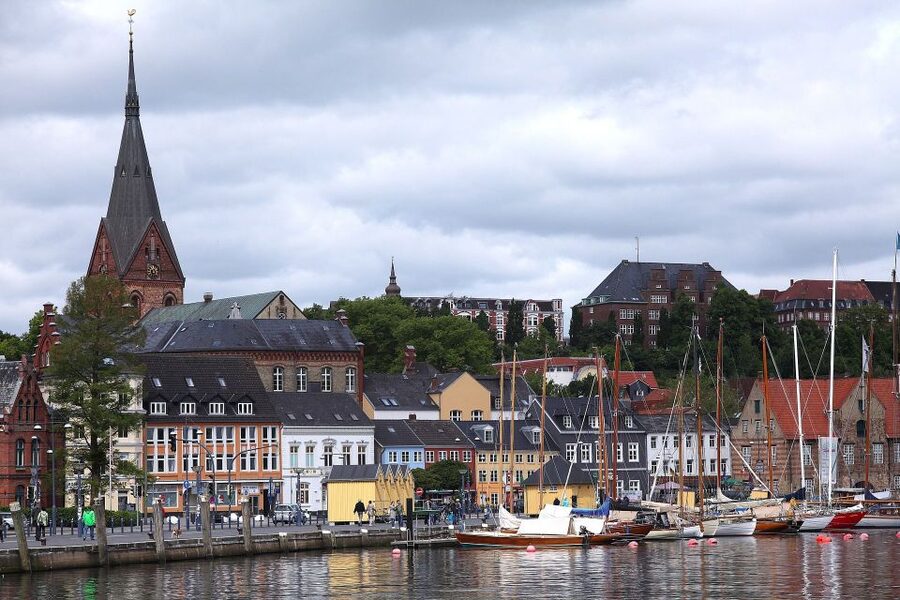
The tour begins in front of Saint Nikolai Church at Nikolaikirchhof 8. This is a practical meeting point in the center, placing you close to the old town and the streets where Flensburg’s layered past is easiest to read.
You do not need a long museum introduction before the walk begins. The city itself supplies the setting. Your guide can explain how Flensburg was founded by Danes in the Middle Ages and how its position near the border shaped its language, politics, buildings, and trade.
That border story is the key to the whole experience. Flensburg is not simply a German city with a few Danish connections added later. For more than 400 years, it was ruled by the Danish king. The result is a place where German and Danish influences overlap rather than sit neatly in separate boxes.
I would pay close attention to the small details your guide points out. Architecture, street patterns, and local institutions can reveal how power shifted between the Duchy of Schleswig, the Danish kingdom, and later the Kingdom of Prussia. Those changes make much more sense when you see them in the streets instead of trying to absorb them from a timeline.
More Walking Tours in the Baltic Coast:
- Schwerin: Private Guided Walking Tour
★ 4.9 · 14 reviews - Stralsund: Old Town Highlights Private Walking Tour
★ 5.0 · 5 reviews - Kiel: City Highlights Express Walking Tour with a Local
★ 3.3 · 4 reviews
Reading Flensburg’s German-Danish character
The strongest part of the walk is the chance to connect political history with daily life. Flensburg’s Danish roots are not treated as a distant medieval footnote. They help explain the city’s cultural identity today, including the continuing influence of the Danish minority.
Your guide is available in English or German, so you can choose a language that lets you follow the finer points. For mixed-language families or groups, this is useful. A private tour also lets you stop and ask how German-Danish relations affected ordinary people, not just rulers and borders.
The subject can become complicated. Schleswig’s history involves shifting authority, competing national identities, and the long tension between German and Danish interests. A 90-minute walk cannot cover every political turn. What it can do is give you a readable framework for understanding why Flensburg feels different from many other German towns.
I especially like the chance to ask questions as they arise. If one building or street raises a question about Danish culture, Prussian administration, or the border, your guide can spend more time there. On a standard group walk, the guide may need to keep moving. Here, the conversation can follow your curiosity.
Old streets and architecture from several periods
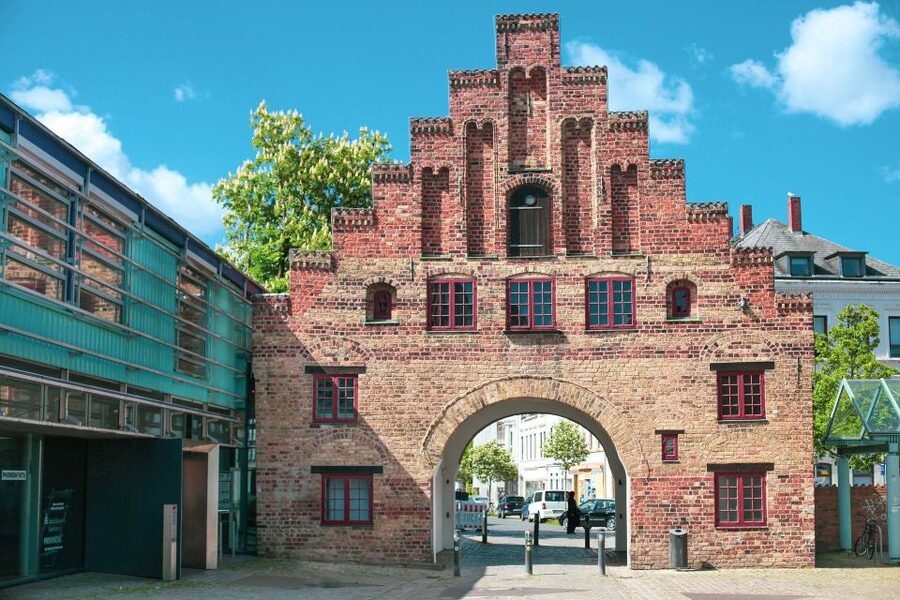
Flensburg was not destroyed during World War II, which left a large number of historic buildings standing. That gives the walk real visual weight. You are not only hearing about the past. You are seeing buildings from different periods gathered within the old town.
The architecture also helps make the German-Danish relationship concrete. Instead of treating culture as a list of dates, the guide can point to the character of the town and explain how its history shaped the built environment.
Do not expect a formal architectural tour with a long list of technical terms. The emphasis is on the city’s wider story, including Danish influence and the way Flensburg developed over roughly 700 years. If you enjoy old streets, carefully preserved buildings, and the link between politics and design, this part of the walk should hold your attention.
The tradeoff is that the tour does not include entrance fees. You are paying for a guided walk, not museum admission or a visit inside a particular landmark. That keeps the outing simple, but anyone wanting detailed interiors should plan separate sightseeing afterward.
The harbor and the City of Rum
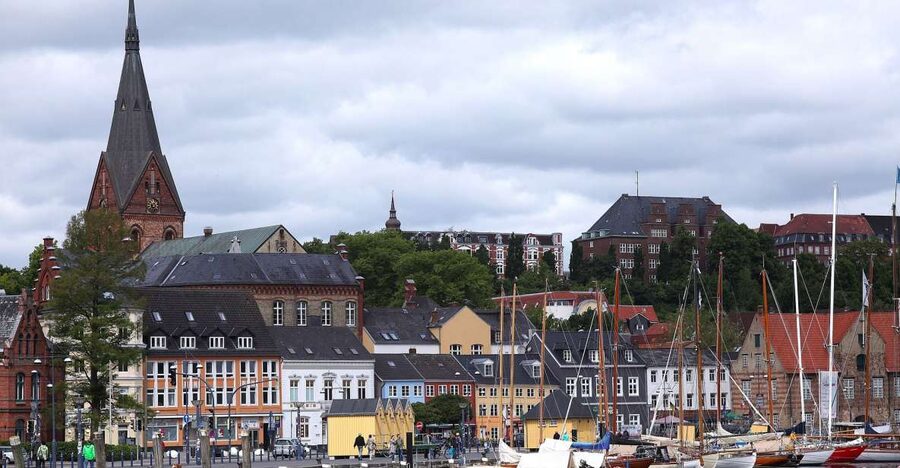
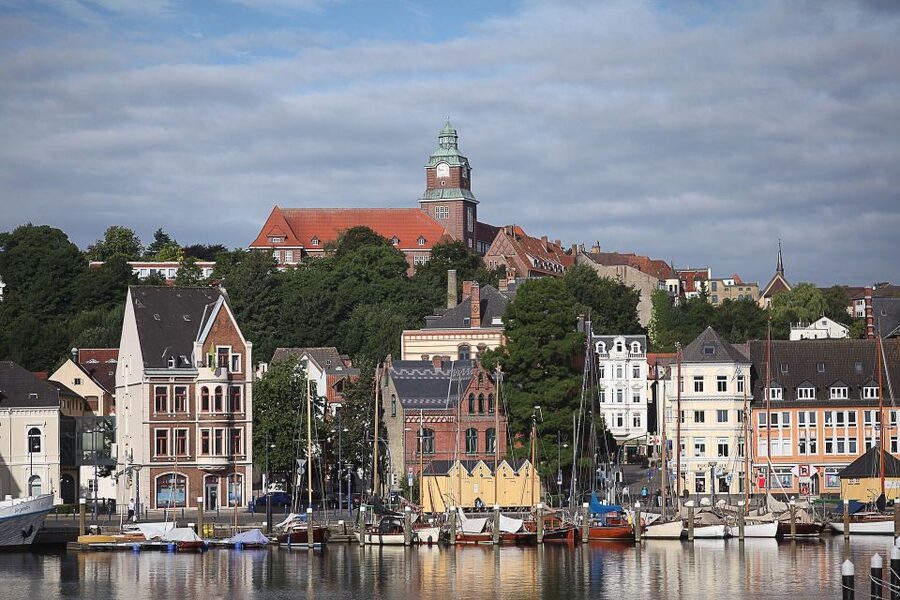
Flensburg’s harbor adds a useful change of pace. During the 18th century, the city became known as the City of Rum because of its trade with the Caribbean islands. The harbor is where that commercial past feels most relevant.
Your guide can explain how the port connected Flensburg with wider trade networks. That story keeps the town from seeming like an isolated border settlement. Its fortunes were tied not only to Denmark and northern Germany, but also to overseas commerce.
The harbor area is also a good place to understand why location mattered. Flensburg’s position near the German-Danish border helped make it a meeting point for cultures and a working port with links beyond the region.
The tour does not promise a tasting or a visit to a rum museum. Keep your expectations focused on history, buildings, and the harbor setting. If you are hoping for food or drink, those would need to be separate plans.
A few more half-days in the Baltic Coast worth comparing
- Schwerin: City Highlights Guided Tour
★ 4.7 · 541 reviews - Schwerin: Tour with the Night Watchman
★ 4.5 · 366 reviews - Stralsund: 1-Hour Harbor Cruise
★ 4.6 · 365 reviews - Baabe on Rügen: Seal-Spotting Cruise in the Baltic
★ 3.4 · 129 reviews
War, Prussia, and changing power
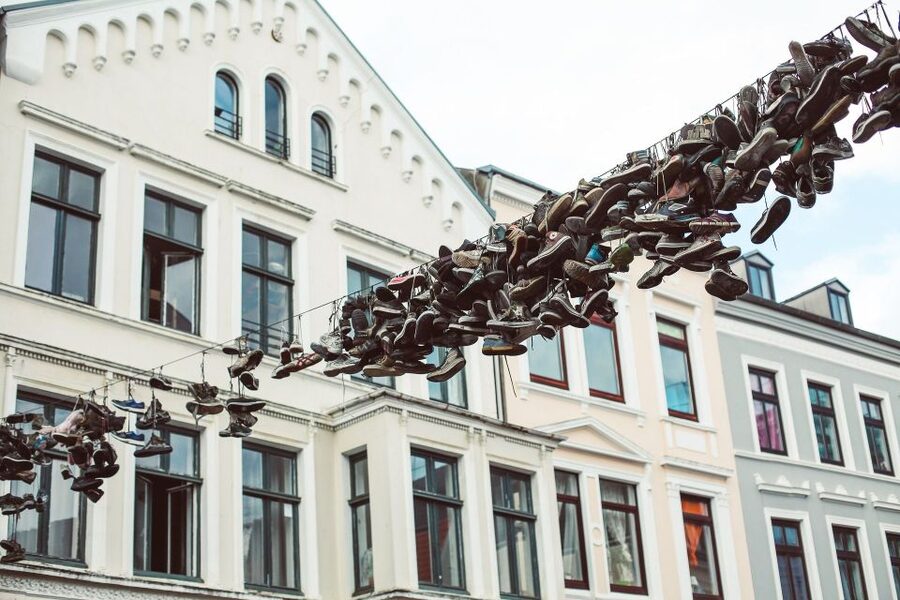
The walk also covers Flensburg’s place in the Duchy of Schleswig and the Kingdom of Prussia. These subjects may sound dry on paper, but they explain the city’s changing loyalties and identity.
The Thirty Years’ War and the Battle of Flensburg add another layer. Your guide can place the town within the larger conflicts that shaped northern Europe. This is useful context because Flensburg’s story was never only local. Armies, monarchs, trade, and national politics all affected the city.
A short tour must be selective. You will not receive a full military history of the Thirty Years’ War or every detail of the Battle of Flensburg. Instead, expect the major events to be tied back to the streets and buildings around you.
That approach suits me. Dates alone fade quickly, while a story attached to a place is easier to remember. If military history is your main interest, ask your guide at the start for more attention to the battle and war period.
Stories beyond the main hotspots
One of the best reasons to choose this private walk is the chance to move beyond the most obvious sights. The guide can include less familiar corners and tell stories that do not always appear on a first glance around town.
That does not mean you should expect secret access or attractions closed to the public. It means the walk can give more attention to the city’s cultural background, historic changes, and local details instead of simply pointing out famous buildings.
This style works well if you have already seen Flensburg’s central sights or if you prefer context over a checklist. It also suits people who like to stop for questions. The guide is with your group only, so you can ask for more detail about Danish culture, the harbor, the rum trade, or the city’s role under Prussian rule.
The private setup matters most when your group has a shared interest. A family may want a shorter explanation for children. History fans may want more detail about war and borders. A group visiting from Denmark may want to focus on the city’s Danish connections. The route can respond to those needs on the spot.
What the $280 group price means
The price is $280 for a group of up to 15 people. At the full group limit, that is about $18.67 per person for a 90-minute private walk. For two people, the effective cost is $140 each, so value depends heavily on group size.
This is not the cheapest way to get a quick orientation. A larger group, however, can make the price reasonable, especially if you want your own guide and the freedom to shape the conversation. A family reunion, school group, or small organization may find the private format more useful than separate tickets for many people.
The price does not include entrance fees. Since the experience is centered on outdoor walking and public areas, you should not need to budget for admissions during the tour itself, but any additional sites you visit later would cost extra.
You also get a flexible cancellation policy, with a full refund available if you cancel at least 24 hours ahead. You can reserve now and pay later, which helps if your plans around the German-Danish border are still changing.
Timing, weather, and walking effort
The stated duration is 90 minutes. That is enough for a strong introduction, but not enough for every chapter of Flensburg’s past. I would treat it as a focused orientation rather than a complete day of sightseeing.
Wear comfortable shoes. The tour is on foot, and the information provided specifically warns that it is not suitable for wheelchair users or people with mobility impairments. No detailed surface information is given, so anyone concerned about walking should ask before booking.
Northern German weather can also affect your comfort. One group received a warning to prepare for cold, which is especially useful if you visit in late autumn or winter. Bring a warm layer and do not assume a short walk will feel mild near the harbor.
The guide speaks German or English. Confirm your preferred language when booking so the experience fits your group.
Who will enjoy this walk most?
I would recommend this tour to you if you want a compact introduction to Flensburg before exploring on your own. It is particularly useful if you are interested in borders, national identity, architecture, port trade, or the long connection between Germany and Denmark.
It also suits groups that prefer a private conversation. The guide can focus on your questions instead of following a fixed script for a large crowd. Families and small groups may appreciate that flexibility.
You may want a different plan if you need a fully accessible route, want extensive indoor sightseeing, or expect a long tour with many formal entrances. The 90-minute format is focused and outdoors. It gives you a framework, then leaves room for you to continue through Flensburg independently.
Should you book the Flensburg walking tour?
Book it if the German-Danish border story is the main reason you are visiting Flensburg. The combination of Danish rule, Prussian politics, war, historic architecture, harbor trade, and the Danish minority gives the walk more substance than a simple old-town stroll.
The private format is the strongest reason to choose it. At $280, it makes the most sense for a larger group or for anyone who values a guide dedicated to their questions. Smaller groups should weigh that cost against the convenience of a private route.
Go prepared for cold weather, comfortable walking, and a focused 90-minute introduction. If that matches your plans, this is a practical way to see why Flensburg feels both German and Danish at once.
FAQ
Where does the Flensburg walking tour meet?
Meet your guide in front of Saint Nikolai Church at Nikolaikirchhof 8, 24937 Flensburg, Germany.
How long does the tour last?
The stated duration is 90 minutes.
What languages are available?
The live guide is available in German or English.
Is this a private tour?
Yes. The tour is for a private group, with a guide who is with your group only.
How many people can join?
The price covers one group of up to 15 people.
What is included in the price?
A local guide is included, along with the possibility of customizing the tour with your guide on the spot.
Are entrance fees included?
No. Entrance fees are not included.
What should I bring?
Bring comfortable shoes. You should also prepare for cold weather, particularly during cooler seasons.
Is the tour suitable for wheelchair users?
No. The activity is not suitable for wheelchair users or people with mobility impairments.
Can I cancel for a full refund?
Yes. You can cancel up to 24 hours in advance for a full refund.
Just added in the Baltic Coast
- Highlights-Tour★ 4.8 · 9 reviews
- Stralsund: Old Town Highlights Private Walking Tour★ 5.0 · 5 reviews
- Schleswig: Highlights tour (cathedral, old town, Holm, city harbor)★ 4.8 · 7 reviews
- Schwerin: Private Guided Walking Tour★ 4.9 · 14 reviews
- About Vikings, kings and cheeky monks (Medieval Schleswig)★ 4.9 · 11 reviews
- Kiel: City Highlights Express Walking Tour with a Local★ 3.3 · 4 reviews
- The shadows of history – “Schleswig’s dark secrets★ 4.6 · 7 reviews
- 1-day ticket for Schwerin Zoo★ 3.8 · 11 reviews
Walking Tours, compared.



Berlin’s Best: 2 Hour Walking Tour Third Reich and the Cold War
Read our review →
Third Reich Berlin: Hitler and WWII Walking Tour
Read our review →Browse the lists this tour appears in