
Reviewed · WALKING TOURS
Dresden: Walking Tour with Virtual Reality elements
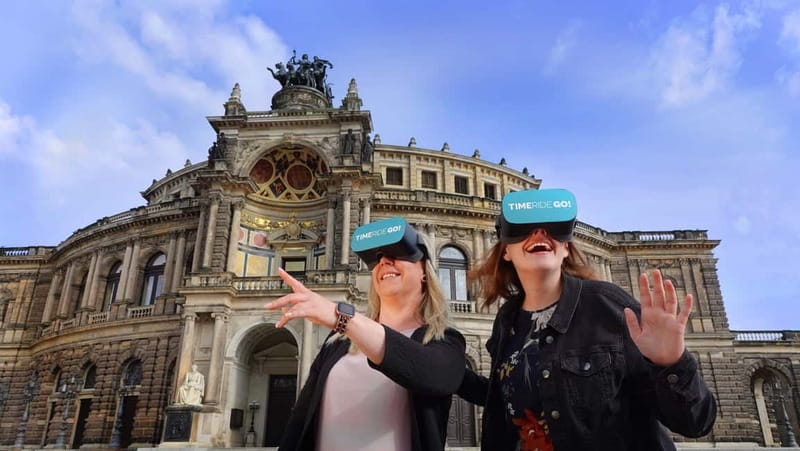
Dresden’s past appears in your hands on this 90-minute Old Town walk, where a mobile VR headset shows vanished streets, older buildings, and changing city scenes at nine stops. It is a smart way to connect today’s Dresden with what stood here before war and political change reshaped it. I like the way the tour pairs those computer-made views with a real guide, and I like that it reaches beyond the usual postcard version of the city.
The strongest part is the mix of clear historical comparisons and lively local storytelling. One caution: the tour is in German, the headset needs careful handling, and the short stops leave little time for lingering or museum visits.
Key points to know before you book
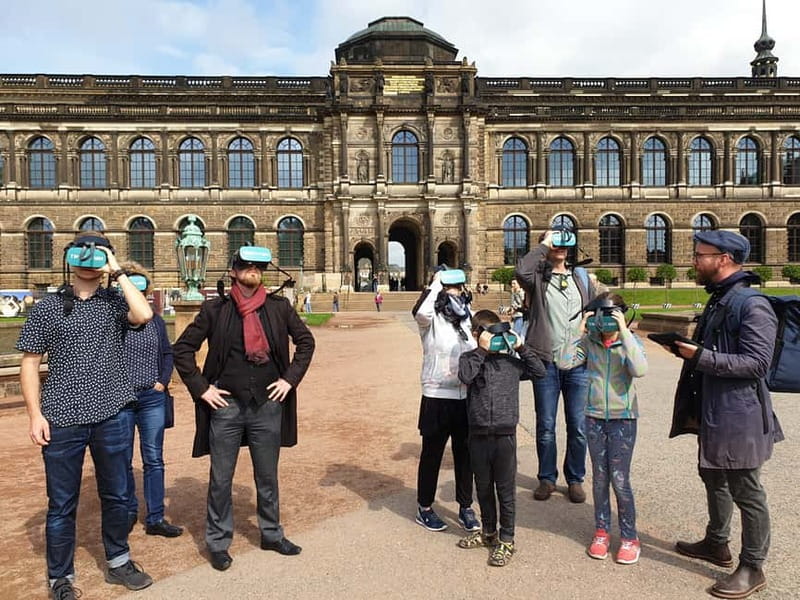
- Nine VR stops: See 360-degree scenes that compare Dresden’s past with the city you see today.
- Four centuries in 1.5 hours: The story moves from the Baroque period through the 1920s, World War II, socialism, and reunification.
- A walking route through central Dresden: Stops include the Zwinger, Postplatz, Old Market Square, Pirnaischer Platz, Neumarkt, Fürstenzug, and the Semperoper.
- German-speaking guide: You get live commentary throughout, but this is not an English-language tour.
- Museum admission is not included: The focus is outdoor sightseeing and VR, not entering Dresden’s museums.
- Best for history-curious visitors: Comfortable shoes and weather-ready clothing matter, since the experience takes place outside.
Dresden in a headset, not just on a postcard
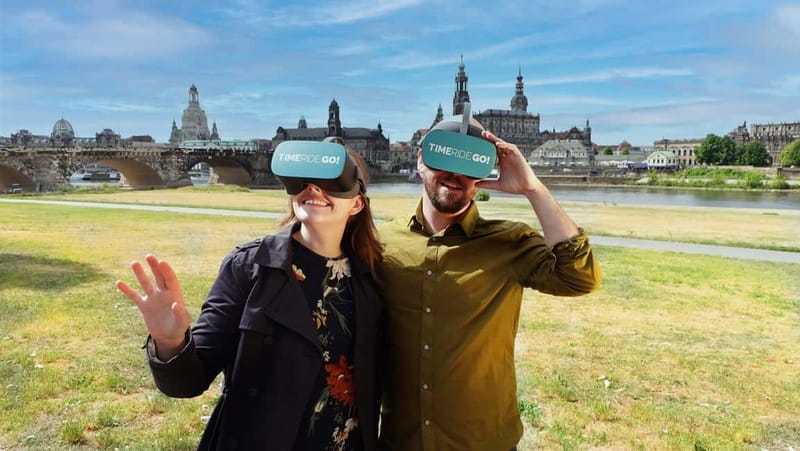
Dresden can look almost too polished at first glance. The Zwinger, grand squares, the Semperoper, and the rebuilt churches present a handsome Baroque center. Yet the city’s appearance hides several sharp breaks in time. This tour makes those breaks visible by placing historic images and 360-degree virtual scenes beside the buildings and streets you see now.
At each location, you use a mobile VR headset while the guide explains what happened there. The equipment gives you a visual reference, but the guide supplies the meaning. That pairing matters. A headset alone can show an old street, but it cannot explain why the city changed, what was lost, or how Dresden’s residents lived through those changes.
The route covers roughly 400 years. You move from royal Baroque Dresden to the city’s transformation into the 1920s, then to destruction during World War II, socialist rebuilding, and reunification. The tour does not pretend that one period tells the whole story. Instead, it asks you to compare layers of Dresden’s past with the modern city under your feet.
The experience is conducted in German. If you understand German comfortably, you can follow the guide’s stories and ask questions as you walk. If you do not, the visual scenes may still interest you, but the historical explanation will be harder to appreciate.
More Walking Tours in Dresden
- Dresden: City & Semperoper Guided Walking Tour
★ 4.8 · 2,293 reviews - Dresden: Guided City Walk with a Cup of Coffee
★ 4.7 · 1,568 reviews - Dresden: Complete Walking Tour with Frauenkirche Visit
★ 4.8 · 700 reviews
Starting at Taschenberg 3
Meet at the TIME RIDE GO! flag in front of the shop at Taschenberg 3. This gives you a clear landmark in central Dresden, but arrive ready to begin outside rather than expecting a long indoor orientation.
The guide provides the VR equipment and leads the group from one stop to the next. Treat the headset gently. The tour notes specifically ask you to handle the equipment with care, so keep a firm but relaxed grip and follow the guide’s instructions when putting it on or taking it off.
This is a walking tour, not a bus circuit. Wear comfortable shoes and clothing suited to the weather. In bad weather, the tour may be canceled, which is worth remembering if this is your only planned history activity in Dresden.
The Zwinger: Baroque Dresden comes alive
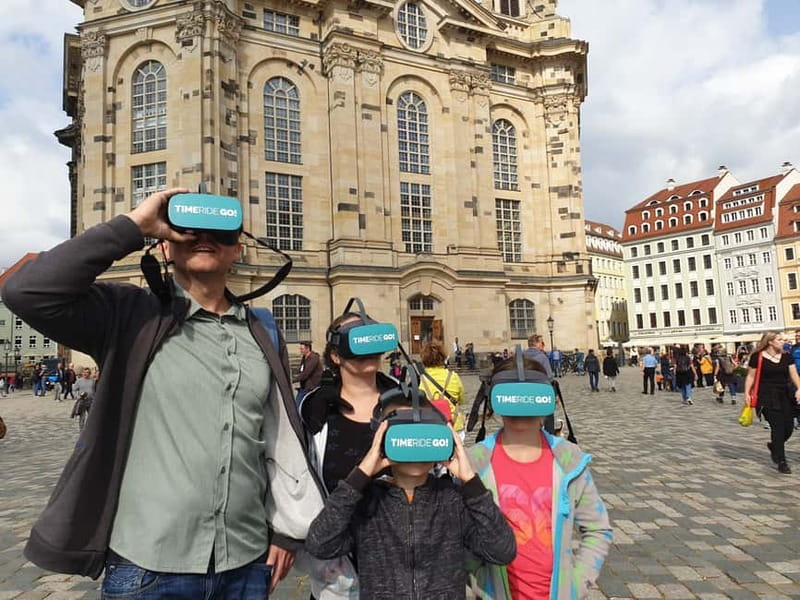
The Zwinger is the natural opening chapter for Dresden’s grand Baroque age. Its courtyards, galleries, and decorative details show the ambition of the city’s rulers, but modern visitors see only the present-day buildings and restored spaces.
The VR view helps supply the missing context. At the Zwinger, you can look toward an earlier version of Dresden and compare that image with the surviving complex. The guide’s explanation gives the architecture a time frame, so the ornate stonework is not just decoration. It becomes part of a larger story about power, taste, and the city’s role in Saxony.
The itinerary includes two Zwinger stops, each listed as about ten minutes. That may sound repetitive, but the site is large enough to support more than one angle. One stop can establish the Baroque setting, while the next can focus on how the area changed over later centuries.
Do not expect a full museum visit here. Entrance fees are not part of the tour, and the experience stays focused on outdoor views, commentary, and the virtual scenes.
Postplatz: A city reshaped by modern times
From the Zwinger, the route continues to Postplatz. This stop helps shift the story away from royal Dresden and toward the city’s later urban development.
The value of Postplatz is comparison. You are not simply looking at a monument that survived. You are looking at a place shaped by changing ideas about transport, planning, politics, and public space. The VR headset can show how the area looked in earlier periods, while the guide connects those images to the city around you.
Each stop takes about ten minutes, so pay attention when the group arrives. The tour is designed for steady movement rather than long lectures. If you like a brisk overview that keeps the city unfolding in front of you, this pace works well. If you prefer to study architectural details or take many photographs, you may find it quick.
Same city, a completely different kind of day:
- Dresden: Semperoper Tickets and Guided Tour
★ 4.7 · 12,102 reviews - Dresden: The Original Night Watchman Tour in Lantern Light
★ 4.6 · 6,653 reviews - Dresden: Semperoper and Old Town Tour
★ 4.8 · 5,735 reviews - Dresden: River Sightseeing Boat Cruise
★ 4.3 · 5,323 reviews
Old Market Square and the pressure of history
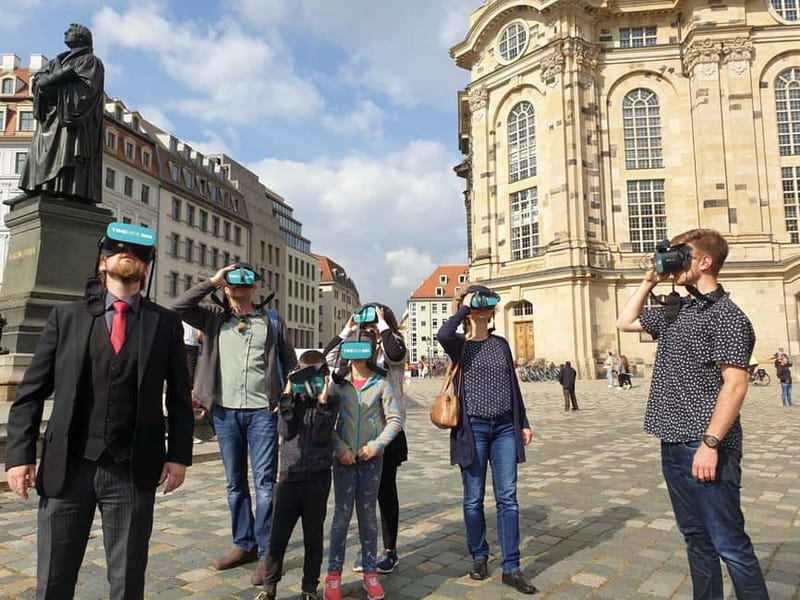
Old Market Square, or Altmarkt, brings Dresden’s civic center into the story. Squares like this often carry several meanings at once: public gathering place, commercial center, ceremonial space, and symbol of political change.
Here, the virtual scenes help you see the square across different periods rather than treating it as a single fixed setting. The guide discusses the city’s transformation up to the 1920s, the destruction of World War II, and the ideas that shaped rebuilding afterward.
This part of the tour is especially useful if you want to understand that Dresden’s story did not stop with wartime destruction. The city continued to change under socialism, and then again after reunification. The VR format makes those transitions easier to picture because you are shown different versions of the same urban space.
Pirnaischer Platz and the socialist chapter
Pirnaischer Platz brings another layer of Dresden’s modern history into view. The route uses this stop to examine new ideas of socialism and the way those ideas influenced the city.
For many visitors, this is where the tour becomes more than a standard old-town walk. Dresden’s Baroque center is easy to photograph, but the city’s socialist period can be harder to read from the street. Buildings, roads, and open spaces may not explain their original purpose on their own. The historical scenes and live commentary fill in that gap.
The guide’s role is important here. The VR image can show a former appearance, but the spoken explanation gives you a sense of why the city was rebuilt and reorganized in particular ways. The tour’s broader strength is this movement between what survives, what was destroyed, and what was created later.
Neumarkt: Rebuilding a symbolic center
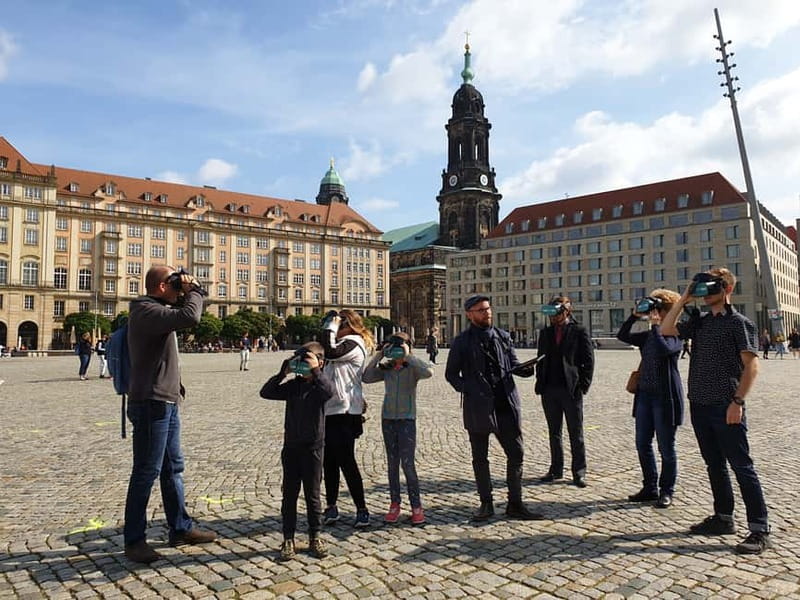
Neumarkt is one of the most emotionally charged stops because it represents both loss and reconstruction. The square is closely tied to Dresden’s historic image, and the surrounding buildings invite comparison between older forms and newer work.
Through the headset, you can view earlier versions of the square and then look back at the present-day scene. That side-by-side feeling is the main reason to choose this tour over a normal walking route. You are not only hearing that Dresden was destroyed and rebuilt. You are seeing how the city’s appearance shifted from one era to another.
Neumarkt also raises a practical question about restoration. A rebuilt historic center can look old, but it belongs to a newer chapter of the city. The tour encourages you to notice that difference instead of treating every elegant facade as untouched history.
Fürstenzug: A close look at Dresden’s long timeline
The Fürstenzug, a monumental porcelain-tile mural showing Saxon rulers, is a natural place to pause. It presents a long line of rulers in a single image, making it a useful visual link to the tour’s wider theme of time.
This is listed as a photo stop as well as a guided visit. You get a chance to take in the mural while the guide sets it within Dresden’s political and artistic story. The VR element adds another layer by showing how the nearby setting and city changed around it.
The mural is easy to admire on its own, but the tour’s timeline gives it more weight. You can see it not only as an attractive wall but also as a statement about Saxony’s rulers and the way Dresden presented its past.
Ending near the Semperoper
The route finishes at the Semperoper, one of Dresden’s best-known landmarks. It is a fitting final stop because the opera house reflects the city’s artistic ambitions and its experience of destruction, restoration, and renewal.
The tour details identify the Semperoper as the finish, while the meeting information also says the activity ends back at the meeting point. Those descriptions do not match perfectly, so confirm the exact end arrangement when you book. In either case, you finish in the central Old Town, close to major sights and easy walking routes.
The final stop works best as a conclusion to the city’s changing identity. You have seen royal ambition, urban modernization, wartime damage, socialist planning, and post-reunification rebuilding. The opera house then gives you one last reminder that Dresden is not simply an old city preserved in place. It is a city repeatedly remade.
What the VR equipment adds
Virtual reality can be a gimmick when it is used without a clear reason. Here, it has a practical job: showing you what no longer exists or what cannot be understood from present-day buildings alone.
The 360-degree views are particularly helpful at places that have changed dramatically. Instead of studying a small archival photograph, you look around a larger scene and compare its streets, buildings, and open spaces with the modern view.
The headset does not replace the guide. It also does not turn the experience into an indoor simulation. You remain outside, walking through Dresden and stopping at real locations. That balance is the key feature: the city supplies the physical setting, while the VR scenes provide the missing historical views.
There are limits. The equipment requires careful handling, and the tour is short. You may not have enough time to inspect every virtual detail before moving on. If you are sensitive to headsets or prefer a traditional walking tour, this format may feel less comfortable than simply listening and looking around.
Pace, language, and practical value
At $34 per person, the tour costs more than a basic free walk but includes a live guide and specialized VR equipment. I think the price is reasonable if you value visual history and want an organized introduction to Dresden’s central landmarks.
The value drops if you mainly want detailed architecture commentary or entry into museums. Museum admission is not included, and the tour does not give you long visits inside the Zwinger or other attractions. You are paying for the guided route, the historic interpretation, and the VR scenes.
The 1.5-hour length is useful for a first orientation. It gives you a clear framework without taking half a day, leaving time afterward for the Frauenkirche, museums, the Semperoper, or a second walk through the Old Town. The ten-minute rhythm at each stop also keeps the experience moving.
The live guide speaks German. That is the most important booking consideration. The supplied equipment may help with visual understanding, but it cannot replace the spoken commentary. Book this only if German works for you or if you are comfortable receiving only part of the experience.
The tour is not suitable for children under six. Older children may enjoy the headset, though the subject matter includes war, destruction, and political change. Families should decide if that historical content fits the child’s age and attention span.
Free cancellation is available up to 24 hours before the start, and you can reserve now and pay later. In bad weather, the activity may be canceled, so keep an eye on conditions and avoid making this your only fixed plan.
Who should book this Dresden walk?
I would choose this tour if you want a fast, visual introduction to Dresden and you are curious about how the city moved from Baroque splendor through war, socialism, and reunification.
It suits first-time visitors who want the major Old Town landmarks explained in one continuous story. It also suits people who have already seen Dresden’s famous buildings but want more context about what changed around them.
The tour is less suitable if you want an English-language experience, museum interiors, a slow photography walk, or a highly detailed architectural lecture. You should also allow extra time before or after the tour if you want to visit the Zwinger or another attraction inside.
Should you book it?
Book this walking tour if the VR comparisons appeal to you and you understand German. The equipment gives you something a normal walking tour cannot: a way to see earlier versions of Dresden at the exact places where change occurred.
Skip it if you need English commentary, dislike headsets, or want admission to museums included. For everyone else, $34 buys a focused 1.5-hour history lesson, a central walking route, and a useful visual guide to a city that has been rebuilt more than once.
FAQ
Where does the tour begin?
Meet at the TIME RIDE GO! flag in front of the shop at Taschenberg 3 in Dresden.
Where does the tour finish?
The route lists the Semperoper Dresden as the final stop. The meeting information also says the activity ends back at the meeting point, so confirm the exact end location when booking.
How long does the experience last?
The walking tour lasts 1.5 hours.
What language is the tour conducted in?
The live guide speaks German.
Is a guide included?
Yes. A live guide accompanies the walking tour.
Is the virtual reality headset included?
Yes. A mobile virtual reality headset is included.
How many locations does the tour visit?
The tour uses VR at nine different locations in Dresden’s Old Town.
Are museum entrance fees included?
No. Entrance to museums is not included.
Is the tour suitable for young children?
The activity is not suitable for children under six years old.
What should I bring?
Bring comfortable shoes and clothing suitable for the weather. Handle the VR equipment with care.
Just added in Dresden
- Test Drive Electric Vehicles from the VW brand (ID. model)★ 4.8 · 190 reviews
- SRF CoBi | City Tour by ConferenceBike★ 4.7 · 38 reviews
- Dresden: Scavenger Hunt to Elbe River & Castles★ 4.7 · 15 reviews
- Dresden: Bike Rental – City Bike with Option Children Seat★ 4.5 · 13 reviews
- Private trip from Prague to Dresden, Moritzburg & Meissen★ 5.0 · 5 reviews
- Moritzburg: Scavenger Hunt Self-Guided Walking Tour★ 4.8 · 12 reviews
- Historical tour of the old town including a Saxon dinner★ 4.7 · 23 reviews
- Climb the mountains together with goats★ 4.8 · 8 reviews
Walking Tours, compared.



Berlin’s Best: 2 Hour Walking Tour Third Reich and the Cold War
Read our review →
Third Reich Berlin: Hitler and WWII Walking Tour
Read our review →Browse the lists this tour appears in