
Reviewed · WALKING TOURS
Dresden: Guided City Walk with a Cup of Coffee
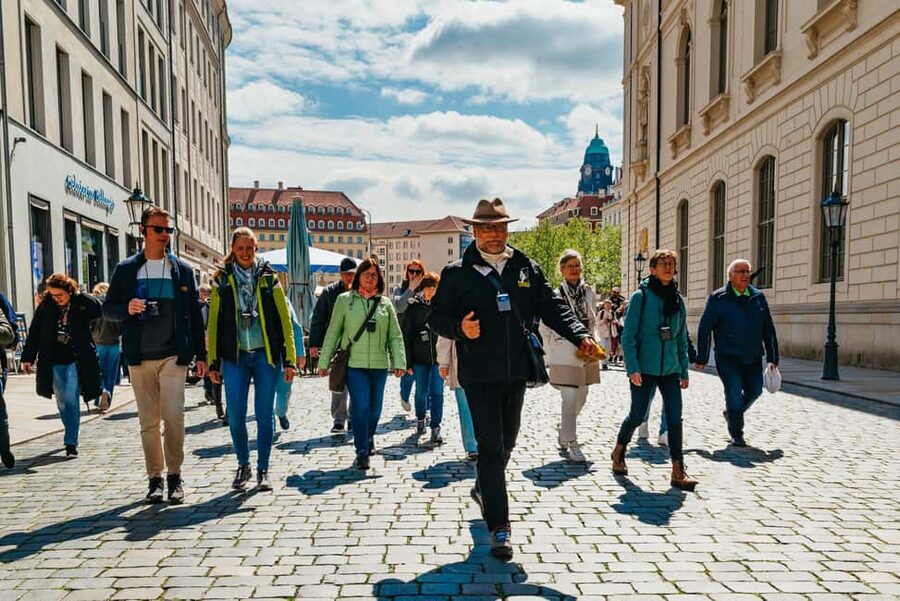
Dresden’s old town is a concentrated lesson in power, war, faith, and rebuilding. In 90 minutes, this German-language walking tour links the city’s grandest Baroque sights with stories from the Middle Ages, the former East Germany, and the peaceful revolution of 1989.
I like the low $15 price and the way the guide mixes dates with anecdotes instead of giving you a dry list of rulers and architects. I also like the digital audio system, which should make it easier to follow the guide in a busy square. The main drawback is simple: the tour is offered in German only, and the coffee coupon has occasionally been missed, so remind the guide if it is not handed over.
Key points at a glance
- A compact Baroque route: See the Frauenkirche, Semperoper, Zwinger, Dresden Castle, Fürstenzug, Stallhof, and Brühl’s Terrace in 1.5 hours.
- History beyond grand buildings: Hear about medieval Dresden, the Renaissance, the Baroque court, East and West Germany, and 1989.
- German-language guiding: The live tour is conducted in German, with a digital audio guide system to help you hear.
- A useful first-day walk: Ask the guide for restaurant and leisure tips while you get oriented in the old town.
- Coffee included: A free coffee coupon is part of the package, though you should check that you receive it.
- Easy central meeting point: Begin at Dresden Information in the basement of the QF Passage, near Frauenkirche.
Why this Dresden walk works well
Dresden is not a city where the main sights are scattered across a wide area. The historic center places its grand buildings within an easy walking circuit, and this route makes good use of that compact layout. You move from Neumarkt and the Frauenkirche through the castle quarter, along Brühl’s Terrace, and past the Semperoper and Zwinger.
That matters if you have only a morning or afternoon. You get a useful first look without committing half a day to a large museum or a long bus tour. The 90-minute length also leaves room for your own visit to the Frauenkirche, the Royal Palace museums, the Zwinger collections, or one of Dresden’s cafés.
The guide’s job here is not just to point at decorated façades. You hear how Dresden developed from a medieval settlement into a powerful royal residence, how the Baroque center took shape, and how modern political events changed the city. The strongest part of the format is the mix of big events and small anecdotes. That combination helps you remember the place after the tour ends.
The digital audio guide system is another practical touch. Dresden’s central squares can be lively, and ornate buildings often draw several groups at once. A receiver or audio setup can make the explanation easier to follow than trying to stand shoulder to shoulder with the guide.
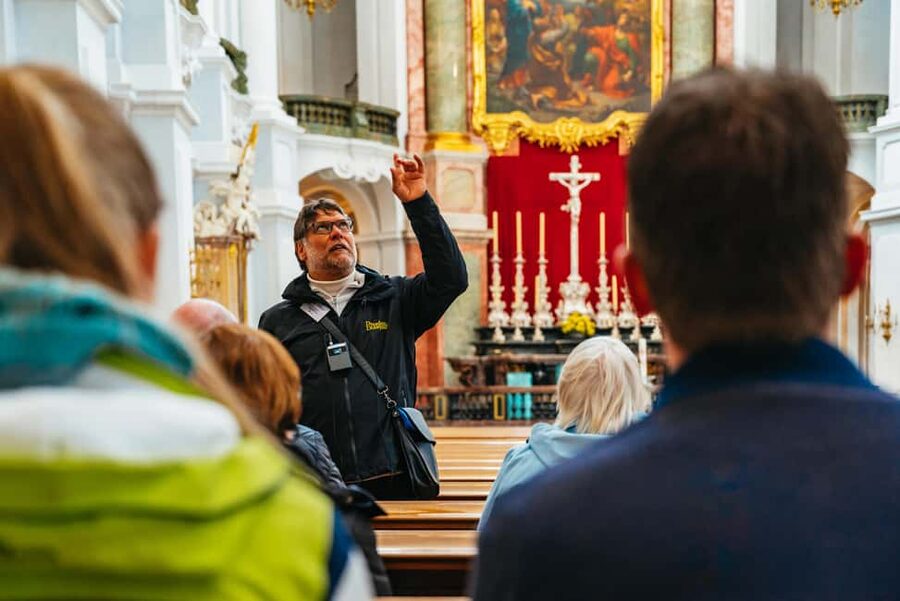
Keep your expectations in check, though. This is an exterior walking tour. You pass the major landmarks and hear their stories, but the description does not promise interior entry to the Frauenkirche, Semperoper, Zwinger, or Dresden Castle. If you want museum rooms or an opera-house visit, plan those separately.
More Walking Tours in Dresden
- Dresden: City & Semperoper Guided Walking Tour
★ 4.8 · 2,293 reviews - Dresden: Complete Walking Tour with Frauenkirche Visit
★ 4.8 · 700 reviews - Dresden: Walking Tour with a Night Watchman and Meal
★ 4.4 · 487 reviews
Meeting at Neumarkt and finding Dresden Information
The tour begins in front of Dresden Information in the basement of the QF Passage. This is a central location at Neumarkt, close to the Frauenkirche. Give yourself enough time to find the basement meeting point, especially if you are arriving by public transport or coming from another part of the city.
Neumarkt is a fitting starting place. The square presents Dresden’s restored Baroque face, with the Frauenkirche as its visual anchor. It also raises one of the central questions of the city: how much of Dresden is old, reconstructed, or newly designed to look old?
Your guide introduces the route here before the group sets off. The tour is offered in German, so you should be comfortable following spoken German for the full 90 minutes. The digital audio system should help, but it does not change the tour language.
The route includes a short walk of about three minutes before reaching Stallhof. That is hardly a transfer, but comfortable shoes still matter because most of the experience takes place on foot over historic city paving.
Stallhof and Fürstenzug: Dresden’s royal stage
Stallhof, the former courtyard of the royal stables, gives you an early look at the courtly world that shaped Dresden. Its name points to its practical past, but the setting also reflects the ceremonial life of the Saxon rulers. Here, the guide can connect everyday court functions with the larger ambitions of Dresden’s royal family.
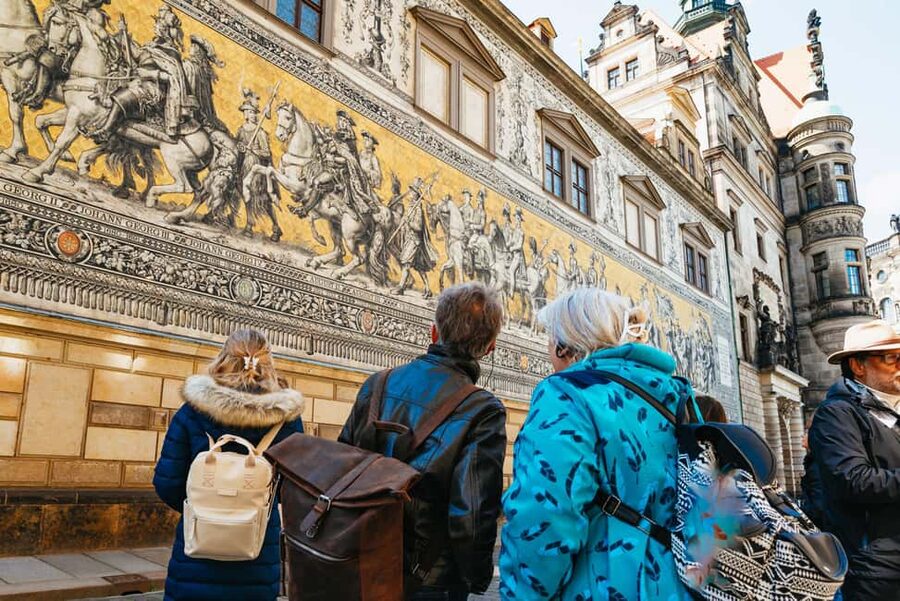
Next comes the Fürstenzug, or Procession of Princes. This long wall picture presents Saxon rulers in a mounted procession. It is one of the most memorable stops because you can read Dresden’s political story in a single outdoor artwork.
The guide’s explanation is especially useful here. Without context, the parade can seem like a procession of unfamiliar names and costumes. With a little background, it becomes a visual record of Saxony’s ruling dynasty and the city’s close ties to royal power.
This is also a good place for an anecdote or two. The tour is designed to include smaller stories alongside major historical events, and the Fürstenzug rewards that approach. The artwork is large, public, and easy to inspect without entering a museum.
Dresden Castle and the path to the cathedral
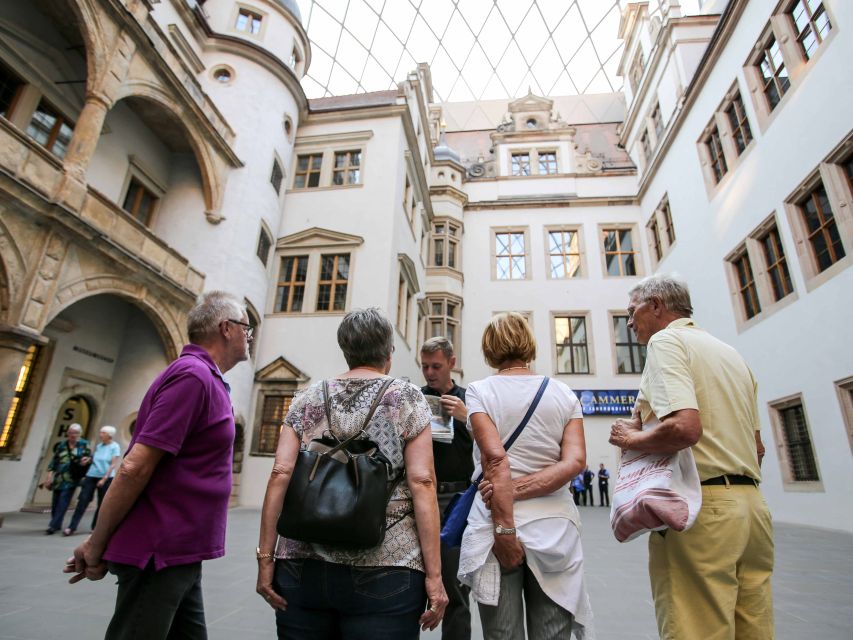
Dresden Castle, or Residenzschloss, was the seat of Saxony’s rulers and one of the key buildings in the old town. From the outside, it forms part of the architectural chain linking the royal court, the cathedral, the stable yard, and the public squares.
The castle is valuable context for understanding why Dresden looks so grand. The city’s Baroque character was not an accident. It grew from the wishes of rulers who wanted their residence, ceremonies, churches, and public spaces to express power.
The walk continues toward Dresden Cathedral. This part of the route helps connect the political and religious sides of the old town. You are not simply seeing isolated monuments. You are following the physical relationship between the royal residence, the court, and the church.
The tour does not include a separate interior visit to the castle or cathedral, so consider this stop an architectural and historical introduction. If one of these buildings catches your attention, you can return later with more time.
More coffee stops in Dresden:
- Hamburg: Speicherstadt Walking Tour with Coffee Tasting
★ 4.6 · 360 reviews - Rüdesheim: city tour with music and wine and Rüdesheim coffee
★ 4.8 · 6 reviews
Brühl’s Terrace and the Elbe views
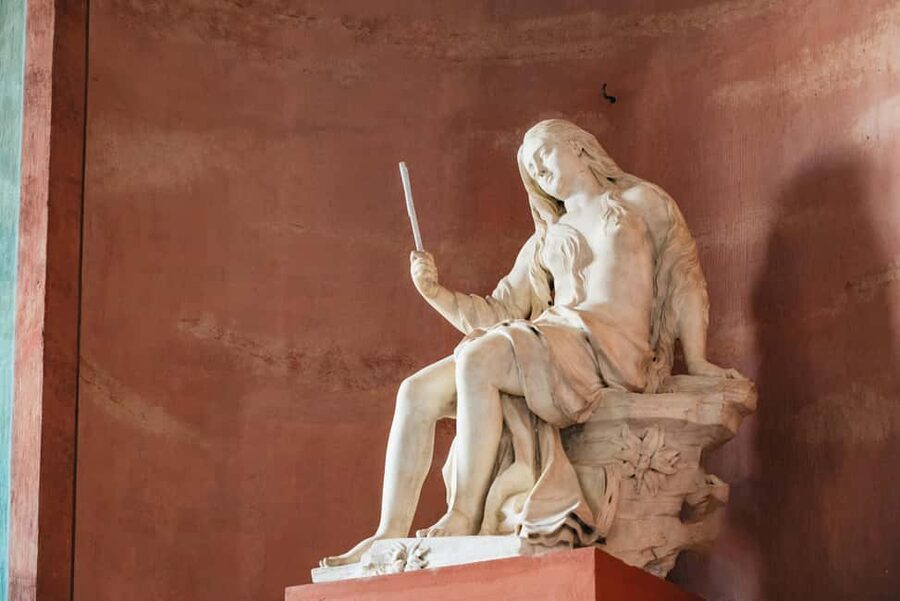
Brühl’s Terrace is one of Dresden’s best-known public promenades. It runs above the Elbe and offers a change of mood from the enclosed courtyards and monumental façades of the castle quarter.
Your guide uses the terrace to discuss Dresden’s development and its position along the river. It is also a useful pause in the route because you can look outward after spending much of the walk among buildings.
Do not expect a long scenic stop. The tour has several major sights to cover, so the guide must keep moving. Still, Brühl’s Terrace gives you a broader sense of Dresden’s setting and helps explain why the city became an important center in Saxony.
The terrace is also where modern Dresden can enter the story. The city has had to balance historic reconstruction with new and sometimes controversial buildings. This tension is part of what makes Dresden more interesting than a simple Baroque postcard.
Semperoper and the city’s grand cultural face
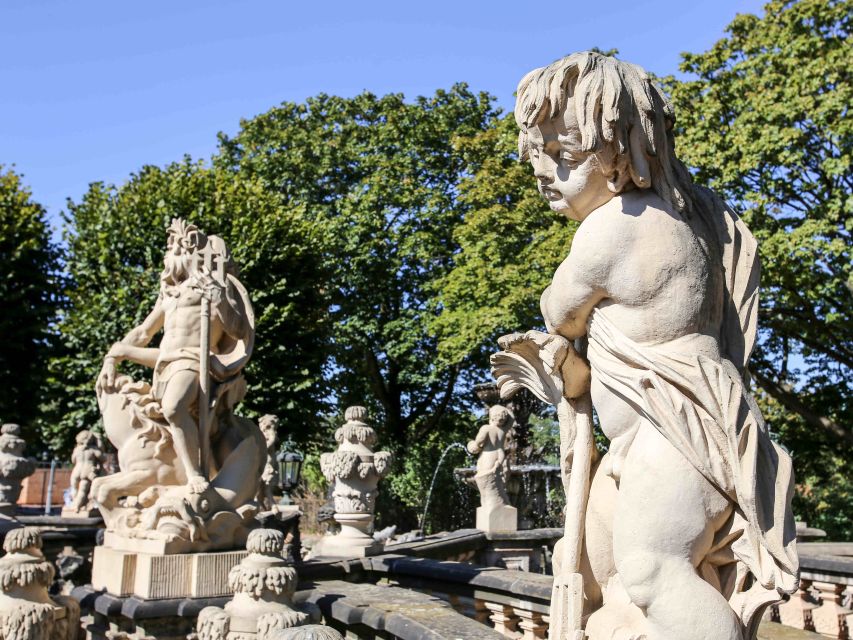
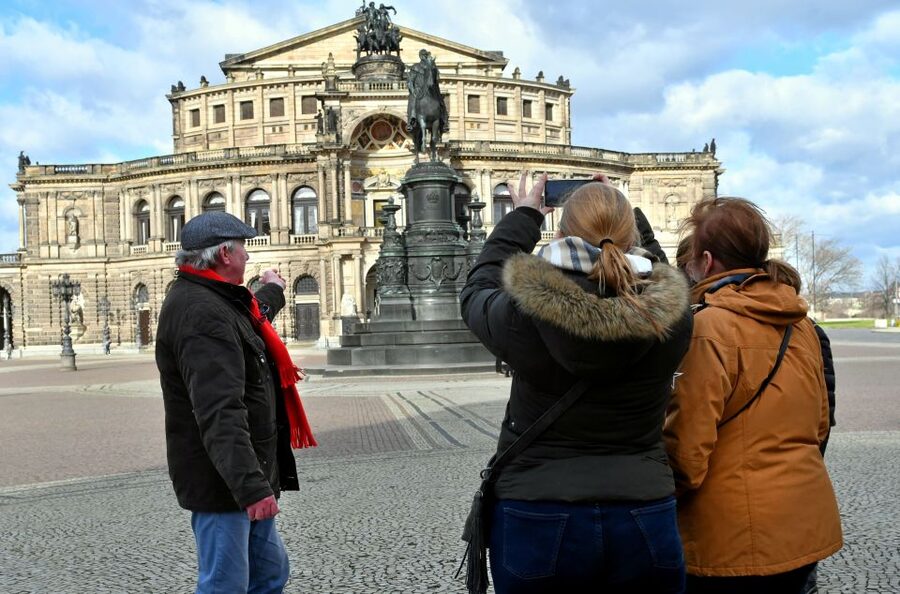
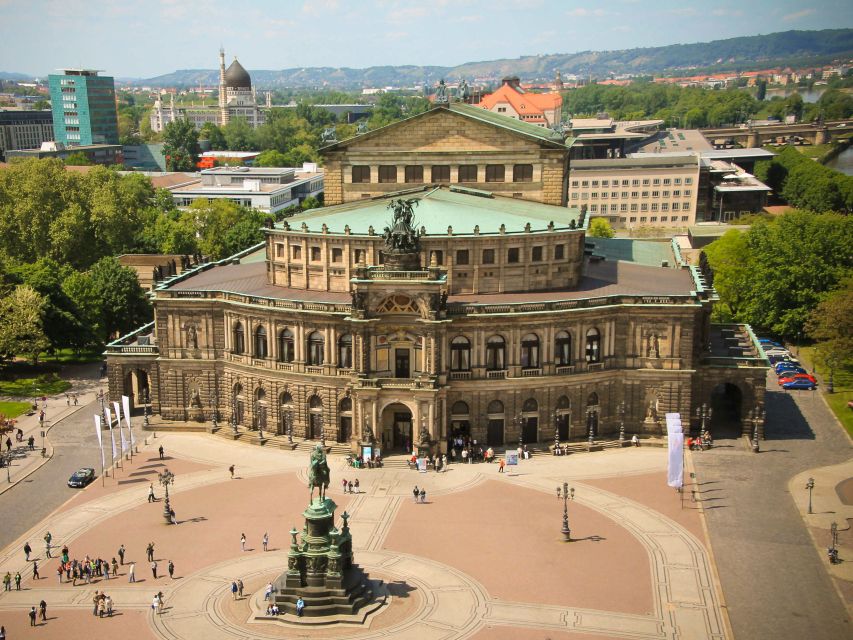
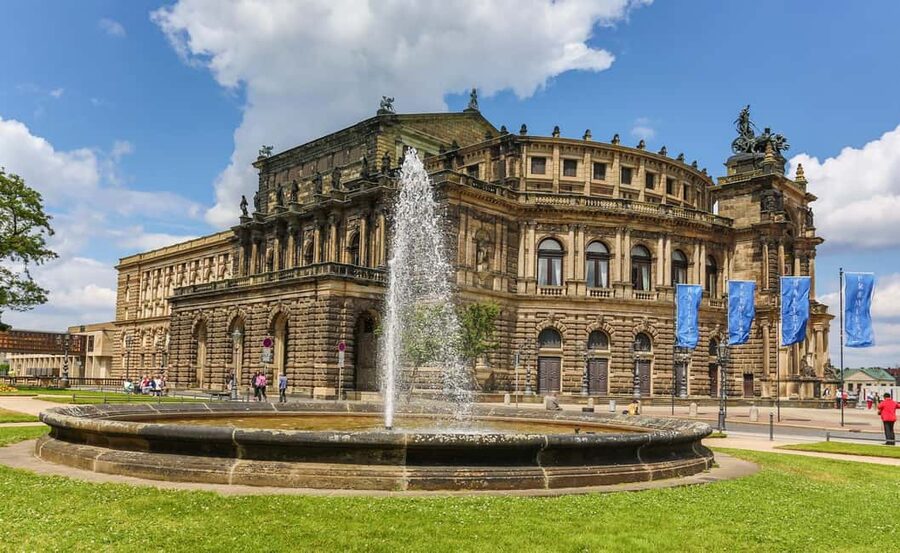
The Semperoper is Dresden’s famous opera house and one of the strongest examples of the city’s ceremonial architecture. Its name refers to architect Gottfried Semper, and its appearance reflects the confidence of Dresden’s royal and cultural world.
The guide explains the building’s place in the city rather than treating it as a stand-alone photo stop. That approach helps you see how the opera house relates to the Zwinger, the palace quarter, and the wider Baroque center.
You will view the Semperoper from outside on this walking route. The tour does not include a performance or an interior opera-house visit. If you want to go inside, you will need to arrange that separately and check the available schedule.
For a first orientation, the exterior stop is still worthwhile. The building helps show how Dresden’s rulers used architecture, music, and ceremony to project status. It also gives the walk a cultural counterpoint to the military and political themes found elsewhere.
Zwinger: Baroque display in open air
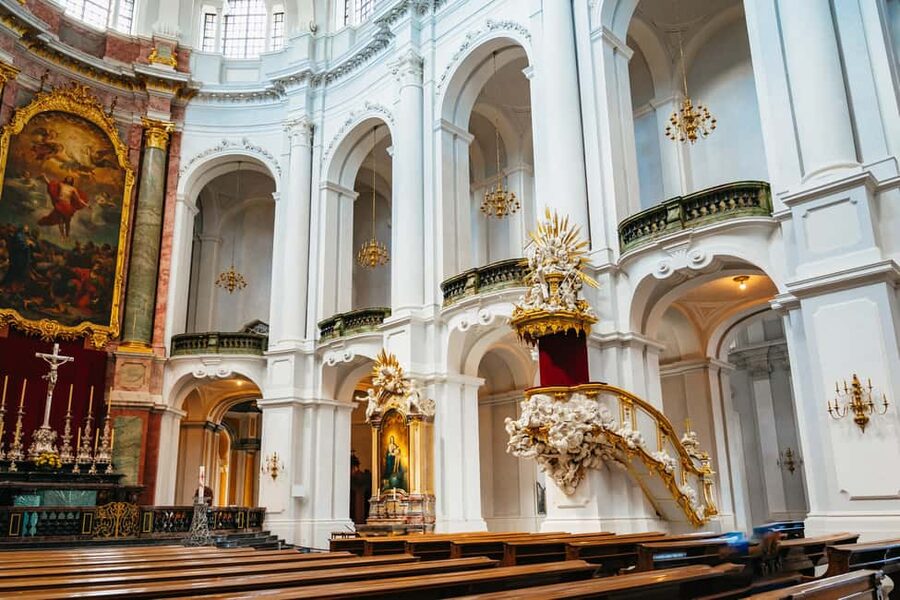
The Zwinger is perhaps the clearest expression of Dresden’s Baroque taste. Its courtyards, pavilions, sculptural details, and formal design were made to impress. Even a short exterior explanation gives you a sense of how much effort went into royal display.
The guide explains the building’s role in Dresden’s development and places it within the city’s wider Baroque period. That context is useful because the Zwinger can otherwise seem like an elaborate collection of decorative buildings without a clear purpose.
This stop also shows why a walking tour can be good value here. You can see the main forms of the complex quickly, learn what to look for, and then decide if the museums inside deserve a longer visit. The package itself does not include museum admission.
Allow yourself a little time to look up and around. The Zwinger is full of small details, and a rushed glance does not do it justice. The guide will keep the group moving, but you can return later for closer photographs or an interior visit.
Frauenkirche, Taschenbergpalais, and the route’s final stretch
The Frauenkirche is the emotional center of Dresden’s old town. Its dome dominates Neumarkt, and its story brings together faith, destruction, memory, and reconstruction. The tour presents the church as part of Dresden’s broader history, not only as a beautiful building.
You also pass the Taschenbergpalais, another important piece of the city’s grand central architecture. Along with the castle, cathedral, and surrounding squares, it helps complete the picture of Dresden as a court city shaped by royal building projects.
The route includes Augustus Bridge as it moves through the old town area. The bridge is another reminder that Dresden’s identity is tied to the Elbe and to connections between different parts of the city.
The tour finishes near Frauenkirche, with the activity information also describing the end as back at the meeting point. Since the start and finish are in the same central area, you are well placed to continue sightseeing, visit a café, or begin a separate museum stop.
From the Middle Ages to the peaceful revolution of 1989
The strongest historical promise of this walk is its wide time span. You hear about the Middle Ages, the Renaissance, the Baroque period, and the political changes of modern Germany. That range keeps the experience from becoming only an architecture lesson.
The discussion of East and West Germany is especially useful in Dresden. The city was part of former East Germany, and the peaceful revolution of 1989 forms an important part of its modern identity. The guide aims to explain what those changes felt like for ordinary people, not just list dates.
This part may be more valuable to visitors who know little about Germany after World War II. It gives the monumental old town a modern human context. You begin to see Dresden not only as a reconstructed historic center, but as a city shaped by war, division, political pressure, and public change.
Because the tour lasts only 90 minutes, no single period receives a full lecture. You get a connected overview instead. I would treat it as a foundation, then choose one or two subjects to explore further on your own.
The coffee coupon and small practical details
The free coffee coupon adds a modest but pleasant extra. It gives you a reason to sit down after the walk and think over what you have seen. At a $15 price, even a small included drink improves the overall value.
There is one practical caution. The coffee coupon has not always been handed out automatically. Before you leave the guide, check that you have it. This is a minor issue, but it is exactly the sort of detail worth catching while the guide is still nearby.
Personal expenses are not included, so plan to pay for anything else you order. The tour itself is short enough that you do not need food or a full refreshment break during the route.
The experience is wheelchair accessible, which makes the central route more usable for many visitors. You should still allow time to reach the basement meeting point at Dresden Information and be ready for a walking pace through the old town.
Is $15 good value for 90 minutes?
Yes, if you want orientation and historical context rather than private guiding or museum admission. For $15, you receive a live German-speaking guide, a structured route through the main old-town sights, a digital audio system, and a coffee coupon.
The value is strongest for first-time visitors. You can see where the key monuments fit together, learn which buildings deserve a return visit, and ask for restaurant or leisure suggestions. Those local tips may save you time later in the day.
The price is less compelling if you already know Dresden well or need an English-language tour. It is also not the right choice if you want extended time inside the museums or a detailed architectural lecture at every stop.
Free cancellation up to 24 hours before the start and the reserve-now, pay-later option make the booking less risky. Check the available start times before choosing your day, since the duration is fixed at 1.5 hours but the departure time varies.
Who should book this Dresden walking tour?
I would choose this walk if you:
- Understand German and want a live local guide.
- Have limited time in Dresden and need a sensible old-town introduction.
- Enjoy history told through buildings, anecdotes, and political context.
- Want to see the major Baroque sights before deciding which ones to revisit.
- Prefer a short walking route to a longer coach or museum tour.
- Like ending near cafés and central attractions.
I would skip it if you need English, want guaranteed interior access, or prefer a slow photography walk. Families can book children’s tickets, with a maximum of four child tickets per adult, but younger children may find 90 minutes of historical commentary demanding.
Should you book it?
Book this Dresden tour if you want a compact, inexpensive introduction to the city’s old town and you can follow German comfortably. Its best feature is the balance of famous buildings and stories that reach from medieval Dresden to the events of 1989.
The tour does not replace a full day of museums, palace rooms, or an English-language guide. It does give you a clear mental map, a useful historical frame, and a practical starting point for exploring on your own. Remember to ask for the coffee coupon, wear comfortable shoes, and arrive at the Dresden Information meeting point in the QF Passage with enough time to find the basement.
FAQ
Is the Dresden walking tour offered in English?
No. The live tour guide and the activity are offered in German only.
How long does the tour last?
The walking tour lasts 1.5 hours. Starting times vary, so check availability when booking.
Where does the tour begin?
Meet the guide in front of Dresden Information in the basement of the QF Passage near Neumarkt and the Frauenkirche.
Which major sights are included?
The route includes the Frauenkirche, Semperoper, Zwinger, Dresden Castle, Residenzschloss, Fürstenzug, Stallhof, Brühl’s Terrace, Dresden Cathedral, Taschenbergpalais, and Augustus Bridge.
Is coffee included?
Yes. The tour includes a free coffee coupon. Check with the guide if you do not receive it during the activity.
Can I cancel the booking?
You can cancel up to 24 hours in advance for a full refund. A reserve-now, pay-later option is also available.
Just added in Dresden
- Test Drive Electric Vehicles from the VW brand (ID. model)★ 4.8 · 190 reviews
- SRF CoBi | City Tour by ConferenceBike★ 4.7 · 38 reviews
- Dresden: Scavenger Hunt to Elbe River & Castles★ 4.7 · 15 reviews
- Dresden: Bike Rental – City Bike with Option Children Seat★ 4.5 · 13 reviews
- Private trip from Prague to Dresden, Moritzburg & Meissen★ 5.0 · 5 reviews
- Moritzburg: Scavenger Hunt Self-Guided Walking Tour★ 4.8 · 12 reviews
- Historical tour of the old town including a Saxon dinner★ 4.7 · 23 reviews
- Climb the mountains together with goats★ 4.8 · 8 reviews
Walking Tours, compared.


Berlin’s Best: 2 Hour Walking Tour Third Reich and the Cold War
Read our review →
Third Reich Berlin: Hitler and WWII Walking Tour
Read our review →Browse the lists this tour appears in