

Reviewed · OLD TOWN TOURS
Ulm: Evening stroll through the old town
Ulm’s evening old town tour brings you from the world’s tallest church tower to crooked medieval houses glowing after dark. The route packs a lot into 1.5 hours, with Ulm Minster, the Town Hall, the city wall, and the Fishermen’s and Tanners’ Quarter all included.
I like the contrast between medieval and modern Ulm, and I like that the guide adds stories instead of simply pointing out buildings. Guides such as Anne have made the information lively, humorous, and easy to follow. The main drawback is language: the live tour is in German, and that may be a serious problem if you cannot follow German well.
Key points at a glance
- Ulm Minster begins the story: Learn about the construction of the church from the square, with the building viewed from outside.
- Medieval meets modern: See newer buildings in central Ulm beside the city’s older landmarks.
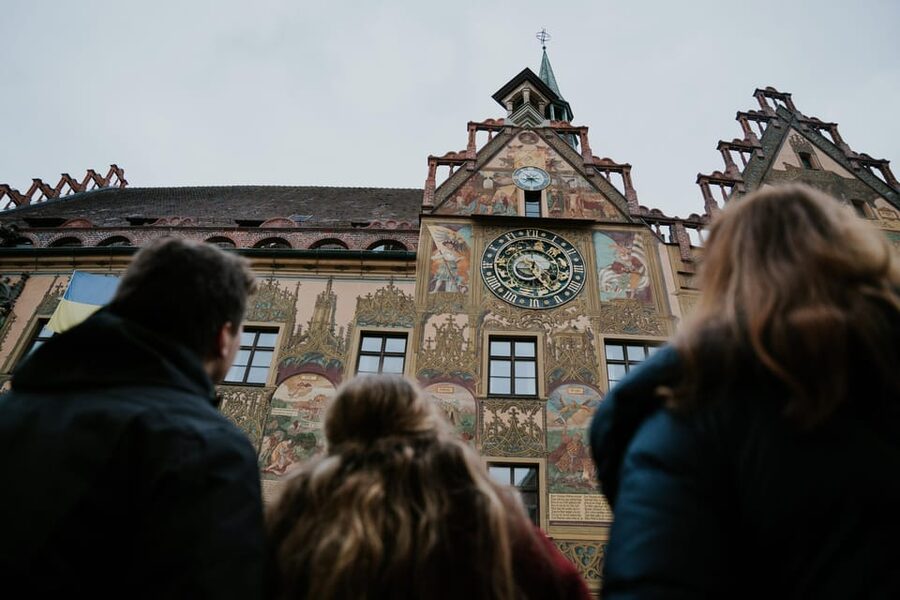
- The Town Hall rewards a close look: Its early Renaissance facade includes a large fresco cycle and an astronomical clock.
- The route reaches Ulm’s most romantic quarter: Narrow lanes, bridges, and footbridges shape the Fishermen’s and Tanners’ Quarter.
- The Crooked House is a memorable finale: The leaning hotel is listed by Guinness World Records as the world’s most leaning hotel.
- German is the tour language: Plan carefully if you need an English-speaking guide.
Ulm is at its best when you can connect its landmarks rather than view them as isolated sights. This walk does exactly that. It begins in the broad space around Ulm Minster, crosses into the central city, follows the old defenses, and finishes in the small-scale lanes of the Fishermen’s and Tanners’ Quarter.
The evening setting matters. Illuminated stone, timber, water, and narrow passages give the route a different mood from a daytime sightseeing walk. You still get useful facts, but the focus shifts toward atmosphere and the way Ulm’s old center feels after the day’s rush has eased.
At $14 per person, this is a modestly priced introduction to the city. You are paying mainly for a professional guide and a well-planned route, not for entrance tickets. Since the tour is outdoors and Ulm Minster is visited from the exterior, the price stays low while still giving you a clear orientation.
Beginning at Ulm Minster and Its Tower
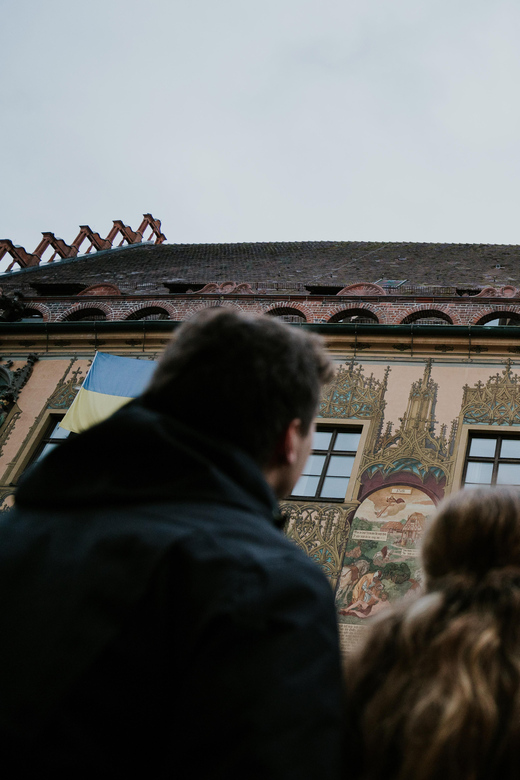
The tour starts at Minster Square, where the first subject is Ulm Minster. The church’s tower is the headline attraction: it is the highest church tower in the world.
That fact is easy to repeat and forget, so the construction background gives it more meaning. You learn how the building developed and why its tower became such a defining part of Ulm’s identity. The exterior format also keeps the opening efficient. You are not spending the first part of the walk inside a church, waiting for a group to gather or moving through a ticketed visit.
The square gives you space to look upward and take in the full scale of the building. In evening light, the minster becomes a strong visual starting point, and the tower helps you get your bearings in the city center.
This is an exterior tour, so you should not expect an interior visit or a climb up the tower as part of the experience. If entering Ulm Minster is a priority, you will need to arrange that separately. The tour’s strength is its wider view of Ulm, not a detailed examination of the church interior.
More Old Town Tours in Swabia:
- Segway Tour: Old Town Hall, Water Tower & Ehrenhof
★ 5.0 · 21 reviews - Dresden: Semperoper and Old Town Tour
★ 4.8 · 5,735 reviews - Nuremberg: Old Town Guided Walking Tour
★ 4.6 · 2,416 reviews
North of the Minster: Ulm’s New Center
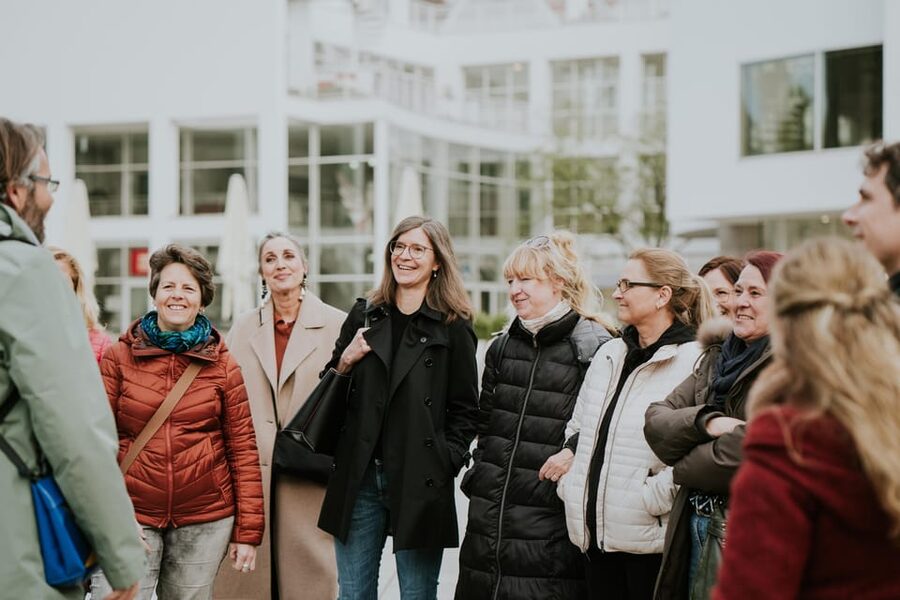
From the minster, the route moves into the neighborhood to the north and continues toward the new Ulm city center. This is where the tour’s theme of Medieval meets modern becomes clear.
Ulm has added newer buildings in the heart of the city over recent decades. The guide places these structures beside the older sights, helping you see that the center is not a preserved medieval set piece. It is a living city where modern design sits close to historic streets and monuments.
I find this part especially useful because new architecture can be easy to dismiss when you are focused on old buildings. Here, you get a reason to look at it. The contrast gives the walk more range than a standard old town circuit, and it keeps the route from becoming a string of similar timbered facades.
The exact appeal will depend on your taste. Some people come to Ulm mainly for medieval atmosphere and may prefer to reach the old quarters faster. If you enjoy architecture, town planning, and the way old and new buildings share one center, this section adds real value.
The Town Hall’s Frescoes and Astronomical Clock
The Town Hall is close by, and it is one of the most rewarding stops on the route. This early Renaissance building is known for what is probably Germany’s largest fresco cycle from the 16th century.
The exterior decoration gives you plenty to examine, especially if the guide points out details that are easy to miss from the square. The building is not simply a civic office with a pretty facade. Its paintings turn the outside walls into a large public display of art, civic pride, and period ideas.
The astronomical clock adds another layer. Its zodiac signs and moon phases reflect an older view of time, in which civic life, the heavens, and the calendar were closely linked. At night, the clock becomes part of the illuminated city scene, but you may want to look carefully while the guide explains how it works.
This stop rewards attention. If you are tired from a full day of sightseeing, it would be easy to glance at the Town Hall and move on. The guide’s explanation is what turns it into a meaningful stop rather than another attractive building.
The Leaning Butcher Tower and the Old City Wall
The walk then passes the Butcher Tower, known for its pronounced lean, and continues toward the city wall. These landmarks shift the story from civic buildings to Ulm’s defenses and working city.
The Butcher Tower is a quick visual hit. Its tilt makes it immediately memorable, and it fits the evening route well because the unusual shape is easy to appreciate at a glance. The city wall adds context, showing how the old town was protected and where Ulm’s historic edge once ran.
This portion of the walk also helps you understand the city’s layout. You are no longer simply moving between famous buildings. You are following the boundary and approaching the quarter where craftsmen, waterways, and small homes shaped daily life.
Do not expect a long military lecture or a museum-style presentation. The route uses the wall as part of the city story, then turns toward the more intimate streets ahead. That keeps the pace moving during a short tour.
A few more half-days in Swabia worth comparing
- Ulm: City Center Walking Tour with Minster Visit
★ 4.7 · 831 reviews - Sinsheim: Technik Museum Day Pass and IMAX 3D Ticket
★ 4.8 · 616 reviews - Karlsruhe: 24-Hour Hop-On Hop-Off Sightseeing Bus Ticket
★ 4.4 · 362 reviews - Heilbronn: 24h Hop-on Hop-off City Sightseeing Bus Tour
★ 4.3 · 85 reviews
Entering the Fishermen’s and Tanners’ Quarter
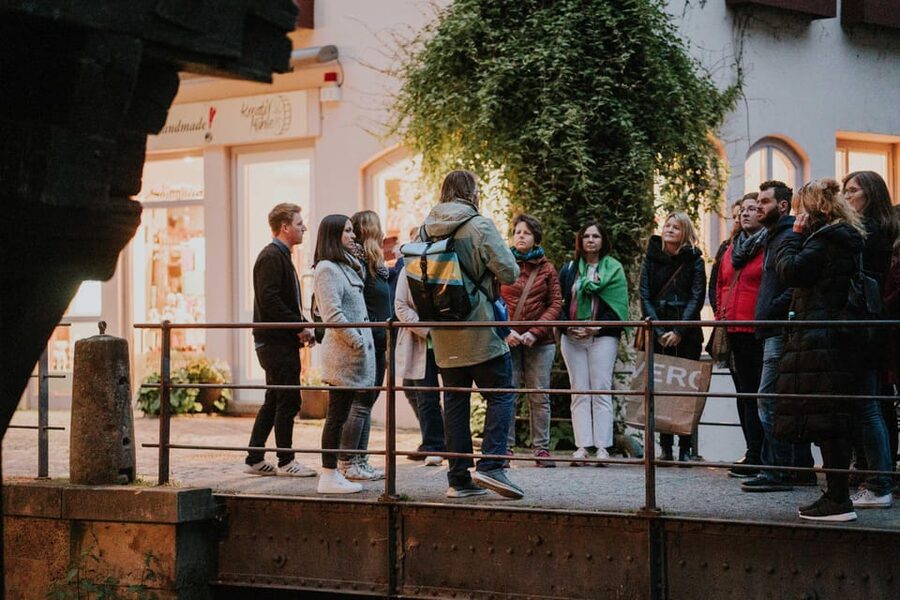
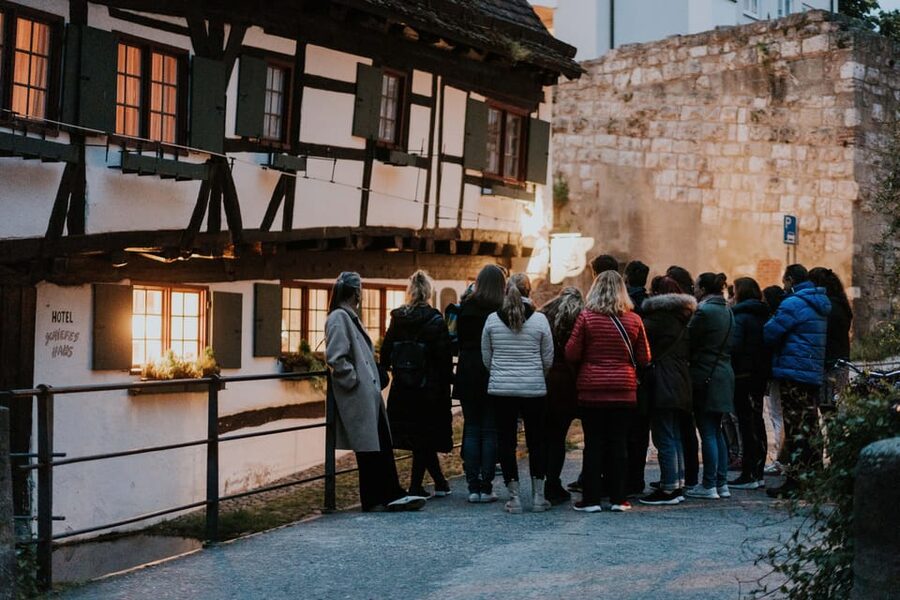
The most atmospheric section comes in the Fishermen’s and Tanners’ Quarter. Small alleyways, bridges, and footbridges create a close, irregular setting that feels very different from the open minster square.
This was once a craftsmen’s quarter and was formerly considered shabby. Today, its buildings have been carefully restored, making it one of Ulm’s most important old town ensembles. The restoration does not erase the working character of the area. The narrow routes and water crossings still suggest a neighborhood shaped by trade and craft rather than grand civic planning.
This is the point where an evening walk earns its place. Lights catch the timbered facades and bridges, and the route becomes more about atmosphere than scale. You will want to slow down, look up, and notice how tightly the buildings and passages fit together.
The quarter is also where the tour feels most distinct from a general city orientation. Ulm Minster is monumental and the Town Hall is formal. Here, the city becomes intimate. You see the kind of small details that are easy to miss if you only visit the largest sights.
The Crooked House and a Memorable Finish
The Crooked House is one of the route’s most recognizable sights. According to the Guinness Book of World Records, it is the world’s most leaning hotel.
The name tells you what to expect, but seeing the building in its tight medieval setting makes the effect stronger. Its angle looks even more striking beside the narrow lanes and nearby bridges. It is a natural place to pause for photographs, though the value of the stop is not just the record. The building captures the unusual character of the quarter as a whole.
This final part gives the tour a lighter note after the minster’s scale, the Town Hall’s formal decoration, and the city wall’s defensive history. A good guide can connect the quirky sight to the quarter’s wider story, and that is where the local anecdotes matter.
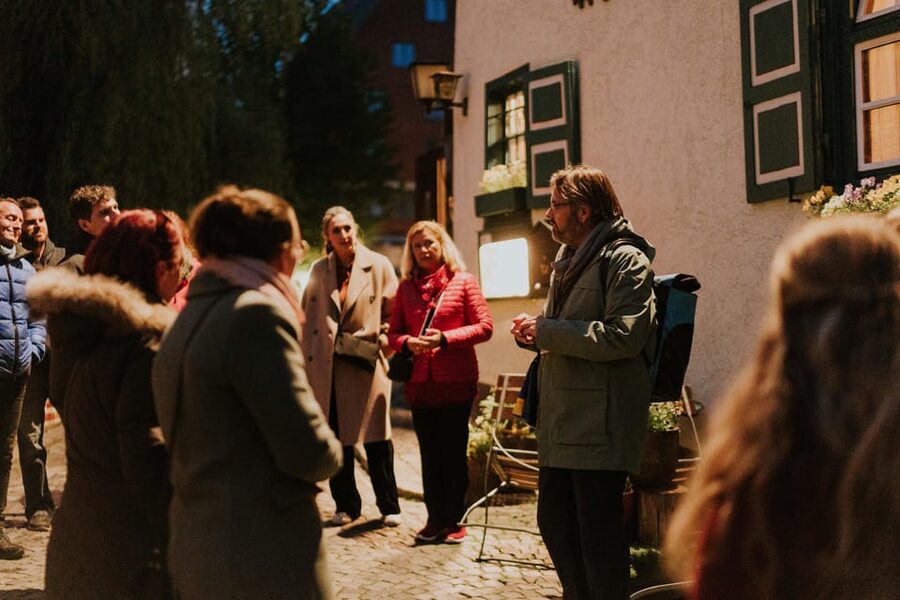
Guides such as Anne have been praised for bringing a lot of information across with humor. Another strong point is the willingness to answer questions and add stories beyond the basic route. That makes the experience feel less like a memorized speech and more like a conversation, although the exact style depends on who leads your group.
How the German Language Affects the Experience
The listed live guide language is German. This is the most important practical point before booking.
If you understand German comfortably, the language should support the tour’s strengths: background information, jokes, questions, and small details about the buildings. The reported rating of 4.7 from 41 reviews also fits the pattern of a tour that works particularly well for German speakers.
If you select English when booking but the actual tour remains in German, you may not receive the experience you expected. One booking party found that the German presentation made it difficult for some members to follow the details. That is not a minor issue on a guided walk, since the buildings are visible without a guide but the explanations are the main product.
I would book this confidently for German speakers. For English speakers, confirm the language before paying. The route is still easy to walk independently, but you would lose much of the architectural background and local storytelling if you cannot understand the guide.
Pace, Length, and Evening Timing
The 1.5-hour duration is well judged for a first look at Ulm. You cover several distinct parts of the center without committing an entire afternoon or evening. The route is long enough to make the $14 worthwhile, yet short enough to fit before dinner or another evening plan.
The walk includes open squares, city streets, a wall, narrow lanes, bridges, and footbridges. You should expect a steady urban stroll rather than a sit-down sightseeing experience. The route’s variety keeps it interesting, but the uneven feel of an old quarter may call for sensible shoes.
Starting in the evening means the lighting is part of the appeal. You see the minster, Town Hall, wall, and old quarter as connected pieces of the same city scene. The tradeoff is that evening conditions can make small architectural details harder to inspect than they would be in daylight.
Check the available starting times when booking. The supplied information does not give one fixed departure time, so the exact feel of the walk will depend on the season and the selected start.
Is $14 a Fair Price?
At $14, the tour is good value if you want orientation and interpretation in one compact outing. You get a professional guide, a route through Ulm’s main historic center, and access to stories that are difficult to pick up from signs alone.
The value is strongest for a first visit. You can use the walk to decide which places deserve a longer return visit, especially Ulm Minster, the Town Hall, and the Fishermen’s and Tanners’ Quarter. The tour also saves you from piecing together the old town’s geography on your own.
It is less useful if you have already spent several days studying Ulm’s architecture or if you prefer to wander without a fixed route. You also receive no included interior admission, so anyone seeking a church visit or museum-style experience will need additional plans.
Flexible booking improves the value for uncertain schedules. You can cancel up to 24 hours before the tour for a full refund, and the reserve-now, pay-later option lets you hold a place without paying immediately.
Who Should Book This Ulm Walk?
I would recommend it to first-time visitors who want a quick, coherent introduction to Ulm. It suits anyone interested in city architecture, historic neighborhoods, illuminated streets, and short guided walks with plenty of visual variety.
It is also a good choice for people who enjoy local stories more than a formal lecture. The best comments about the experience focus on humor, useful information, questions answered, and interesting anecdotes. That combination can make a short tour feel much more personal.
You should think twice if you need English or another language. The guide language is German, and the tour loses much of its value if you can only understand occasional phrases. In that case, an independent walk through the same sights may be more practical, though you would miss the guide’s explanations.
Should You Book the Evening Stroll?
Book this tour if you want to see Ulm’s major old town sights in a well-shaped 1.5-hour route, especially if you understand German. The strongest reasons are the evening setting, the switch from the monumental minster to the intimate Fishermen’s and Tanners’ Quarter, and the lively guiding style associated with guides such as Anne.
Skip it if your main goal is to go inside Ulm Minster, climb its tower, or take a long architectural tour. This is an exterior walk with a broad city focus. For $14, it gives you a useful first look, a few memorable buildings, and a romantic finish among Ulm’s bridges and crooked houses.
FAQ
Where does the Ulm evening stroll begin?
The tour begins at Minster Square, beside Ulm Minster.
How long does the tour last?
The tour lasts 1.5 hours.
What language is the live tour in?
The live tour guide language is German.
Is Ulm Minster visited inside?
No. The information provided describes an exterior tour of Ulm Minster and its construction.
Does the tour include the Fishermen’s and Tanners’ Quarter?
Yes. The route continues into this quarter, including its small alleyways, bridges, footbridges, restored buildings, and the Crooked House.
Is the guide included in the price?
Yes. A professional tour guide is included.
Can I cancel the booking for a refund?
You can cancel up to 24 hours in advance for a full refund.
Just added in Swabia
- Guided tasting of Cider★ 5.0 · 4 reviews
- Ulm Private Walking Tour With A Professional Guide★ 5.0 · 5 reviews
- Villingen-Schwenningen Scavenger Hunt and Sights Self-Guided Tour★ 4.5 · 3 reviews
- Premium Zone Lasertag in Göppingen★ 4.5 · 6 reviews
- Sigmaringen: Hohenzollern Castle Admission & Audio Guide★ 4.9 · 15 reviews
- Segway Tour: Old Town Hall, Water Tower & Ehrenhof★ 5.0 · 21 reviews
- Mannheim: Segway Tour along the Neckar River★ 5.0 · 15 reviews
- Segway Tour of Mannheim: Rhein, Waldpark, and Lindenhof★ 5.0 · 13 reviews
Old Town Tours, compared.


Old Town & Viktualienmarkt City Walk in German
Read our review →
The Night Watchman Old Town Walking Tour in German
Read our review →
New Old Town and Highlights German-Language Tour
Read our review →Browse the lists this tour appears in