
Reviewed · SWABIA TOURS
Public tour With Bertha Benz through the city of inventors Costume tour
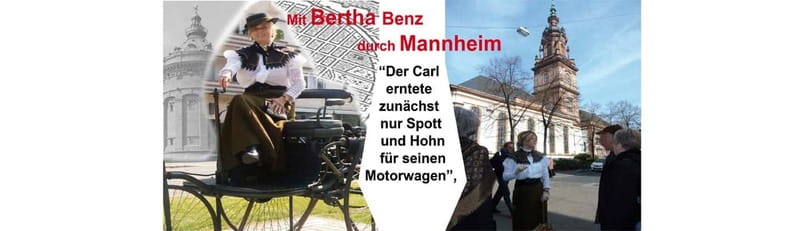
Mannheim’s car story begins with a woman who refused to let a good invention sit unused. In costume, Maria presents Bertha Benz as the bold partner who took Carl Benz’s motorcar onto the world’s first long-distance drive after people mocked it and called it the devil’s work. Automotive history gives this tour its hook, but the walk also explains why Mannheim became a city of inventors.
I like the mix of theater and city sightseeing, and I like that the tour covers about 4 kilometers rather than keeping you in one small square. The reported price of $17 is fair for two hours with a live guide. The main drawback is that the tour is in German, so you need solid German skills or a companion who can translate.
Key points to know before booking
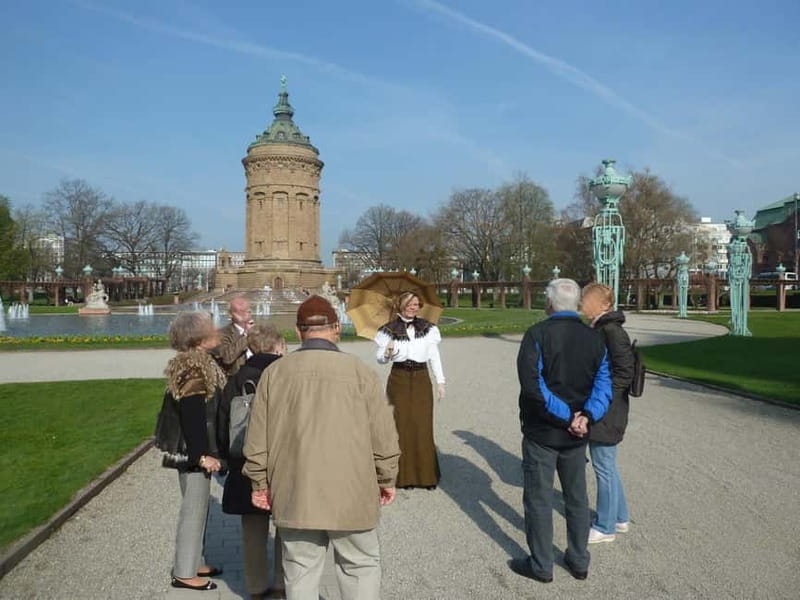
- Bertha Benz leads the story: Maria appears in costume and uses humor, audience participation, and anecdotes to bring Bertha’s role into focus.
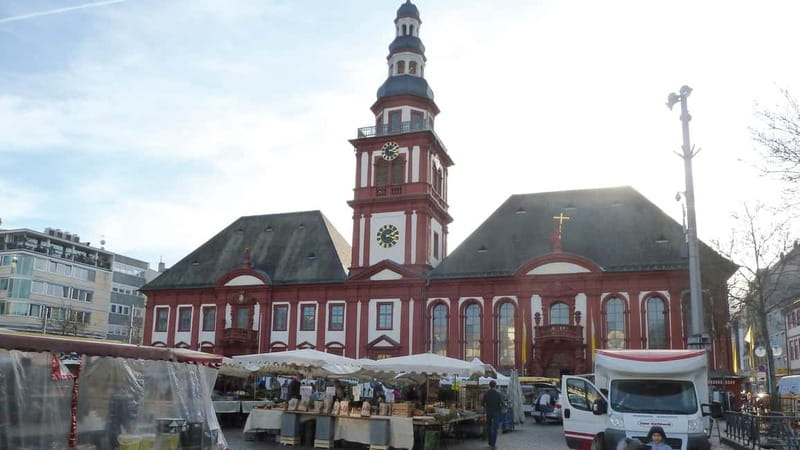
- A 4-kilometer city walk: You move from the Carl Benz memorial past the Water Tower, Planken, Marktplatz, Schillerplatz, Jesuit Church, and Mannheim Baroque Palace.
- Cars are only part of the subject: The tour also covers the wheel, tractor, music theater, industrial growth, driving licenses, milk carts, chickens, and other local inventions.
- A German-language experience: The live guide conducts the tour in German, which matters more here because the humor and character performance carry much of the appeal.
- Good for families: The playful stories and Bertha’s character make the tour more approachable for children than a standard city history walk.
- Allow two hours on foot: Comfortable shoes matter, and you should check the meeting and end point carefully because the route description finishes at the Baroque Palace while the practical details also refer to returning to the meeting point.
Why Bertha Benz is the right guide for Mannheim
The most useful idea in this tour is that the automobile did not arrive as an instant success. Carl Benz built the machine, but the public did not rush to welcome it. Bertha Benz’s famous journey helped prove that the motorcar could work beyond the workshop.
That gives the tour a human story rather than a list of technical facts. You hear about ridicule, small successes, practical problems, and the daring needed to keep going. Bertha is presented not as a footnote to Carl Benz, but as an active force in making the invention useful and visible.
Maria, playing Bertha, uses wordplay and direct engagement with the group. This is important because a costume tour can either feel lively or forced. Here, the format depends on the guide’s timing, humor, and ability to involve the audience. The available feedback points especially to Maria’s witty delivery and her habit of bringing people into the action.
You should expect history told through character rather than a formal lecture. Bertha can explain a technical point, then turn to a funny detail about chickens, a milk cart, or the practical problems of early driving. That change of pace helps younger participants stay with the story.
A few more half-days in Swabia worth comparing
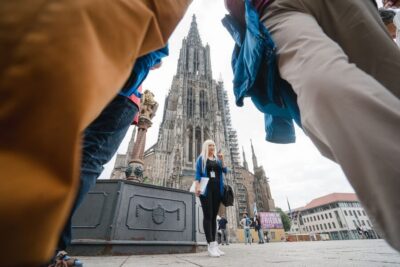
- Ulm: City Center Walking Tour with Minster Visit
★ 4.7 · 831 reviews - Sinsheim: Technik Museum Day Pass and IMAX 3D Ticket
★ 4.8 · 616 reviews - Karlsruhe: 24-Hour Hop-On Hop-Off Sightseeing Bus Ticket
★ 4.4 · 362 reviews
Starting beside the Carl Benz memorial
The walk begins at the Carl Benz memorial near the Mannheim Water Tower and Augustaanlage. This is a fitting place to start because the tour sets the automobile story against the city itself, rather than treating the car as an isolated invention.
At the opening, you can expect the guide to introduce Carl and Bertha, explain the early reception of the motorcar, and place the invention in the industrial age. The focus is not just on a famous name. The larger point is that nineteenth-century Mannheim was full of people testing new ideas and building new industries.
The starting area near the Water Tower is also practical for visitors. It gives you a clear landmark and puts you near the first major stop. Still, arrive with the meeting instructions in hand. The supplied details describe the start as the Carl Benz memorial near the Water Tower and Augustaanlage, while another note says the activity ends back at the meeting point. The listed route finishes at Mannheim Baroque Palace, so confirm the exact ending arrangement when you book.
The Water Tower and Mannheim’s city setting
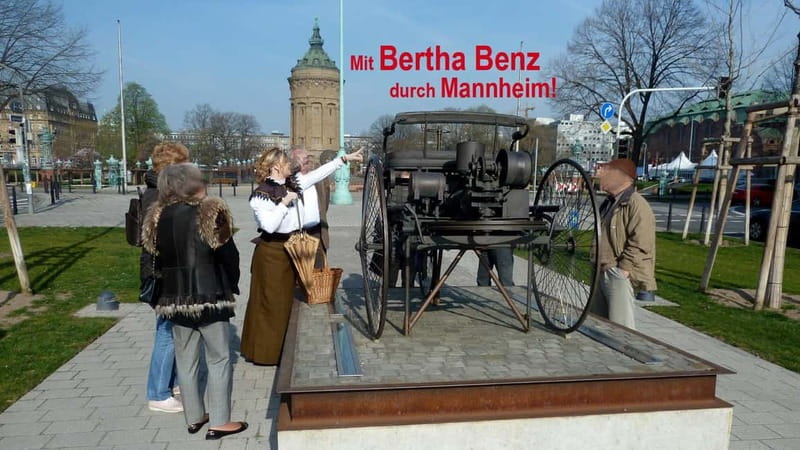
The Mannheim Water Tower is the first listed stop. Even if your main reason for booking is Carl Benz, this pause helps explain the city’s physical character and its connection with public works, engineering, and urban growth.
The Water Tower also gives the tour a strong visual marker early in the walk. You are not simply hearing about inventions in a room. You are moving through a city where architecture, transportation, manufacturing, and public life developed together.
The golden age of industrialization is a recurring subject. That phrase can sound grand, but on this walk it connects to ordinary things: how people moved around town, how goods were carried, and how an invention had to fit into daily life before anyone accepted it.
You might find this section less useful if you want only automobile facts. The tour keeps widening the story to include Mannheim’s other inventions and changing society. That is a strength for a first visit to the city, but a limitation for anyone seeking a specialist museum-style account of the Benz family.
Planken: the modern city meets the motorcar
From the Water Tower, the route continues toward Planken, Mannheim’s major central shopping street. The contrast is part of the pleasure. You hear about early engines and nineteenth-century transport while walking through a busy urban center shaped by later generations of commerce and movement.
This is where Bertha’s stories about the driver’s license, milk carts, and other practical details become especially useful. An invention is only successful when it enters everyday life. Questions about who could drive, what vehicles shared the streets, and how people transported goods help you picture the awkward early years of motoring.
The Planken section also keeps the tour from becoming a memorial-only experience. You are seeing Mannheim as a living city, with the Benz story woven into the streets rather than sealed behind glass.
Because the walk is public, the pace and group size may vary. You will be part of a shared experience rather than receiving a private talk tailored to your interests. The upside is the social energy and audience interaction. The tradeoff is less control over how long the guide spends on any one subject.
Same city, a completely different kind of day:
- Heilbronn: 24h Hop-on Hop-off City Sightseeing Bus Tour
★ 4.3 · 85 reviews - Karlsruhe: Guided City History & Culture Walking Tour
★ 4.5 · 79 reviews - Ulm: Scavenger Hunt Self-Guided Walking Tour
★ 4.6 · 71 reviews - Mannheim, guided Walking Tour: Discover Mannheim
★ 4.5 · 62 reviews
Marktplatz and the everyday side of invention
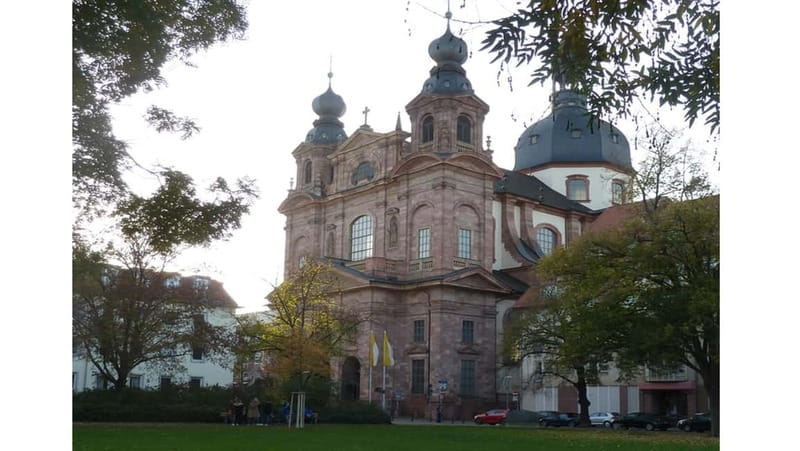
Marktplatz brings the tour into one of Mannheim’s historic civic spaces. Here, the discussion of inventions can feel grounded in ordinary life. The supplied themes include the wheel, tractors, milk carts, chickens, and other inventors, so expect the story to move beyond the motorcar.
That broader approach is one of the tour’s best features. Carl Benz did not invent in a vacuum. A city that produces new machines also needs roads, transport systems, tradespeople, customers, and people willing to take a risk on something unfamiliar.
Bertha’s voice gives these changes a practical angle. Instead of presenting progress as a smooth march forward, the tour focuses on trial, doubt, and small fixes. That can make the industrial age easier to understand, especially for children who may connect more readily with a stubborn cart, a troublesome chicken, or a machine that does not work as planned.
The route also includes a stop at Kaffee Herdegen. It is part of the walk rather than a separately described tasting or meal stop, so do not book this expecting food or a scheduled café break. Its place in the route adds another everyday Mannheim setting to a tour that moves between landmarks and streets.
Schillerplatz and the city’s cultural history
At Schillerplatz, the tour shifts from machines to culture and city history. Mannheim’s story includes figures such as Friedrich Schiller, and the tour links the city’s intellectual and artistic life with its industrial development.
This is a useful counterweight to the automobile focus. A city is not defined only by factories and inventions. The route presents Mannheim as a place of writers, music, theater, engineering, and public life. The highlights also refer to Mozart and music theater, so you can expect cultural history to sit alongside the technical story.
I appreciate this balance because it gives you more value than a narrow car tour. If you already know the basics of Carl Benz, the material about Schiller, Mannheim’s courtly past, and the city’s cultural institutions gives you another reason to pay attention.
The limitation is that the tour cannot give every topic equal space in two hours. You will get an entertaining connection between the subjects, not an in-depth study of Schiller, Mozart, or Mannheim’s theater history. Think of this as a lively introduction that points you toward places you may want to explore later.
The Jesuit Church and Mannheim’s older layers
The Jesuit Church is another important stop on the route. Its inclusion keeps the walk from being only a nineteenth-century industrial tour. You see Mannheim through several periods, from its earlier religious and courtly identity to the age of engines and factories.
The church also changes the rhythm of the walk. After streets, shopping areas, and stories of machines, a major historic building gives the group a place to consider the city’s older foundations.
The guide’s role matters here. In a conventional sightseeing tour, you might receive a standard architectural explanation. In Bertha’s costume, the building becomes part of a larger character-led story about Mannheim and its changing fortunes. You may find that approach more memorable, though it will not replace a specialist architecture tour.
The Baroque Palace finish
The route lists Mannheim Baroque Palace as the final stop. This is a strong closing point because the palace represents the city’s earlier political and cultural importance, while the Benz story represents its later industrial identity.
Ending with the palace gives the tour a broad arc. You begin with a memorial to the automobile, pass through central streets and historic spaces, and finish with the grand setting of Mannheim’s courtly past. The message is clear: the city of inventors was also a city of rulers, artists, churches, markets, and public institutions.
Pay attention to the end-point information when reserving. The route description says the walk ends at the Baroque Palace, but the meeting-point details also state that the activity ends back at the meeting point. That may reflect a return walk or a listing inconsistency. It is a small point, but it matters if you have a train, restaurant booking, or another timed visit afterward.
What the $17 price gives you
At $17 per person, this is a good-value city experience if you want both entertainment and orientation. You receive a two-hour guided walk, a costumed performer, a clear theme, and several central Mannheim landmarks.
The price is especially reasonable for families. A standard historical tour can lose children when it becomes a string of dates and names. Bertha’s troubles with the early car, the stories of chickens and milk carts, and the guide’s humor give young listeners something concrete to follow.
The value depends on your language ability. Since the live tour is in German, the cost is less attractive if you cannot understand German and have no way to translate. You would miss the jokes, audience exchanges, and much of the character work that make this format different from a normal walking tour.
The booking terms are flexible: you can cancel up to 24 hours in advance for a full refund, and you can reserve now and pay later. Those details help if your Mannheim schedule is still shifting, though the main decision remains the language and the walking distance.
Who should book this walking tour
I would recommend it to families, German-speaking couples, curious first-time visitors, and anyone who likes history delivered with personality. It also suits people who want a city walk with a clear theme but do not want to spend the whole time inside a car museum.
The tour is a good fit if you like connections. You will move from Bertha Benz to Carl Benz, from the motorcar to the wheel and tractor, and from industrial progress to Schiller, Mozart, the Jesuit Church, and the Baroque Palace.
It is less suitable if you want a private tour, an English-language explanation, or a highly technical account of automotive engineering. It is also not the best pick if you dislike walking. The route covers about 4 kilometers in two hours, so comfortable shoes and a reasonable walking pace will make the experience easier.
Should you book With Bertha Benz through Mannheim?
Book this tour if you want a lively introduction to Mannheim built around a remarkable woman and a major invention. Maria’s Bertha is presented with humor, audience involvement, and enough city history to make the walk useful beyond the car story.
I would choose it over a standard city tour if you are traveling with children or enjoy historical characters. I would skip it only if German is a serious barrier, if you need a fully private experience, or if you want detailed engineering rather than storytelling.
Before paying, confirm the exact meeting and end point. If those details work for your schedule, $17 for two hours and roughly 4 kilometers is a sensible price for a memorable look at Mannheim’s inventive side.
FAQ
Where does the tour begin?
The tour begins at the Carl Benz memorial near the Mannheim Water Tower and Augustaanlage.
Where does the tour end?
The route description lists Mannheim Baroque Palace as the final stop. The practical meeting-point information also says the activity ends back at the meeting point, so confirm the exact arrangement when booking.
How long does the tour last?
The tour lasts two hours.
How far does the walking route cover?
The route covers about 4 kilometers through Mannheim.
What language is the tour in?
The live guided tour is in German.
Who leads the tour?
Maria leads the experience while appearing as Bertha Benz in costume.
Is the tour private?
No. It is a public city tour.
What places does the route visit?
The route includes the Carl Benz memorial, Mannheim Water Tower, Planken, Marktplatz, Schillerplatz, Jesuit Church, and Mannheim Baroque Palace.
Is the tour only about Carl Benz and automobiles?
No. It also covers Bertha Benz, the wheel, tractors, music theater, Mannheim’s industrial age, Schiller, Mozart, the driver’s license, milk carts, chickens, and other inventors.
What is the cancellation policy?
You can cancel up to 24 hours in advance for a full refund. You can also reserve now and pay later.
Just added in Swabia
- Guided tasting of Cider★ 5.0 · 4 reviews
- Ulm Private Walking Tour With A Professional Guide★ 5.0 · 5 reviews
- Villingen-Schwenningen Scavenger Hunt and Sights Self-Guided Tour★ 4.5 · 3 reviews
- Premium Zone Lasertag in Göppingen★ 4.5 · 6 reviews
- Sigmaringen: Hohenzollern Castle Admission & Audio Guide★ 4.9 · 15 reviews
- Segway Tour: Old Town Hall, Water Tower & Ehrenhof★ 5.0 · 21 reviews
- Mannheim: Segway Tour along the Neckar River★ 5.0 · 15 reviews
- Segway Tour of Mannheim: Rhein, Waldpark, and Lindenhof★ 5.0 · 13 reviews
Swabia Tours, compared.
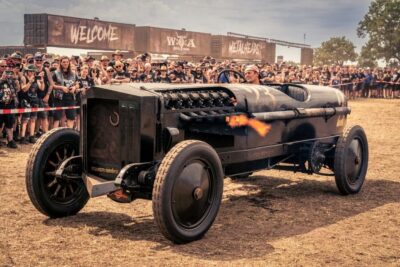
Sinsheim: Technik Museum Day Pass and IMAX 3D Ticket
Read our review →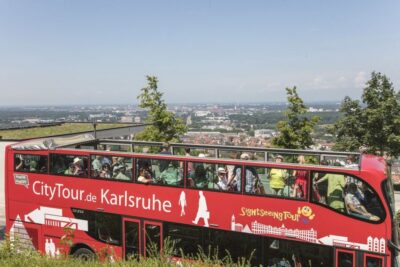
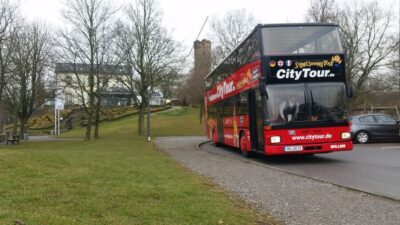
Heilbronn: 24h Hop-on Hop-off City Sightseeing Bus Tour
Read our review →
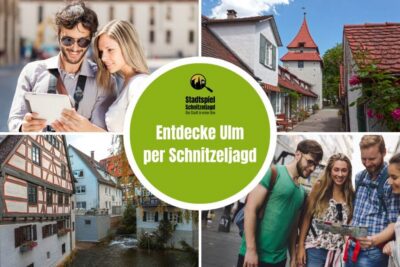
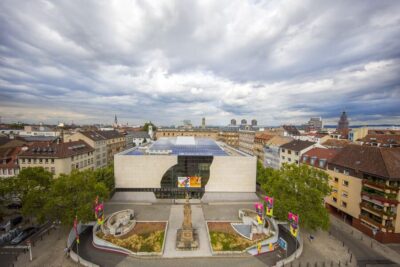
Mannheim, guided Walking Tour: Discover Mannheim
Read our review →
Browse the lists this tour appears in