
Reviewed · LEIPZIG TOURS
Leipzig: Courtyards, Houses, Trade – Passage Tour in German
Leipzig’s passages and courtyards are more than covered shopping lanes. They are the city’s old trade network, built so merchants, horses, and goods could move through the center with less fuss. This two-hour walk shows how commerce shaped Leipzig’s architecture, from grand Mädler Passage to smaller corridors you might otherwise walk past.
I like the tour’s tight focus on Leipzig’s trade history, and I like that it mixes famous sights with less-used passageways. At $18, it offers a useful way to understand the city center without paying separate entrance fees. The main drawback is clear: the tour is offered only in German, so you need solid listening skills to get the full story.
Key points at a glance
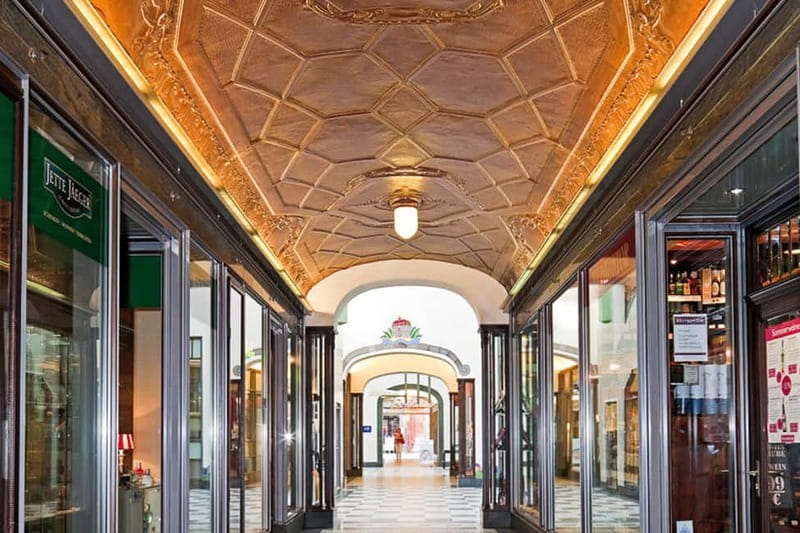
- Mädler Passage: See Leipzig’s most celebrated passage, known for its impressive architecture and special place in the city’s story.
- Trade shaped the streets: Learn why Leipzig’s old fair system produced courtyards and passages that worked like early shopping centers.
- A two-hour walking route: The compact format fits neatly into a morning or afternoon in central Leipzig.
- Big and small corridors: The route includes grand, familiar spaces as well as older or less-used passageways.
- German-language guiding: You receive the full tour from a live guide in German only.
- Simple meeting point: Start and finish at the Tourist Information office at Katharinenstrasse 8.
Why Leipzig’s passages are worth your time
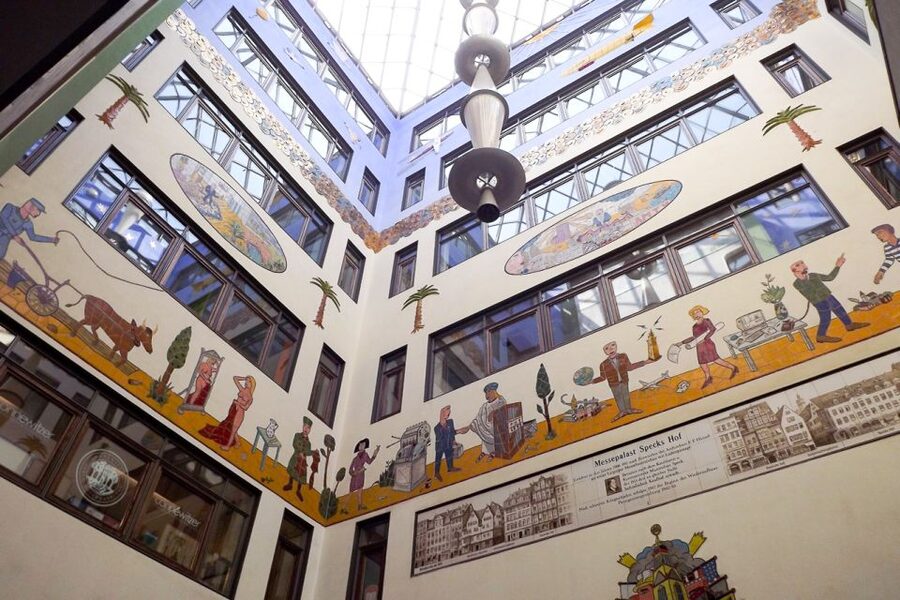
Leipzig developed an unusual network of connected courtyards, covered walkways, and exhibition houses. These spaces were shaped by the Leipziger Messe, the city’s long-running trade fair tradition. Merchants needed room to display goods, receive buyers, move carts, and connect one street with another.
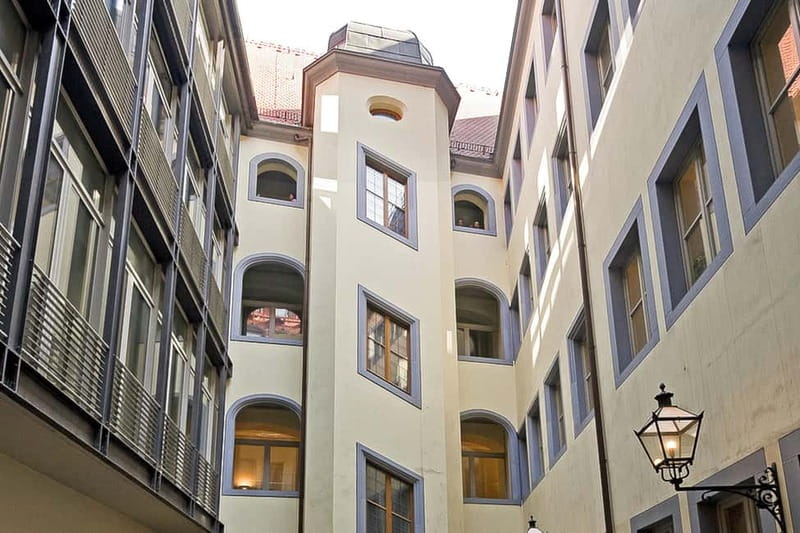
That practical need gave Leipzig a city center with a special character. Instead of keeping commerce inside one large market hall, the city worked trade into its existing blocks. A passage could link two streets. A courtyard could receive a horse-drawn carriage. An exhibition house could bring sellers and buyers together under one roof.
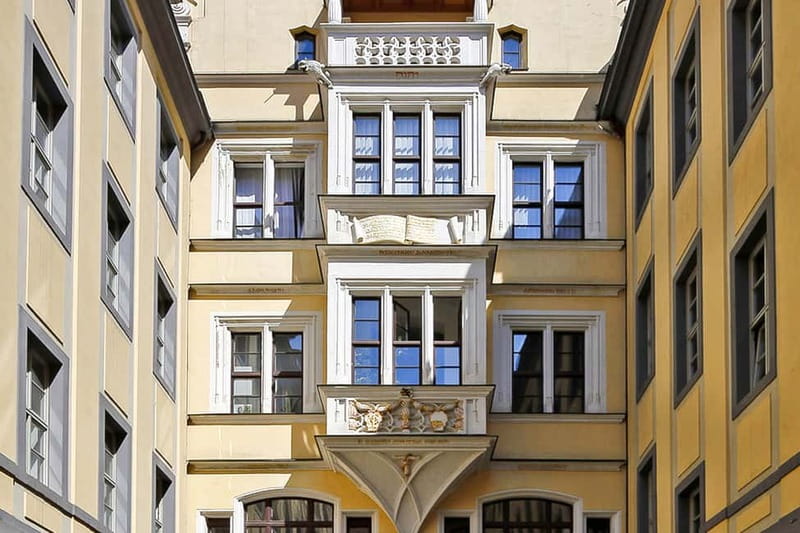
The result is easy to miss if you only follow the main shopping streets. You may see a narrow opening between buildings and assume it leads to a store or office. Inside, it can reveal a courtyard, a glass-roofed walkway, or a carefully restored architectural space.
I like this kind of city tour because it explains what you are seeing at street level. You are not simply looking at decorative facades. You are learning why the buildings were arranged that way and how Leipzig’s commercial life shaped them.
The route also gives you a useful introduction to Leipzig as an old trading town. The tour connects architecture with daily movement: horses entering courtyards, merchants displaying goods, and shoppers passing through spaces that once served business before they served leisure.
A few more half-days in Leipzig worth comparing
- Leipzig: City History Canal Sightseeing Tour on a Motorboat
★ 4.7 · 6,232 reviews - Leipzig: 1.5-Hour Public Tour with Night Watchman Bremme
★ 4.6 · 3,116 reviews - Combo Tour in Leipzig: Guided City Tour & City Sightseeing
★ 4.7 · 2,317 reviews
Starting at Katharinenstrasse 8
The tour begins at the Tourist Information office at Katharinenstrasse 8 and returns there after two hours. That makes planning easy, especially if you are using the walk as an introduction to Leipzig’s center.
You can arrive, get oriented, and then follow the guide into the nearby network of passages and courtyards. Since the route begins and ends in the same place, you do not need to arrange transport back from a distant neighborhood.
The meeting point also gives the tour a practical advantage. If you are new to Leipzig, the Tourist Information office is a sensible place to begin exploring. You can continue sightseeing afterward without needing to retrace a complicated route.
The activity information does not provide individual guide names. You should expect a trained, live German-speaking guide rather than an audio tour or self-guided booklet. That matters here because the meaning of the passages is not always obvious from the architecture alone.
Mädler Passage, Leipzig’s grand showcase

Mädler Passage is the star stop. It is described as Leipzig’s most splendid passage, and its importance comes from both its appearance and its story.
You can expect an elegant, carefully designed space rather than a simple shortcut between streets. The architecture gives the passage a formal feel, while its location connects it with Leipzig’s long role as a center of trade and public life.
A guide can point out why Mädler Passage matters within the larger system. It is not just a place to admire polished floors, shop windows, and decorative details. It represents the way exhibition houses and commercial buildings turned movement through the city into part of the shopping experience.
This is also where the tour’s mix of past and present becomes most clear. Mädler Passage remains a functioning urban space. You can enjoy its architectural details while people continue to use it for shopping, walking, and meeting friends.
Do not expect a long stop devoted only to one building. The tour is designed to connect Mädler Passage with other courtyards and corridors. If you want an exhaustive architectural survey of every detail, two hours will feel short. If you want a clear sense of why this passage is important, the timing works well.
From exhibition houses to early shopping centers
One of the most useful ideas on the tour is that Leipzig’s courtyards worked like early shopping centers. That comparison makes the city’s layout easier to understand.
The exhibition houses gathered commercial activity inside central buildings. Merchants could present goods to buyers, while courtyards allowed carriages to enter and move through the blocks. In a small town with narrow streets, being able to drive through without turning around was a real advantage.
This was not shopping-center design in the modern sense. There were no large parking areas or food courts. The basic idea was still similar: bring many commercial activities together in an organized space and make movement between them easy.
The tour explains how these exhibition houses led to the passages you see today. In other words, the passages were not added simply to make the city prettier. They grew from the needs of trade.
That practical background gives the architecture more weight. A courtyard may look decorative now, but it once solved a clear problem. A covered corridor may feel like a pleasant walkway, but it also connected merchants, goods, buyers, and streets.
I find this one of the strongest parts of the experience. You leave with a better way to read Leipzig’s center. Instead of seeing a collection of attractive buildings, you see a working system shaped by commerce.
Same city, a completely different kind of day:
- Leipzig: 1.5-Hour Historical Walking Tour in German
★ 4.7 · 2,217 reviews - Leipzig: 2-Hour Guided Walking Tour in German
★ 4.8 · 1,612 reviews - Leipzig: 13-Stop Hop-on/Hop-off Bus Ticket
★ 4.6 · 1,468 reviews - Gruseltour Leipzig: A Haunted Guided Tour
★ 4.5 · 1,385 reviews
Large, small, old, and less-used corridors
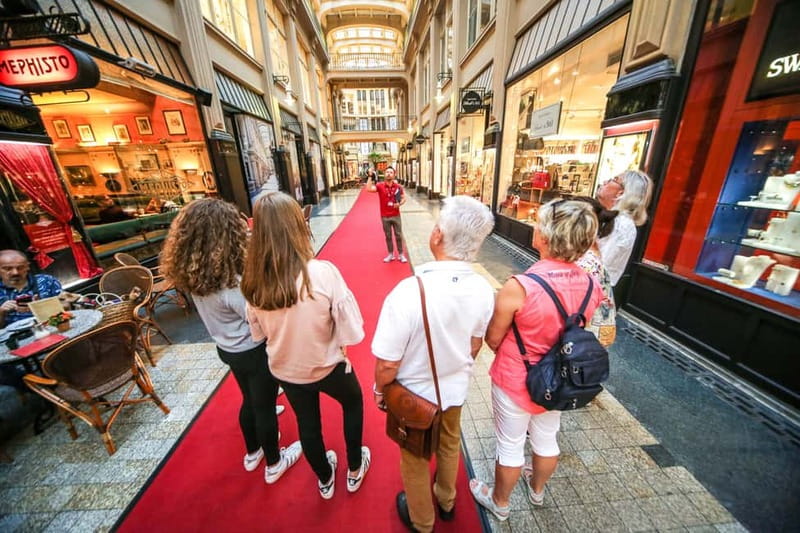
The route is not limited to Leipzig’s best-known passage. You will see a mix of large and small spaces, older and newer examples, and corridors that are visible from the main streets as well as those used less often.
That variety keeps the walk from becoming a single-building visit. The grand passages provide the visual highlights, while the smaller spaces show how broad the system really is.
Some corridors may feel more polished and public. Others may be quieter or less obvious. Their value lies in comparison. You can see how Leipzig adapted passage design to different buildings, different periods, and different commercial needs.
The supplied information does not name every passage on the route, so you should not book this expecting a fixed checklist of famous sites beyond Mädler Passage. The exact selection may depend on the guide, access, and the route used that day.
That flexibility can be useful. It allows the guide to show you more than the standard postcard view of Leipzig. At the same time, it means you should think of the tour as an overview of the passage system rather than a detailed visit to every major building.
Architectural variety without museum admission
The tour has no separate entrance fees included or required according to the activity details. You are exploring the public passage and courtyard spaces as part of a guided walk.
That keeps the $18 price straightforward. You are paying for the two-hour explanation and route, not for a bundle of tickets you may or may not use. Personal expenses, food, and drinks are not included, but the experience itself is simple to budget.
The value depends on how much context you want. If you are happy to wander Leipzig’s shopping streets alone, you can see some of the passages without paying. You may not understand how they relate to the Leipziger Messe, why courtyards were built for carriages, or how exhibition houses changed the city center.
For me, that makes the tour most worthwhile early in a Leipzig visit. Once you understand the passage system, you can return later and explore at your own pace. The tour gives you the framework; your later walks supply the extra time for photographs, shopping, or a closer look at individual facades.
Because food and drinks are not part of the experience, plan a café stop before or after if you want a break. The activity lasts two hours, so it is long enough to feel substantial but short enough to fit beside other city sights.
What two hours feels like on foot
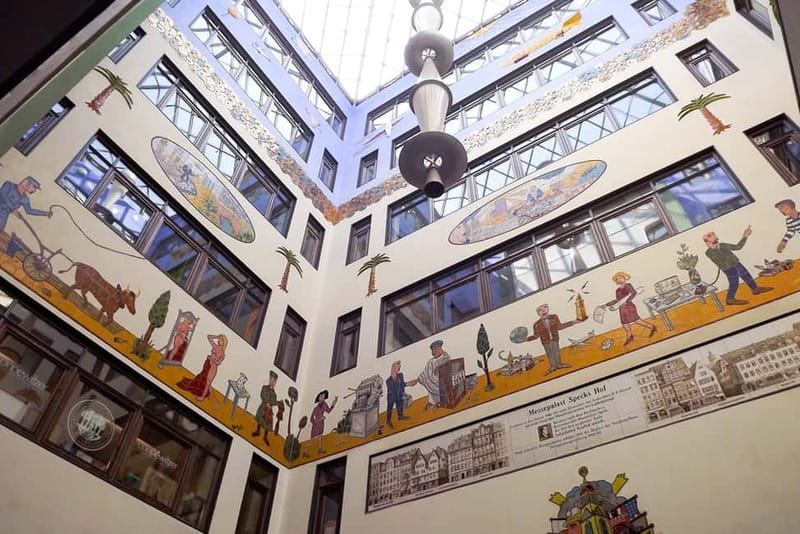
Two hours is a good length for this subject. A shorter walk might show you one or two attractive passages without explaining the wider system. A much longer tour could become repetitive, especially if you are mainly interested in architecture rather than commercial history.
You will spend the time walking between spaces and pausing for explanations. The activity details do not give a precise route order, distance, group size, or pace, so you should allow the full two hours and wear shoes suitable for city walking.
The tour ends back at Katharinenstrasse 8. That return point helps if you have a later reservation or want to continue around central Leipzig. It also means you can plan the experience without worrying about finding your way back from an unfamiliar district.
Since the route includes public passages, courtyards, and exhibition houses, the character of each stop may vary. Some areas will feel open and showy. Others may be tighter, quieter, or less obvious from the street.
The guide’s role is especially important in these spaces. A self-guided walk can show you where to go, but a live guide can connect each courtyard to the larger story of trade and urban design. The experience is therefore strongest for people who want explanation, not just photographs.
The German-only question
This tour is available only in German. That is the most important practical point before booking.
If you understand conversational German, you should be able to follow the tour more easily than you would a technical architecture lecture, but the exact level of language used will depend on the guide. The activity is built around spoken explanation, so simply recognizing written signs will not be enough.
If you do not speak German, the architecture may still be enjoyable, but you would miss much of the reason for taking this particular tour. Leipzig’s passages are accessible without a guide. The added value comes from the stories about trade, exhibition houses, and the city’s unusual layout.
I would choose this tour for a German-speaking visitor who wants local context and a focused city walk. If you need an English tour, this is not the right booking, even though the route itself could still be interesting to explore independently.
Who gets the most from this experience
This tour suits you best if you like architecture, city planning, commercial history, or the small details that explain how a city works. It is also a good choice if you want an activity that stays in central Leipzig and takes only two hours.
You will get more from it if you look beyond the shopping. Notice how the passages connect streets. Look at the relationship between public corridors and private buildings. Think about why a carriage needed to pass through a courtyard and how that practical need shaped the buildings you see today.
Families and mixed-interest groups may find the compact length helpful, but the German-only format remains the deciding factor. Anyone hoping for a food-focused visit, shopping excursion, or museum tour should choose something else.
The 4.8 rating from 185 reviews points to strong satisfaction overall. The most useful caution comes from the comment that the tour is informative and interesting but could have included even more about the passages. That tells you what the experience does well and where it may leave you wanting more: it gives a solid introduction, not an exhaustive study.
Booking value and final advice
At $18 per person, this is a fair price for a trained guide and two hours of focused sightseeing. You are not paying for meals, transport, or admissions, so the cost is easy to understand. The real question is whether the history and explanation matter to you.
Book it if you want to understand why Leipzig’s center looks the way it does. Mädler Passage alone is attractive, but the broader story of courtyards, exhibition houses, and trade makes the walk much more useful than a quick look at a shopping arcade.
Skip it if you do not understand German or if you prefer to explore at your own pace without a set route. Also skip it if you want a full architectural inventory, since the two-hour format is an overview and the route details beyond Mädler Passage are not fixed in the information provided.
For the right visitor, I would book this early in a Leipzig stay. It gives you a practical key to the city center, and you can use that knowledge when you return to the passages on your own.
FAQ
Where does the Leipzig passage tour begin?
The tour begins at the Tourist Information office at Katharinenstrasse 8 in Leipzig.
Where does the tour end?
The activity ends back at the Tourist Information office, the same place where it starts.
How long does the tour last?
The tour lasts two hours. Starting times depend on availability.
What language is the tour offered in?
The tour is offered only in German with a live German-speaking guide.
What will I see on the tour?
You will visit Leipzig’s passages, courtyards, and exhibition houses, including Mädler Passage. The route includes large and small, old and new, visible and less-used corridors.
Are entrance fees included?
The tour includes a trained guide, but personal expenses, food, drinks, and any entrance fees are not included.
How much does the tour cost?
The listed price is $18 per person.
Just added in Leipzig
- City tour on foot, by S-Bahn and tram★ 4.5 · 12 reviews
- Schkeuditz: 4-Hour Vintage East German Trabant Rental★ 4.9 · 15 reviews
- Leipzig City Centre: Scavenger Hunt Self-Guided Tour★ 4.4 · 114 reviews
- Tour on Lake Cospuden★ 4.7 · 58 reviews
- Leipzig: True or false? Walking Tour and Interactive Game★ 4.8 · 28 reviews
- Leipzig: “SoKO Leipzig”, unique Escape Room, 60 minutes★ 4.6 · 20 reviews
- Leipzig Spirits Manufacture: Guided Tour and Tasting★ 4.8 · 79 reviews
- Leipzig: Scavenger Hunt Self-Guided Tour★ 4.7 · 11 reviews
Leipzig Tours, compared.
City History Canal Sightseeing Tour on a Motorboat
Read our review →


Browse the lists this tour appears in