
Reviewed · HAMBURG TOURS
Hamburg: Private – Town Hall, Speicherstadt, Elbphilharmonie
Hamburg’s story unfolds in a compact walk from a grand neo-Renaissance city hall to the futuristic Elbphilharmonie. In two hours, you move through medieval trade, wartime destruction, 19th-century commerce, and modern waterfront planning without spending half your day on a bus.
I like the private format, especially for a group that wants to ask questions or set its own pace. I also like the route’s sharp contrasts: old merchant houses on Deichstrasse, red-brick Speicherstadt warehouses, and the glassy concert hall at the harbor. The main consideration is time. Two hours is enough for an excellent introduction, but not enough for long interior visits or a relaxed stop at every sight.
Jutta is one of the guides named in the feedback, and her English tours are described as humorous, flexible, and easy to follow. She also uses historical photographs to show how Hamburg changed, which adds useful context to buildings that can otherwise look like attractive backdrops. One practical point: the tour ends at the Elbphilharmonie, so you will need to arrange your own way to the meeting point at Hamburg Town Hall.
Key points to know before booking
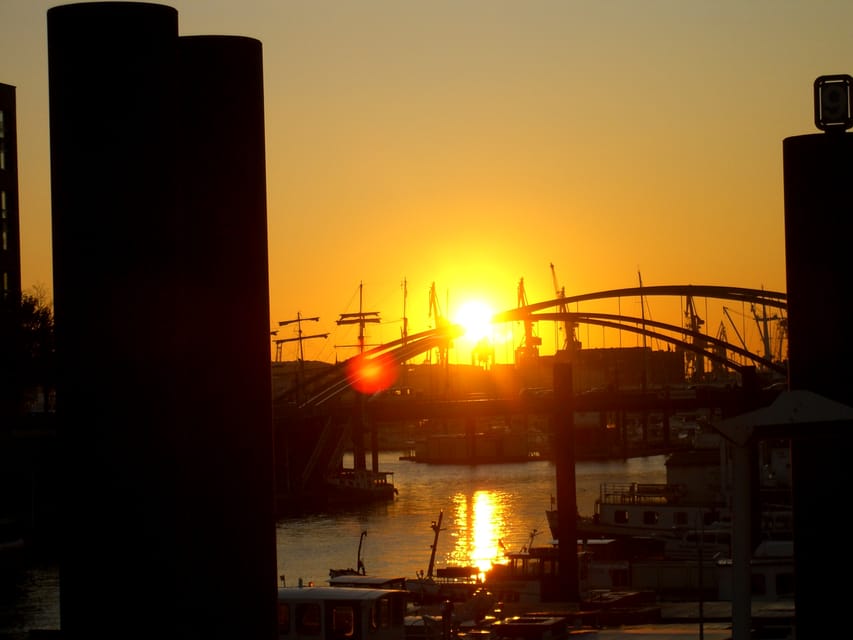
- A city in fast-forward: Cover Hamburg’s Town Hall, the Chamber of Commerce, St. Nikolai Memorial, Deichstrasse, Speicherstadt, HafenCity, and the Elbphilharmonie in two hours.
- A genuinely private walk: Your group can include up to 15 people, with a guide focused on your party rather than a large mixed crowd.
- History with strong visual contrasts: See a ruined wartime church, protected 17th-century homes, UNESCO-listed warehouses, and a 21st-century concert hall.
- Jutta is a particularly praised guide: Her tours are known for humor, flexibility, clear English, and old photographs showing Hamburg’s transformation.
- Good value for a group: At $294 per group of up to 15, the price makes more sense when shared by several people.
- Plan for an outdoor walking tour: Transportation to the starting point is not included, and the tour finishes at the Elbphilharmonie.
Starting beneath Hamburg’s ornate Town Hall
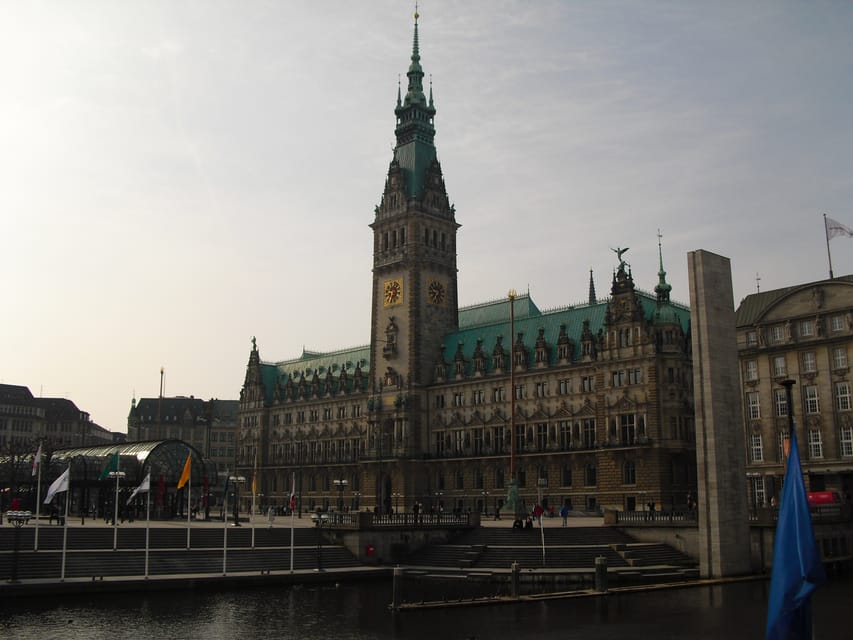
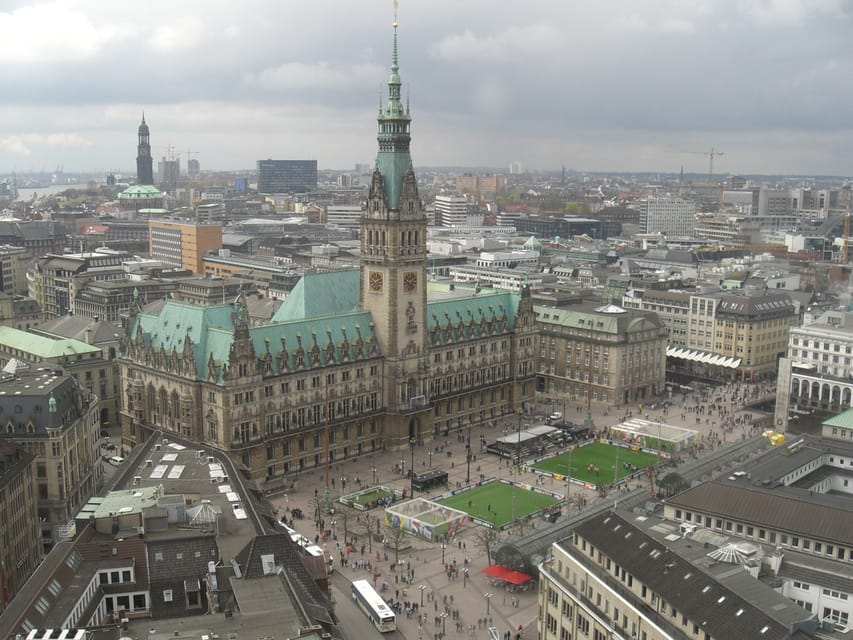
The tour begins at Hamburg Town Hall, or Rathaus, one of the city’s grandest buildings. Its neo-Renaissance design reflects Hamburg’s wealth and confidence during the 19th century, when the port city had become a major commercial power.
You begin with a guided visit and photo stop lasting about 15 minutes. The building is not just a handsome facade. Inside, the grand entrance hall and civic details help explain how Hamburg’s government works and how the city’s merchants shaped public life.
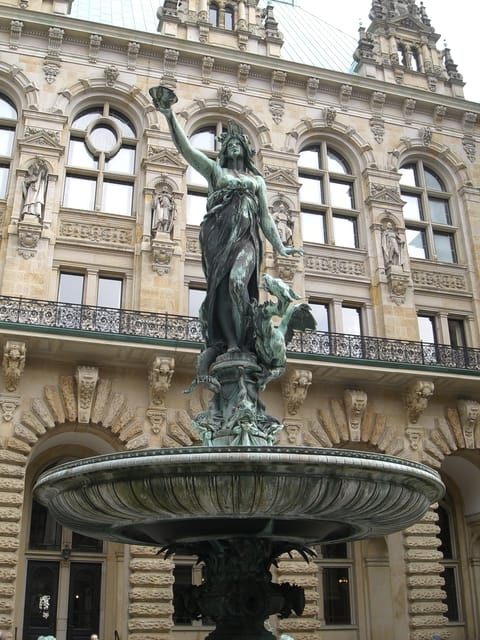
One detail worth watching for is a fountain decorated with mystic figures. Your guide can connect those statues with local stories and customs, giving the first part of the walk a little more personality than a simple architectural commentary.
The Town Hall is a strong meeting point because it gives you immediate bearings. You are in central Hamburg, close to the old commercial district and the canals that once served as the city’s working arteries. If this is your first visit, the location helps you understand how close the key sights are to one another.
The short visit also sets the tour’s pace. You are not settling into a long indoor museum visit. Instead, you are getting a brisk introduction before moving into the streets.
A few more half-days in Hamburg worth comparing
- Hamburg: Sex and Crime in St. Pauli Tour for Ages 18+
★ 4.7 · 15,447 reviews - Hamburg: 1.5-Hour Harbor and Speicherstadt Day Cruise
★ 4.6 · 14,200 reviews - Hamburg: 90-Minute Evening Lights Harbor Cruise
★ 4.5 · 7,728 reviews
From the former stock market to Trostbrücke
Across from the Town Hall is the historic building now used by Hamburg’s Chamber of Commerce. It was formerly associated with the city’s stock market, so this stop adds an important commercial layer to the tour.
Hamburg grew through shipping, trade, finance, and its links to the North Sea. Seeing the civic center and commercial center together makes that connection clear. Government and business were never far apart here, and your guide can explain how trade shaped the city’s buildings and public institutions.
The visit lasts about 10 minutes, followed by a short stop at Trostbrücke. The bridge provides a useful transition from the formal center to the older waterways. This is not a major sightseeing stop on its own, but it helps you follow the route toward Nicolaifleet and the remains of Hamburg’s early port.
The walking distances are short, which is one of the route’s strengths. You spend your time looking and listening rather than waiting for transport. Still, anyone expecting extensive interior access should keep expectations modest. The schedule allows for guided visits and photographs, not detailed tours of each building.
St. Nikolai Memorial and Hamburg’s wartime scars
The St. Nikolai Memorial is one of the most serious stops on the route. The church was destroyed during World War II, and its surviving ruin now serves as a memorial to the destruction suffered by Hamburg and other cities in Western Europe.
You have around 10 minutes here. That is enough to pause, take photographs, and hear the essential story, though the subject deserves respectful attention rather than a rushed snapshot.
This stop gives the tour emotional weight. Town Hall and the Chamber of Commerce show Hamburg at the height of its prosperity. St. Nikolai shows how quickly a city can be damaged by war. The contrast helps you read the streets around you with more care.
The route near Nicolaifleet also points back to Hamburg’s earlier port, dating to the 12th century. The name refers to a waterway that once carried goods and boats into the heart of the city. Today, the old port landscape is much quieter, but the canal helps you picture Hamburg before its modern harbor expanded along the Elbe.
If you prefer tours that focus only on beautiful buildings, this stop may feel heavier. I consider that a strength. A city tour should make room for difficult events, and the guide’s photographs can help you see what has changed.
Deichstrasse and the surviving merchant houses
Deichstrasse offers one of the route’s most appealing old-city scenes. Protected merchant houses from the 17th century line the street, giving you a sense of Hamburg before the modern waterfront and broad commercial districts took shape.
These homes survived the destruction that affected much of the city during World War II. Their narrow fronts and historic forms provide a rare look at Hamburg’s domestic and business life in earlier centuries.
A floating bridge offers a view toward Nicolaifleet, although the waterway may be less visible at low tide. That small qualification matters if you are hoping for a classic canal photograph. The view depends on the conditions, so treat it as a pleasant possibility rather than a guaranteed highlight.
Deichstrasse also gives you more freedom than some of the earlier stops. You might find places for a meal, ice cream, or whiskey tasting along the street. The tour itself does not include food or drinks, and the two-hour schedule is not designed around a tasting, but the information is useful if you want to return later.
I like this section because it connects architecture with ordinary life. You are not only looking at official buildings. You are seeing where merchants lived, worked, and moved goods through a port city that depended on water.
Same city, a completely different kind of day:
- Hamburg: 2-Hour XXL Port of Hamburg Cruise Tour
★ 4.7 · 6,979 reviews - Hamburg: Line A Sightseeing Hop-On Hop-Off Bus Tour
★ 4.6 · 6,958 reviews - Hamburg: Elbphilharmonie Plaza Guided Tour
★ 4.7 · 5,882 reviews - Hamburg: Hamburg Dungeon Admission Ticket
★ 4.7 · 5,745 reviews
Speicherstadt’s red-brick warehouse district
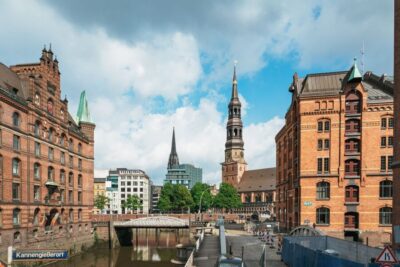
From Deichstrasse, the route moves into Speicherstadt, Hamburg’s famous warehouse district and a UNESCO World Heritage site. The large red-brick buildings were built for storage, with goods arriving by flat-bottomed boats and moving through the canals.
This is one of the clearest examples of Hamburg’s commercial identity. The warehouses are beautiful, but their original purpose was practical. They held imported goods before those goods moved into the city and beyond.
The scheduled guided stop lasts about 10 minutes. That will give you a solid introduction and time for photographs, but it will not cover every canal, bridge, or warehouse. If Speicherstadt is your main reason for visiting Hamburg, you may want to return on your own after the tour.
The route may include a coffee roastery in the warehouse district. The wording allows for some variation, so do not book expecting a guaranteed tasting or extended indoor visit. The useful part is the link between coffee and Hamburg’s trading past. Coffee was one of the goods handled through this commercial port, and a roastery makes that connection feel immediate.
Speicherstadt is also a good place to notice the difference between function and appearance. The brick facades, towers, gables, and canals look carefully designed, yet the district was built to make storage and shipping work efficiently.
HafenCity and the city Hamburg is building now
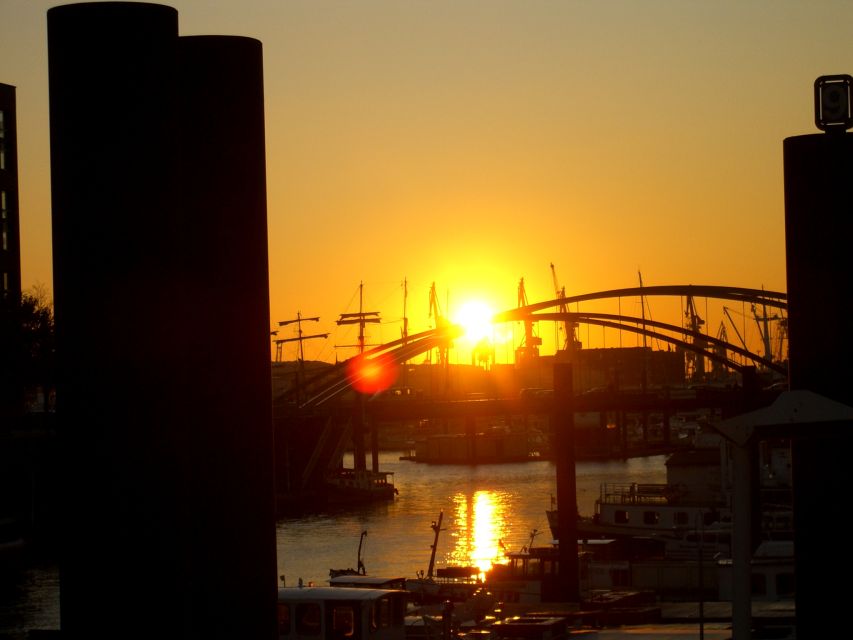
After the old warehouse district, the tour shifts into HafenCity. This is where Hamburg’s modern city planning comes into view.
The area represents a major redevelopment of former port land. The tour uses it to show how the city is adding housing, public areas, commercial space, and cultural buildings beside historic Speicherstadt. You are not simply walking from old buildings to new buildings. You are seeing two different ideas of a working waterfront placed side by side.
The planned stop lasts about 10 minutes. Your guide can explain the choices behind the district and point out how new construction relates to the old warehouses. This makes HafenCity more useful than a quick walk among modern facades. You begin to see it as a long-term urban project.
That said, modern architecture is personal. Some people will enjoy the clean lines and ambitious planning, while others may prefer the older streets. The value of this part depends on your interest in how cities change. For me, it keeps the tour from becoming a history lesson frozen in the past.
Ending at the Elbphilharmonie
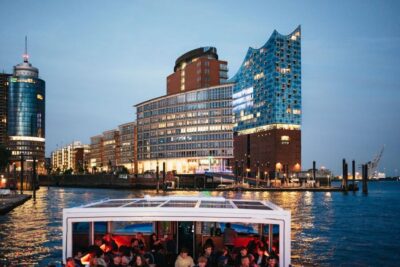
The final stop is the Elbphilharmonie, Hamburg’s celebrated concert hall, completed and opened in 2017. Its striking architecture gives the walk a strong finish, especially after the older brick buildings and wartime memorial.
The guided visit and photo stop lasts about 15 minutes. You will learn about the building and have time to take in its shape, position, and relationship to the harbor. The tour does not promise a concert, a full performance visit, or an extended interior tour, so book this as an architectural stop rather than a music event.
The Elbphilharmonie works well at the end because it represents Hamburg’s present-day ambitions. The route has moved from the medieval port to merchant houses, industrial warehouses, and a modern cultural landmark. You can see how the city keeps rebuilding itself while retaining reminders of what came before.
The finish also makes practical sense. You end at Platz der Deutschen Einheit, beside the concert hall, rather than walking back to the Town Hall. You can continue exploring HafenCity, arrange transport, or plan a separate visit to the building if you want more time.
How the private format affects the experience
This is a private group tour for up to 15 people. That matters most if you are traveling with family, friends, or a small organization. You can ask questions that match your interests, and the guide can adjust explanations without managing a large mixed group.
The feedback gives Jutta particular credit for humor, flexibility, and clear English. One German-language comment also describes her as effective with an English-only group. Another notes that she uses photographs showing Hamburg’s development over time. Those are useful qualities on a route that covers many centuries in a short period.
The language choices are German, English, Spanish, and French. You should select the language that suits your group when booking, since the quality of a history tour depends heavily on being able to follow the details.
Two hours is a sensible length for an overview. You will walk through several central districts without committing an entire morning or afternoon. The tradeoff is that the stops are concise. Expect explanations, photographs, and exterior sightseeing, with limited time for long visits inside each building.
Is $294 a fair price?
The price is $294 for the group, up to 15 people. For one or two people, that is a substantial cost. For a full group, it works out to less than $20 per person, which makes the private format much more attractive.
The value comes from the route and the guide rather than included admissions or transport. You are paying for a professional guide, a carefully linked walk, language support, and the ability to keep the experience private.
You must pay your own way to the meeting point at the Town Hall. The tour ends at the Elbphilharmonie, and the available information does not include transportation between the start and finish. Since the route is a walking tour, wear comfortable shoes and allow enough time to reach Rathaus before the scheduled start.
Free cancellation is available up to 24 hours before the tour for a full refund, and you can reserve while paying later. Those policies help if your Hamburg plans are still shifting, but the most important decision is group size. The larger your party, the better the price works.
Who should book this Hamburg walk?
I would choose this tour for a first visit, especially if you want a clear map of central Hamburg before exploring on your own. The route gives you the city’s civic center, old port, wartime memorial, historic merchant street, warehouse district, new waterfront, and concert hall in one connected story.
It also suits families and groups with mixed interests. Architecture fans get Town Hall and the Elbphilharmonie. History-minded visitors get St. Nikolai and the old port. People interested in trade and city planning get the Chamber of Commerce, Speicherstadt, and HafenCity.
You may want something else if your priority is a long interior visit, a concert, food tasting, or a slow photography walk. The schedule is brisk, and the tour keeps moving. In that case, use this as your orientation, then return to the places that deserve more time.
Should you book it?
Book this tour if you want Hamburg explained in a compact, private walk and your group can share the $294 price. The route is unusually well balanced, moving from grand civic buildings to a ruined church, old canals, red-brick warehouses, and a modern concert hall.
I would especially consider it for a first day in Hamburg. You will leave with a useful sense of how the city grew, suffered, traded, and rebuilt. Just remember that this is an overview, not a series of full museum visits. If that suits your plans, it is a practical and engaging way to get your bearings.
FAQ
Where does the tour start?
The tour starts at Hamburg Town Hall, also called Hamburger Rathaus. The exact meeting point may vary depending on the option booked.
Where does the tour finish?
The tour finishes at the Elbphilharmonie Hamburg, at Platz der Deutschen Einheit 1, 20457 Hamburg.
How long does the tour last?
The tour lasts two hours.
Is this a private tour?
Yes. It is offered as a private group tour for up to 15 people.
What languages are available?
The live guide can conduct the tour in German, English, Spanish, or French.
What sights are included?
The route includes Hamburg Town Hall, the Chamber of Commerce, Trostbrücke, St. Nikolai Memorial, Deichstrasse, Speicherstadt, HafenCity, and the Elbphilharmonie.
Is transportation included?
No. Transportation costs to the meeting point are not included.
Is the Elbphilharmonie concert included?
No concert is included. The Elbphilharmonie is visited as an architectural and sightseeing stop.
What is included in the price?
The price includes a professional tour guide and the two-hour tour.
Can I cancel for a full refund?
Yes. You can cancel up to 24 hours in advance for a full refund.
Just added in Hamburg
- Hamburg: St. Pauli Food and Bier Tour★ 4.7 · 5 reviews
- Hamburg: Private Tour Red Light District Walking Tour★ 4.7 · 227 reviews
- St. Pauli Tour: Drag-Attack with Barbie Stupid & Lee Jackson★ 4.8 · 280 reviews
- St. Michael’s, Elbe Tunnel & Harbor 2-Hour Hamburg Tour★ 4.9 · 21 reviews
- Hamburg: Safari tour in St. Pauli★ 4.9 · 11 reviews
- Satt Pauli – der kulinarische Rundgang durch St. Pauli★ 4.8 · 12 reviews
- Radtour um die Alster & durch traumhafte Alsterviertel★ 4.9 · 34 reviews
- Hamburg: Reeperbahn Comedy Club★ 4.3 · 53 reviews
Hamburg Tours, compared.


Browse the lists this tour appears in