
Reviewed · LEIPZIG TOURS
Guided tour of the Federal Administrative Court in Leipzig
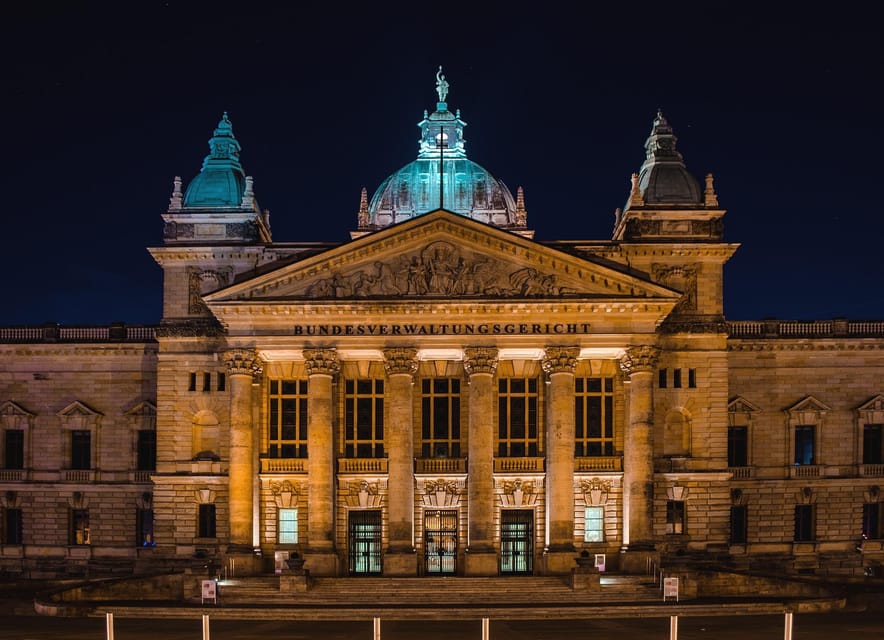
Leipzig’s Federal Administrative Court is far more than an attractive old courthouse. Its walls witnessed major moments in German legal and political history, including Karl Liebknecht’s self-defense against high treason charges and the 1933 Reichstag Fire Trial. The building still works as a court, so you get a look at a living institution rather than a polished museum set.
I like two things especially: the tour opens areas most people would never see on their own, including the president’s apartment, and it explains what Germany’s highest administrative court actually does today. The main consideration is language. The live tour is in German, and late arrivals cannot enter once the group has started.
Key points to know before you go
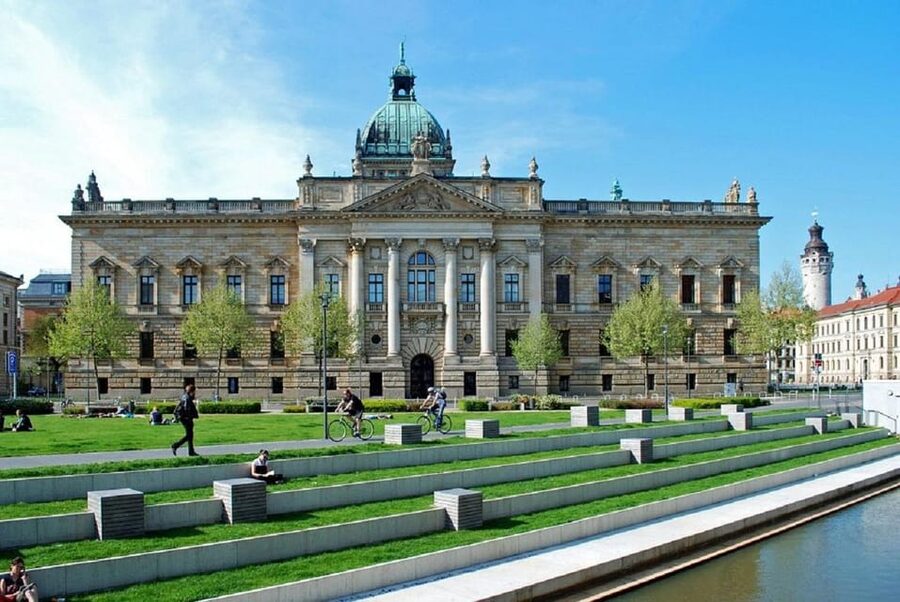
- A working courthouse with imperial-era architecture: Explore the former Imperial Court of Justice, built for Germany’s supreme court in 1879.
- The 1933 Reichstag Fire Trial took place here: The large historic hall adds serious political weight to the visit.
- Public spaces rarely open to casual visitors: See historic courtrooms, the domed hall, the judges’ ancestral gallery, and the president’s ceremonial rooms.
- A clear look at modern German law: The guide explains how the Federal Administrative Court handles disputes in administrative law.
- Only a 90-minute commitment: The tour fits neatly into a Leipzig sightseeing day.
- German-language and wheelchair accessible: Arrive 10 minutes early, and bring a 1 euro coin for the luggage compartment.
Why this courthouse deserves your time
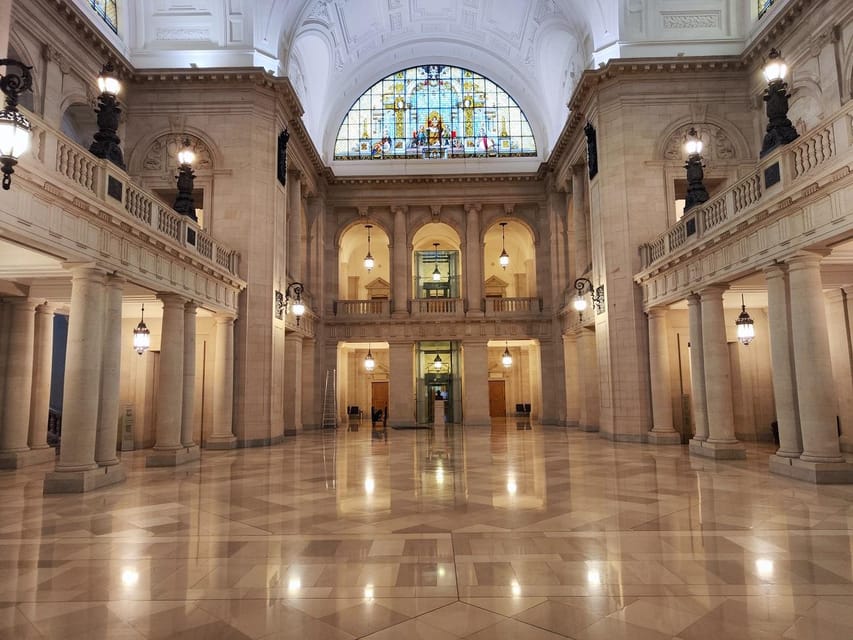
Many historic buildings in Leipzig are admired from the street, photographed, and left behind. This tour takes you inside one of the city’s most important public buildings and gives the interior the attention it deserves.
The former Imperial Court of Justice was founded in 1879 as the highest court of the German Reich. The building was designed to make that role visible. Its large rooms, ceremonial details, and formal arrangement were not accidental decoration. They expressed the authority of the law.
Since 2002, the building has housed the Federal Administrative Court, known in German as the BVerwG. That court is the highest administrative court in the Federal Republic of Germany. It deals with disputes involving public administration and administrative law, so its work can touch questions about how government bodies make and apply decisions.
That combination makes the visit useful for two different reasons. If you care about architecture, you get a close look at an imposing late nineteenth-century court building. If you care about history or politics, you see where important legal proceedings took place and learn how the court functions today.
I would not treat this as a general introduction to all of German history. It is more focused than that. The value comes from the link between place, law, and political power.
A few more half-days in Leipzig worth comparing
- Leipzig: City History Canal Sightseeing Tour on a Motorboat
★ 4.7 · 6,232 reviews - Leipzig: 1.5-Hour Public Tour with Night Watchman Bremme
★ 4.6 · 3,116 reviews - Combo Tour in Leipzig: Guided City Tour & City Sightseeing
★ 4.7 · 2,317 reviews
Entering the former Imperial Court of Justice
You meet your certified guide in the foyer of the Federal Administrative Court. The foyer is the natural starting point because it introduces the building as both a historic monument and an active court.
This is not a theatrical historical attraction. The building continues to serve an official purpose, and that gives the visit a different tone. You are entering a place designed for serious legal work, not a reconstructed set built for sightseeing.
From the start, pay attention to how the building presents authority. The scale and formality are part of the message. Even before you reach the major rooms, the setting helps explain why the Imperial Court of Justice needed such a grand home.
The guide also places the present-day court in context. The building now serves the Federal Administrative Court, whose decisions concern disputes in administrative law. That explanation matters because a historic courtroom can otherwise feel disconnected from modern life.
The tour is conducted in German. If you understand German, you should get the fullest version of the guide’s explanations and legal context. If you do not, the architecture and major spaces still have value, but the spoken history will be harder to follow.
The domed hall and the building’s grand scale
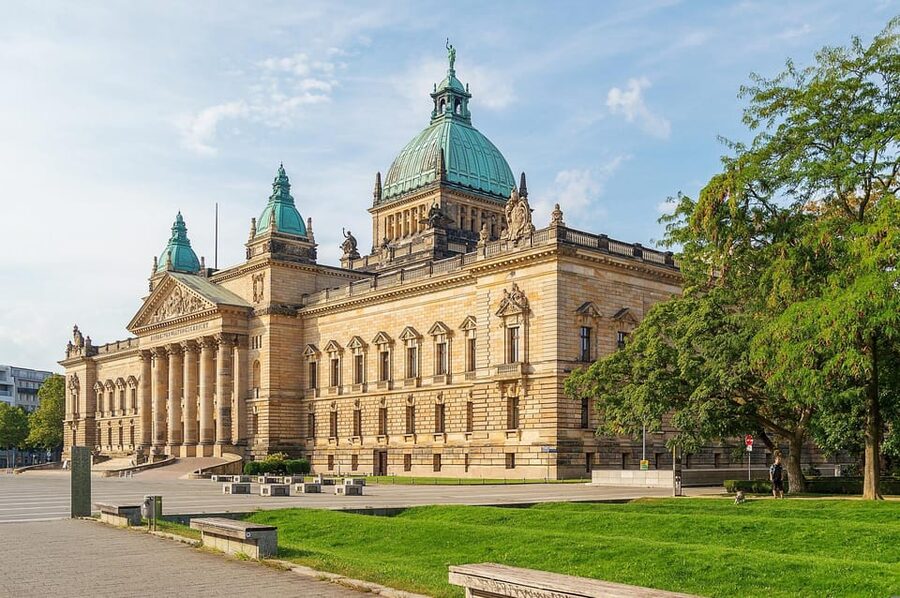
One of the main stops is the domed hall, a central interior space that shows the building at its most formal. This is the sort of room where architecture does much of the talking.
The hall gives you a feel for the scale intended for Germany’s former supreme court. Look up, take in the dome, and notice how the room creates a sense of ceremony. The space was built to make visitors feel that legal decisions carried national importance.
A short guided visit benefits from rooms like this because they provide an immediate visual anchor. Instead of hearing only dates and institutional names, you can connect the story to a physical place. The court’s past becomes easier to grasp when you are standing in the room built to represent it.
You should also allow time to simply look. The tour is only 90 minutes, and the guide has several areas to cover, but the architectural details reward a slower glance. This is not a stop where you need to rush through photographs.
The scale may also be the main reason some visitors prefer this experience to a conventional museum. You are not reading about the building from behind a display case. You are moving through the actual rooms that continue to define the institution.
Historic courtrooms and the judges’ ancestral gallery
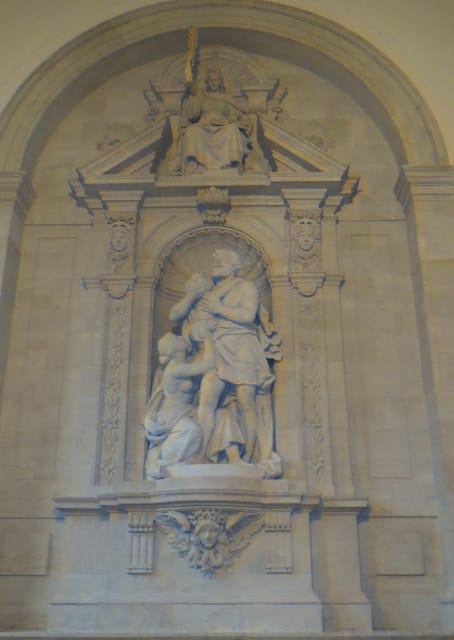
The tour includes historic courtrooms, where the building’s judicial purpose becomes most direct. These spaces help you understand how court proceedings were arranged and how the institution presented itself to the public.
Courtrooms can look formal to the point of stiffness, but that is part of their interest here. The design reflects a legal system that wanted order, rank, and authority to be visible. The rooms are not simply attractive interiors. They show how justice was staged in an earlier political era.
You also visit the ancestral gallery of the judges. This is one of the more unusual elements of the tour. A gallery of judges’ portraits turns the court’s past into a sequence of individual faces, linking the institution’s history to the people who served within it.
The gallery also raises useful questions. Whose work is remembered? How does a court present its own past? What does a long line of judges say about continuity and institutional authority? Your guide can give the display meaning beyond a quick look at framed portraits.
For me, this is where the tour moves beyond architecture. The rooms and gallery show how a court builds an identity over time. You are seeing both the physical setting of justice and the official memory attached to it.
Same city, a completely different kind of day:
- Leipzig: 1.5-Hour Historical Walking Tour in German
★ 4.7 · 2,217 reviews - Leipzig: 2-Hour Guided Walking Tour in German
★ 4.8 · 1,612 reviews - Leipzig: 13-Stop Hop-on/Hop-off Bus Ticket
★ 4.6 · 1,468 reviews - Gruseltour Leipzig: A Haunted Guided Tour
★ 4.5 · 1,385 reviews
The president’s apartment and ceremonial hall

The tour also takes you into the president’s apartment, including its ceremonial hall. This is a surprising part of the visit because it shifts the focus from public legal proceedings to the private and representative side of the court’s leadership.
The ceremonial hall shows that the building was designed for more than hearings. A senior judicial official needed rooms suitable for formal events and representation. These spaces reveal the social structure surrounding the court, not just the mechanics of legal decisions.
You should expect this section to feel different from the courtrooms. The courtroom is built around proceedings and judgment. The ceremonial rooms communicate status and hospitality. Together, the two areas show how an institution operates in public and behind the scenes.
The president’s apartment is also a good reminder that historic government buildings often combine several functions. They can contain offices, official rooms, private quarters, and ceremonial spaces under one roof. That mixture is easy to miss when you see only the exterior.
Because access to such areas is unusual, this is one of the tour’s strongest practical advantages. You are not paying simply to enter a public lobby. You are getting guided access to spaces that explain how the court once presented itself and how its traditions continue.
Karl Liebknecht and the courtroom’s political past
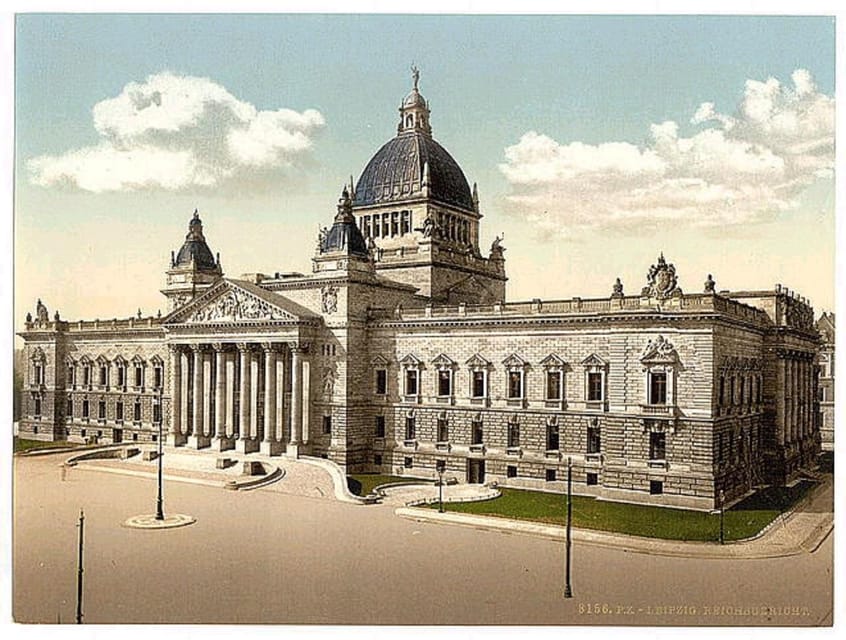
The building is tied to several significant moments in German political history. Karl Liebknecht defended himself here against accusations of high treason, giving the courthouse a direct connection to the political conflicts of the German Empire.
That detail changes how you read the rooms. A courtroom is not only an architectural object. It is a place where the state tested its authority against political opponents, and where defendants faced the legal power of the regime.
The guide’s historical explanation is important because the building’s grandeur can otherwise seem neutral. Its monumental design may suggest fairness and permanence, but the events connected to it show that courts operate within the politics of their time.
You do not need to be a specialist in German legal history to appreciate this part. A basic interest in how governments use courts is enough. The story adds substance to the visit and gives you a reason to look at the courtrooms with more care.
The large hall and the Reichstag Fire Trial
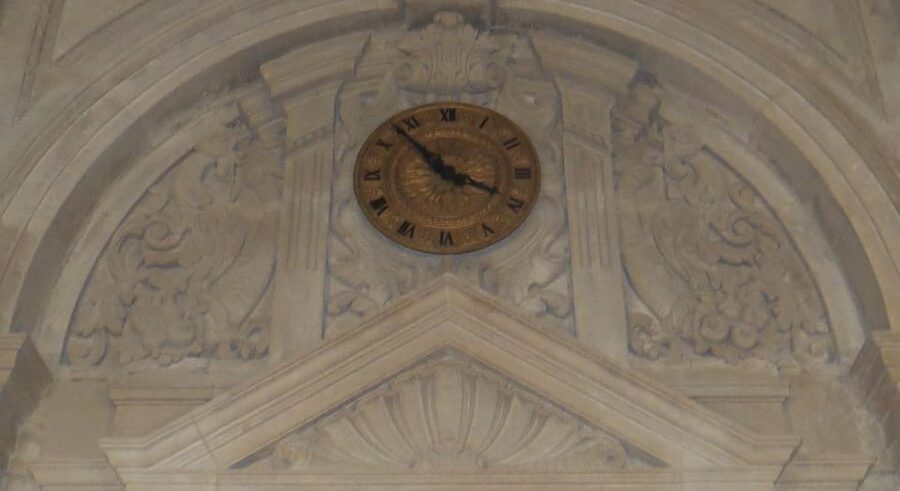
The large hall connected with the Reichstag Fire Trial of 1933 is likely to be the most sobering stop. The trial followed the Reichstag fire and became a major event in the early Nazi period. Seeing the hall where it took place gives the history a precise physical setting.
This is not a light sightseeing moment, and it should not be treated as one. The room carries the weight of a trial associated with the political use of the justice system during a deeply destructive period in German history.
The value of seeing the hall is not that the walls somehow provide every answer. They do not. The value is that the setting helps you think about the difference between a court’s formal ideals and the political conditions in which it operates.
I would pay close attention to the guide here. The tour is in German, and this section is likely to contain the most important historical context. If the subject matters to you but you do not understand German, consider preparing by reading a short account of the trial before your visit.
The room also connects the older Imperial Court of Justice with the building’s later history. You are not viewing separate eras in separate museums. You are walking through one building that passed through major changes in German government, law, and public life.
How the Federal Administrative Court works today
The tour does not stop in the past. A key goal is to explain the present-day work and decisions of the Federal Administrative Court.
The BVerwG is Germany’s highest administrative court. It rules on disputes in the field of administrative law, which concerns the relationship between public authorities and individuals, organizations, or other public bodies.
That may sound technical, but it is worth hearing. Courts like this shape how government decisions are reviewed and applied. Understanding the court gives you a better sense of how Germany’s legal system handles conflicts involving public administration.
The guide presents the court’s work in a vivid way, connecting the institution’s current duties with the building around you. This is the part that keeps the tour from becoming only a historical architecture walk.
I like the balance. You get the old courtrooms, historic figures, and politically charged events, but you also learn why the building remains important now. For anyone interested in government, law, civil rights, or modern Germany, that present-day link adds real value.
Is $16 a fair price for 90 minutes?
At $16 per person, this is a sensible price for a guided visit to a major historic building. The admission covers a certified guide and access to several interior areas that are not presented as a casual self-guided stop.
The value is strongest if you would otherwise pass the building without learning what happens inside. You get the domed hall, historic courtrooms, judges’ gallery, president’s ceremonial hall, and the large room linked to the Reichstag Fire Trial. A guide also ties those spaces to the work of the Federal Administrative Court.
The price is less compelling if you want a long, independent museum visit with extensive written displays or multiple language choices. This is a compact guided experience, not an all-day attraction.
Still, 90 minutes is an efficient length. You can fit the tour into a morning or afternoon without giving up a large part of your Leipzig schedule. The format also prevents the building’s legal and political material from becoming too scattered.
The high rating of 4.8 from 54 reviews supports the view that the experience delivers what it promises, though the most important question for you is whether a German-language courthouse tour matches your interests.
Practical details that can make or break the visit
Meet in the foyer of the Federal Administrative Court, and arrive 10 minutes early. Once the tour begins, you cannot enter the courthouse, so this is not a good activity to schedule with a tight connection or a last-minute arrival.
A 1 euro coin is required for the luggage compartment. Bring one with you so you do not have to search for change before the tour.
The tour lasts 1.5 hours and ends back at the meeting point. The live guide speaks German. The building is wheelchair accessible, which makes this a practical option for visitors who need step-free access, though the information provided does not specify the exact route or facilities.
Pets are not allowed, except for assistance dogs. Party groups and bachelor or bachelorette groups are also not permitted. That fits the setting: this is a formal court building, not a casual group activity.
You can cancel up to 24 hours in advance for a full refund, and the reserve-now, pay-later option keeps your plans flexible. Check the available starting times before booking because the tour cannot be treated as a walk-in activity.
Who will enjoy this tour most?
I would recommend it first to anyone with an interest in German political history, courts, architecture, or public institutions. It offers enough visual material for architecture fans and enough historical context for visitors who want more than another city-center building.
It also suits repeat visitors to Leipzig. If you have already seen the main churches, squares, and museums, this gives you a different view of the city through its legal institutions.
The tour is a good match for travelers who appreciate focused visits. Ninety minutes is long enough to develop a clear subject, but short enough to combine with other plans.
I would hesitate to recommend it to someone who does not understand German unless the building itself is the main goal. You can appreciate the rooms, but the explanations about legal duties and historic trials are central to the experience.
Families with older children or teenagers interested in history may also find it worthwhile, especially if you explain the Reichstag Fire Trial and Karl Liebknecht beforehand. The serious subject matter may not suit very young children.
Should you book the Federal Administrative Court tour?
Book it if you want to enter one of Leipzig’s most important historic interiors and understand how the building connects imperial Germany, the Nazi period, and the modern Federal Republic. The access to the president’s apartment, judges’ gallery, historic courtrooms, and domed hall gives the $16 price real substance.
Skip it if your German is limited and you mainly want a relaxed, self-guided sightseeing stop. The tour depends on the guide’s spoken explanations, and late arrival is not possible.
For the right visitor, this is a focused and unusually revealing Leipzig experience. It shows you a working center of German justice, then asks you to consider how architecture, law, and political power occupy the same rooms.
FAQ
Where does the Federal Administrative Court tour begin and end?
The tour begins in the foyer of the Federal Administrative Court and ends back at the same meeting point.
How long does the tour last?
The guided tour lasts 1.5 hours. Starting times depend on availability.
What language is the live tour in?
The live tour is conducted in German.
Is the tour wheelchair accessible?
Yes. The activity is listed as wheelchair accessible.
What should I bring for the luggage compartment?
Bring a 1 euro coin, which is required for the luggage compartment.
Can I cancel the tour if my plans change?
Yes. You can cancel up to 24 hours in advance for a full refund. You can also reserve now and pay later.
Just added in Leipzig
- City tour on foot, by S-Bahn and tram★ 4.5 · 12 reviews
- Schkeuditz: 4-Hour Vintage East German Trabant Rental★ 4.9 · 15 reviews
- Leipzig City Centre: Scavenger Hunt Self-Guided Tour★ 4.4 · 114 reviews
- Tour on Lake Cospuden★ 4.7 · 58 reviews
- Leipzig: True or false? Walking Tour and Interactive Game★ 4.8 · 28 reviews
- Leipzig: “SoKO Leipzig”, unique Escape Room, 60 minutes★ 4.6 · 20 reviews
- Leipzig Spirits Manufacture: Guided Tour and Tasting★ 4.8 · 79 reviews
- Leipzig: Scavenger Hunt Self-Guided Tour★ 4.7 · 11 reviews
Leipzig Tours, compared.
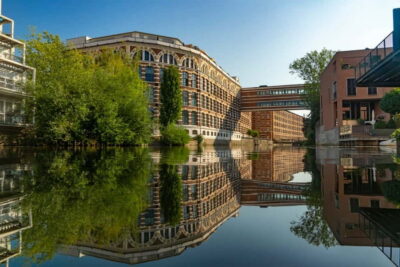
City History Canal Sightseeing Tour on a Motorboat
Read our review →



Browse the lists this tour appears in