
Reviewed · HAMBURG TOURS
German guided insider tour of Hamburg’s Schanzenviertel
Hamburg’s Schanzenviertel reveals its best stories in small lanes and tucked-away courtyards, not on a standard city route. Guide Andreas connects street art, Red Flora, Fritz-Kola, local businesses, and the district’s many subcultures in a lively two-hour walk.
I like the small-group limit of 16 and the relaxed, human approach, with no phone or tablet replacing the guide. I also like that the tour includes useful tips for bars and restaurants, plus a sweet little gift. The main drawback is simple: the tour is in German only, and Hamburg’s November rain can make an outdoor walk less comfortable.
Key points at a glance
- Backyards and side streets: Andreas takes you beyond the main roads to corners many people pass without noticing.
- Red Flora explained: Learn why this well-known building looks the way it does and what it represents in the district.
- Local companies with surprising origins: The tour connects Schanzenviertel with Fritz-Kola and other firms that began here.
- Small group, personal feel: A maximum of 16 people makes it easier to hear the guide and ask questions.
- Street art and subcultures: Expect graffiti, creative installations, and a look at the different groups that shaped the area.
- Practical local tips: You receive suggestions for food and drinks, not just a list of historical dates.
Why Schanzenviertel rewards a walking tour
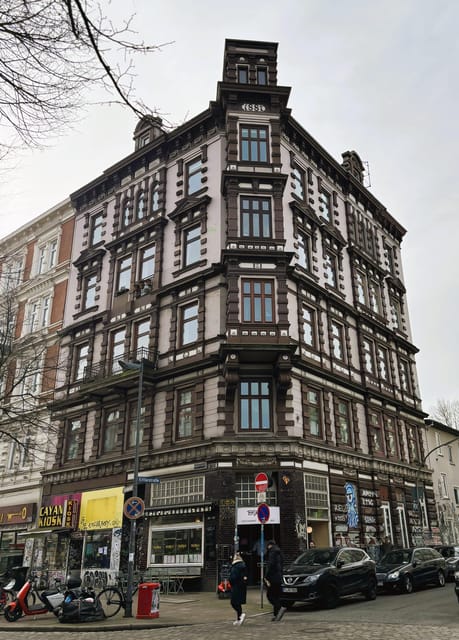
Schanzenviertel, usually shortened to Schanze, is one of Hamburg’s most colorful districts. It mixes creative businesses, alternative culture, nightlife, street art, restaurants, residential streets, and traces of older local life.
That mix is exactly why a guide helps. If you walk alone, you’ll see painted walls, crowded bars, unusual shops, and the striking Red Flora building. You may enjoy the atmosphere, but you won’t always know why a place matters or how the pieces fit together.
This tour gives you the story behind the surface. Andreas explains how people, companies, buildings, food, and politics connect in the neighborhood. The result is less a parade of monuments and more a guided reading of city life.
I like that approach. Schanze is not a district where every important sight has a neat plaque beside it. The meaning is often in a detail: a company’s former roots, a courtyard behind an ordinary entrance, or the way a building has been used and viewed over time.
A few more half-days in Hamburg worth comparing
- Hamburg: Sex and Crime in St. Pauli Tour for Ages 18+
★ 4.7 · 15,447 reviews - Hamburg: 1.5-Hour Harbor and Speicherstadt Day Cruise
★ 4.6 · 14,200 reviews - Hamburg: 90-Minute Evening Lights Harbor Cruise
★ 4.5 · 7,728 reviews
Starting at Cafe Blattgold
The meeting point is in front of Cafe Blattgold, next to the bike station. That is a practical place to begin because it puts you in the district’s everyday setting from the first minute, rather than at a grand tourist landmark.
Look for the guide outside the cafe and arrive ready to walk for about two hours. The exact starting time depends on the date you choose, so check availability before booking.
The tour is conducted in German. That matters more here than it would on a simple sightseeing route because the value comes from the guide’s explanations, jokes, local references, and connections between places. If you are comfortable following spoken German, you should get much more from the experience than you would by simply reading translated labels.
Andreas is the guide named in the available information, and his style is described as open, natural, humorous, and enthusiastic. He does not rely on electronic aids. You get a person leading the conversation, pointing out details in front of you, and adjusting the flow to the group.
Reading the streets, graffiti, and creative culture
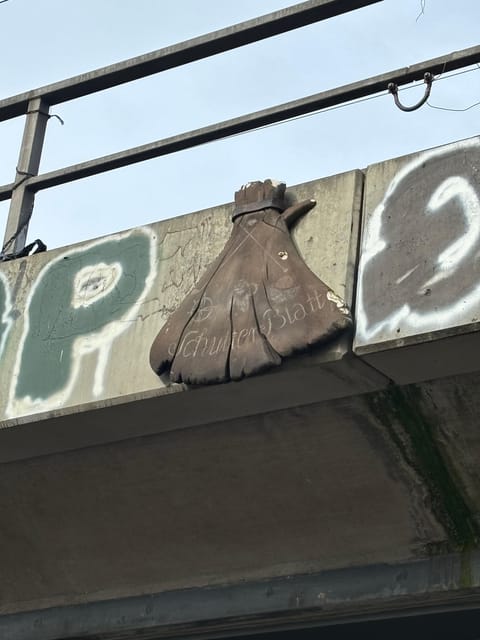
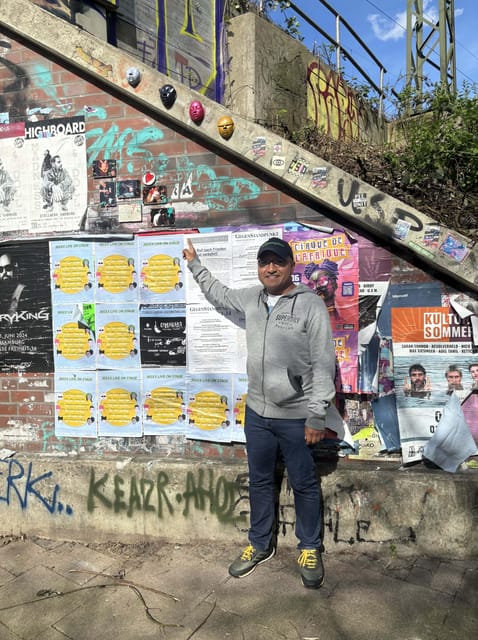
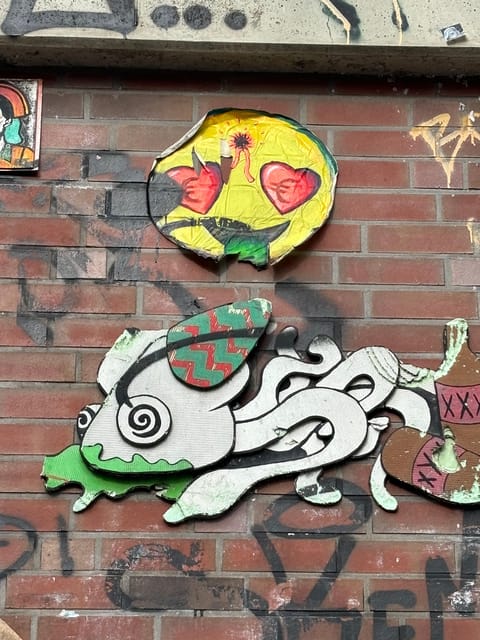
One of the first things you notice in Schanze is its creative and alternative feel. Graffiti and street art installations are part of the visual language of the district, not isolated decorations placed for sightseeing.
A guide can help you look at these works with more care. Instead of treating every painted wall as the same, you can hear how the area’s different subcultures have shaped its appearance and public identity.
The tour also gives you a chance to notice changes that are easy to miss. A district can feel young and creative while still carrying older layers beneath the surface. Shops, bars, companies, political spaces, and residential buildings all occupy the same compact area.
I appreciate that the tour does not reduce Schanze to a simple label such as trendy or alternative. Those words are too broad to explain the neighborhood. The useful question is how these groups, businesses, and ideas share the same streets, and Andreas uses local examples to make that clear.
You should also expect the route to be visually interesting rather than formally grand. This is not a palace tour. The appeal comes from painted walls, street scenes, unusual facades, local hangouts, and small discoveries.
Red Flora and the district’s political edge
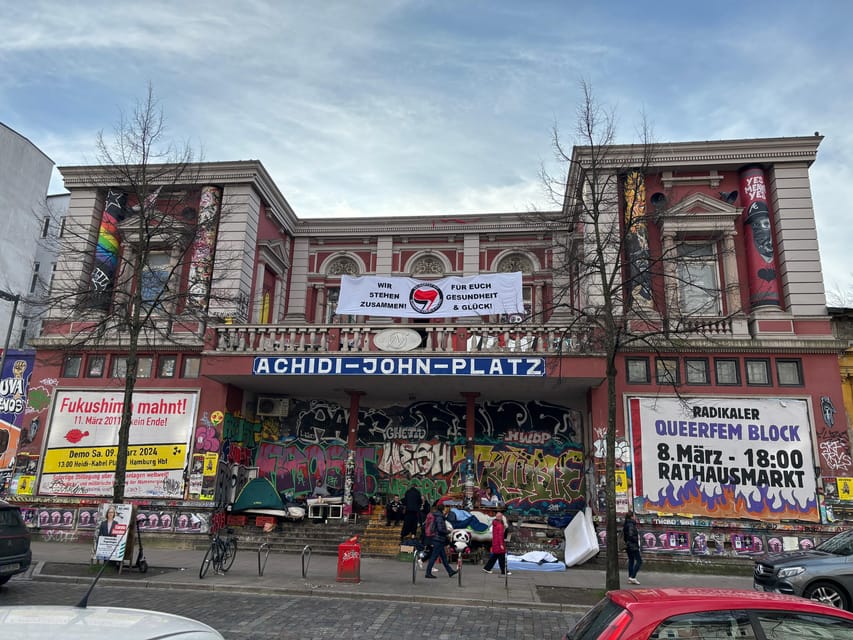
Red Flora is one of the most recognizable subjects on the walk. The tour explains what the building is and why it looks as it does, giving you context for a place that can otherwise seem mysterious or intimidating.
The building is important because it represents the political and alternative side of Schanze. You will not just hear a name and take a photograph. The guide addresses the reason for its appearance and its place in the neighborhood.
This is a good example of why a local guide adds value. A quick visit can leave you with a strong visual impression but little understanding. A spoken explanation helps you place the building within the district’s culture and long-running debates.
The tour is not presented as a lecture, though. The tone is relaxed, with historical facts mixed with fun details and stories about local people. That balance is useful if you want substance without spending two hours listening to dates and official names.
Because the tour is in German, pay attention to the pace and feel free to ask questions if the group setting allows it. A small group of up to 16 should make that easier than a large coach-style walk.
Same city, a completely different kind of day:
- Hamburg: 2-Hour XXL Port of Hamburg Cruise Tour
★ 4.7 · 6,979 reviews - Hamburg: Line A Sightseeing Hop-On Hop-Off Bus Tour
★ 4.6 · 6,958 reviews - Hamburg: Elbphilharmonie Plaza Guided Tour
★ 4.7 · 5,882 reviews - Hamburg: Hamburg Dungeon Admission Ticket
★ 4.7 · 5,745 reviews
Side streets and courtyards most people miss
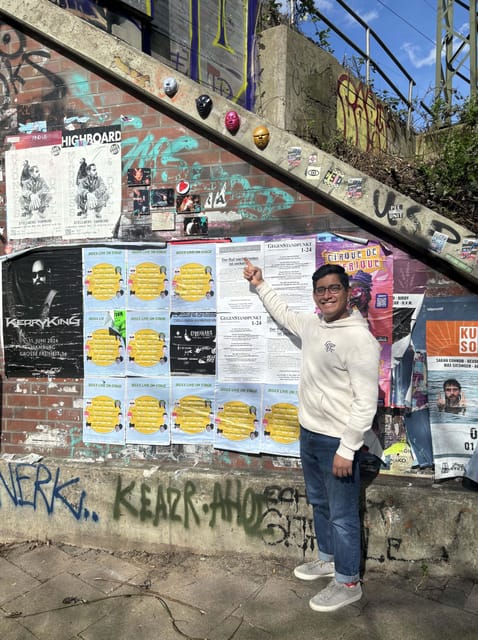
The strongest part of the experience may be the route away from the obvious streets. Andreas leads the group through small lanes and backyards that you would probably not enter on your own.
These spaces help explain how Schanze works. The main roads show you the district’s public face, with graffiti, food, bars, and shops. The courtyards offer a quieter look at the way buildings and businesses fit together behind the street frontage.
You should not expect every courtyard to be a major sight in itself. Their value is cumulative. One tucked-away passage, one overlooked entrance, and one unexpected view can change how you read the whole area.
This is also where the small group matters. Sixteen people is still a real group, but it is compact enough for the guide to point out details without losing everyone in a crowd. A quiet explanation in a narrow space is much easier to follow when there are not dozens of people blocking the route.
Wear comfortable shoes and expect normal city walking. The tour lasts about two hours, and the district’s character is best experienced on foot. There is no promise of a stop for food or drink, so plan ahead if you need refreshments.
Fritz-Kola and companies born in Schanze
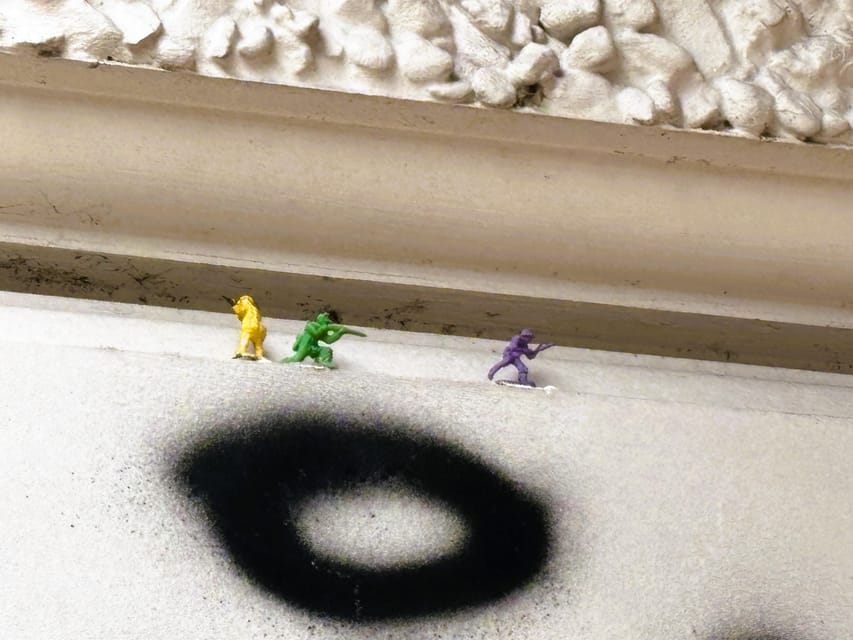
The tour connects Schanzenviertel with large companies that have their origins in the district. Fritz-Kola is one of the named examples, and the route explains the link between the drink and Schanze.
That detail gives the neighborhood a useful economic angle. The area is not only about street art, nightlife, or political culture. It has also been a place where businesses began, grew, and carried the district’s name and spirit into a wider market.
I like this part because it adds surprise. You may arrive expecting only alternative culture and colorful walls, then discover that familiar brands have a local backstory. The guide also asks which other large companies began in the area, turning the information into a small puzzle rather than a dry list.
The tour’s focus on people and businesses keeps it grounded. You learn about the district through real examples, not just broad claims about creativity. For visitors interested in how neighborhoods shape brands, this is one of the more useful parts of the walk.
Food, bars, and the question of where one million euros was paid out
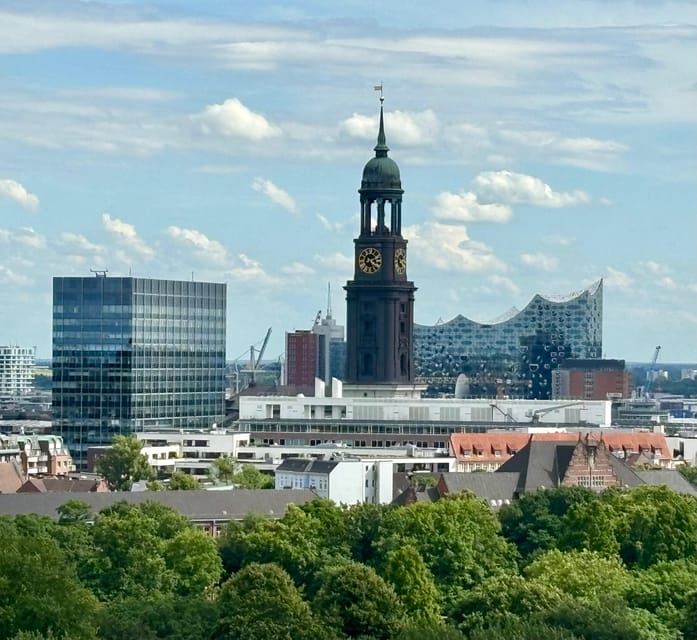
Andreas provides insider tips for bars and restaurants in and around Schanze. These suggestions are useful if you plan to stay in the district after the tour, though food and drinks are not included in the price.
A good walking tour should help you decide what to do next, and this one aims to do that. You can ask about the types of places you prefer and use the tour as an introduction to the local food and drink scene.
The itinerary also includes the unusual question of where one million euros was paid out in a single day. That is the kind of local detail that gives the walk personality. It pulls you away from standard sightseeing and toward the odd facts that make a neighborhood memorable.
You should not expect the tour to become a food crawl. There are no included tastings, and the two-hour format is built around walking and explanation. Still, the restaurant and bar tips increase the value if you use them to plan lunch, dinner, or an evening drink afterward.
How the small group changes the experience
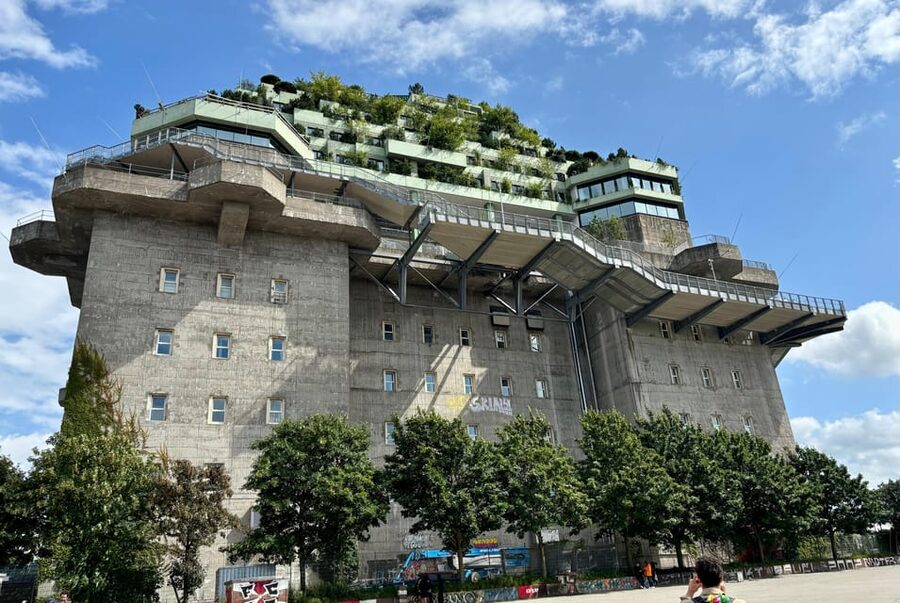
The maximum group size is 16 people. That is not a private tour, but it is small enough for a more direct exchange with the guide.
Andreas’s approach appears to be conversational rather than formal. He mixes local history with fun facts, stories about people, information about companies, and observations about daily life. Several aspects of his style matter: he is described as humorous, enthusiastic, natural, and engaged.
That combination helps in a district where the details can be easy to overlook. A guide who simply recites facts would miss much of Schanze’s character. Here, the aim is to show you why a place is interesting and how it connects to the wider neighborhood.
Private group bookings are also possible. If you are arranging an outing for friends, family, or a small organization, this may be worth asking about. The standard experience already has a personal scale, but a private booking gives you more control over the group and conversation.
The no-electronic-aids policy is another plus for some people. You will not be watching a screen while the guide stands beside the real street. The tradeoff is that you may not receive maps, photos, or digital visuals during the walk. The information comes through the guide and the places around you.
Is $34 a fair price for two hours?
At $34 per person, this is not the cheapest way to walk around Hamburg. You can explore Schanze on your own for nothing, and the tour does not include food, drinks, admission tickets, or transport.
The value depends on how much context you want. If you only need a quick look at graffiti and bars, save your money and wander. If you want the backstory behind Red Flora, local companies, courtyards, Fritz-Kola, and the district’s social mix, the fee is easier to justify.
I see the price as reasonable for a small-group tour led by a guide who knows the neighborhood personally. The sweet guest gift is a minor touch, not a reason to book by itself, but it adds a friendly finish.
The strongest value comes from what you cannot easily reproduce alone: access to less obvious corners and a continuous explanation linking them together. You are paying for interpretation, route planning, and local conversation rather than for a famous ticketed attraction.
Weather, timing, and the German-only format
Hamburg weather can be damp and cold, especially in November. The tour runs outdoors, so bring a rain jacket and dress for the forecast. Reports from late autumn show that the walk can still work in drizzle and cold, but comfort will depend on your clothing and tolerance for wet weather.
The two-hour length is well judged for a neighborhood walk. It is long enough to cover several themes without taking up an entire day. You can pair it with a meal or further exploring in Schanze afterward.
The language is the biggest practical limitation. This is a German-language tour with a live German guide. If you do not understand German, the experience will lose much of its point because the stories and explanations are the main product.
Food and drinks are not included, and tips for the guide are also separate. Carry what you need for the walk, then use Andreas’s local suggestions if you want to eat or drink nearby afterward.
Free cancellation is available up to 24 hours before the start for a full refund. You can also reserve now and pay later, which helps if your Hamburg plans are still shifting.
Who should book this Schanze tour?
I would choose this tour if you have already seen Hamburg’s major central sights and want a district with more local character. It suits people who enjoy street art, unusual buildings, social history, independent businesses, and neighborhood food tips.
It is also a good choice for Hamburg residents who want to see a familiar area differently. The tour’s value is not limited to first-time visitors. The route through courtyards and side streets can reveal details even if you live nearby or pass through the district often.
You will get the most from it if you enjoy listening, walking, and asking questions. It is less suitable if you want a fast photo stop, a food tasting, or a fully scripted tour with visual aids.
Should you book it?
Book it if you want a personal, German-language look at Hamburg’s Schanzenviertel, especially if Red Flora, street art, local companies, backyards, bars, and alternative culture interest you.
The two-hour length, maximum group size of 16, and guide Andreas’s friendly style make it a strong neighborhood introduction. Just remember that the tour is outdoors, food and drinks cost extra, and the German-only format is essential.
If you prefer large landmarks, formal museums, or a sightseeing route in English, choose another Hamburg experience. If you want the stories behind one of the city’s most distinctive districts, $34 is a fair price for the access and local context.
FAQ
Where does the Schanzenviertel tour meet?
The meeting point is in front of Cafe Blattgold, next to the bike station.
How long does the tour last?
The guided walking tour lasts approximately two hours.
What language is the tour conducted in?
The live tour guide speaks German, and the activity is offered in German only.
Who is the guide?
The named guide is Andreas. The tour information describes his style as open, natural, humorous, enthusiastic, and focused on local stories and facts.
How many people can join the group?
The group has a maximum of 16 people.
What will the tour cover?
The walk covers Schanze’s creative and alternative character, subcultures, graffiti, street art installations, Red Flora, local bars and restaurants, Fritz-Kola, companies with origins in the district, and lesser-known courtyards.
Are food and drinks included?
No. Food and drinks are not included in the tour price.
Is a tip for the guide included?
No. A tip for the guide is not included.
Can I cancel for a full refund?
Yes. You can cancel up to 24 hours before the tour for a full refund. You can also reserve now and pay later.
Just added in Hamburg
- Hamburg: St. Pauli Food and Bier Tour★ 4.7 · 5 reviews
- Hamburg: Private Tour Red Light District Walking Tour★ 4.7 · 227 reviews
- St. Pauli Tour: Drag-Attack with Barbie Stupid & Lee Jackson★ 4.8 · 280 reviews
- St. Michael’s, Elbe Tunnel & Harbor 2-Hour Hamburg Tour★ 4.9 · 21 reviews
- Hamburg: Safari tour in St. Pauli★ 4.9 · 11 reviews
- Satt Pauli – der kulinarische Rundgang durch St. Pauli★ 4.8 · 12 reviews
- Radtour um die Alster & durch traumhafte Alsterviertel★ 4.9 · 34 reviews
- Hamburg: Reeperbahn Comedy Club★ 4.3 · 53 reviews
Hamburg Tours, compared.



Browse the lists this tour appears in