
Reviewed · BLACK FOREST TOURS
Freiburg: Gässle, Bächle and More City Tour
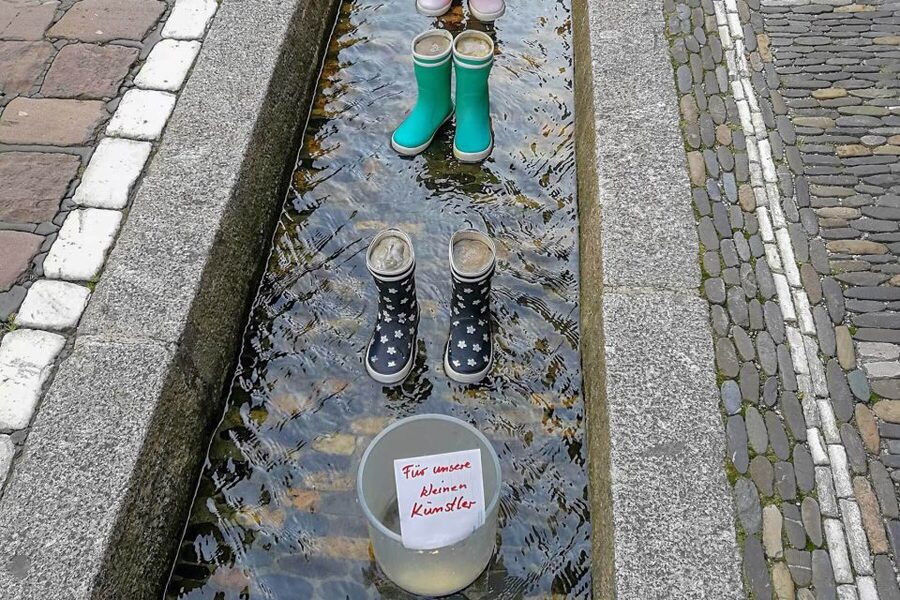
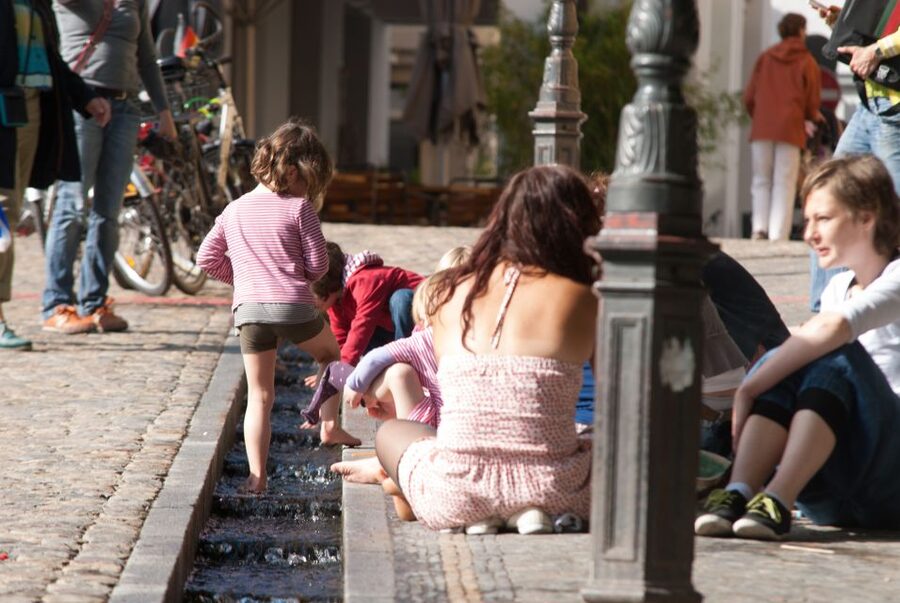
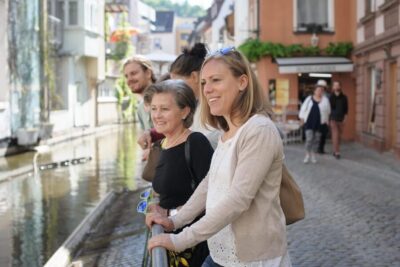
Freiburg’s old town is best understood at walking pace, with water running beside your shoes and crooked lanes opening onto grand squares. This 1.5-hour tour links the city’s Bächle, Gässle, minster, market, old gates, and handsome civic buildings in one tidy circuit.
I like the $13 price, which gives you a useful first look before you decide where to spend more time. I also like the human touch: guides such as Iris and Dr. Tamara Spitzing bring stories, jokes, and practical answers rather than simply pointing at buildings. The main consideration is that the group can be fairly large, with up to 25 people, and the tour is officially German-speaking, although several guides have led it well in English.
Key points at a glance
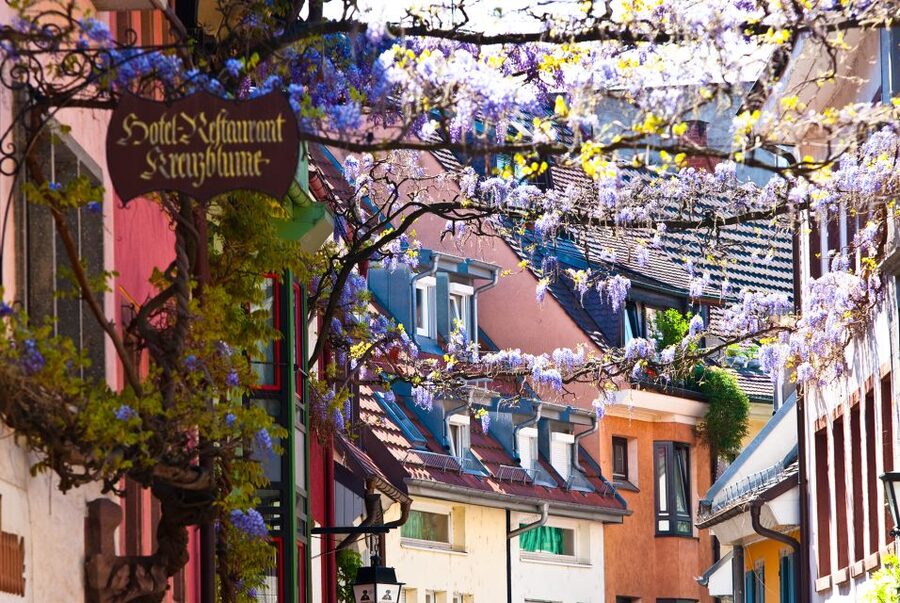
- Follow Freiburg’s Bächle: See the narrow waterways that run beside the old town streets and help give Freiburg its distinct character.
- Start at Münsterplatz: Take in the minster, fanciful gargoyles, delicate steeple, historic buildings, and the farmers’ market held in the morning.
- Walk Konviktstrasse: Explore one of the prettiest small lanes in the old town before reaching the old craftsmen’s quarter.
- Cover major landmarks quickly: The route includes the Altes Kaufhaus, Gerberau, Martins gate, Rathausplatz, and Haus zum Walfisch.
- Hear lively local stories: Guides including Iris, Annabelle, and Dr. Tamara Spitzing are praised for clear explanations, warmth, and humor.
- Know what is not included: You see the outside of Freiburg Minster, but you do not go inside the cathedral or any museum.
Why Freiburg’s Bächle and Gässle make this tour different
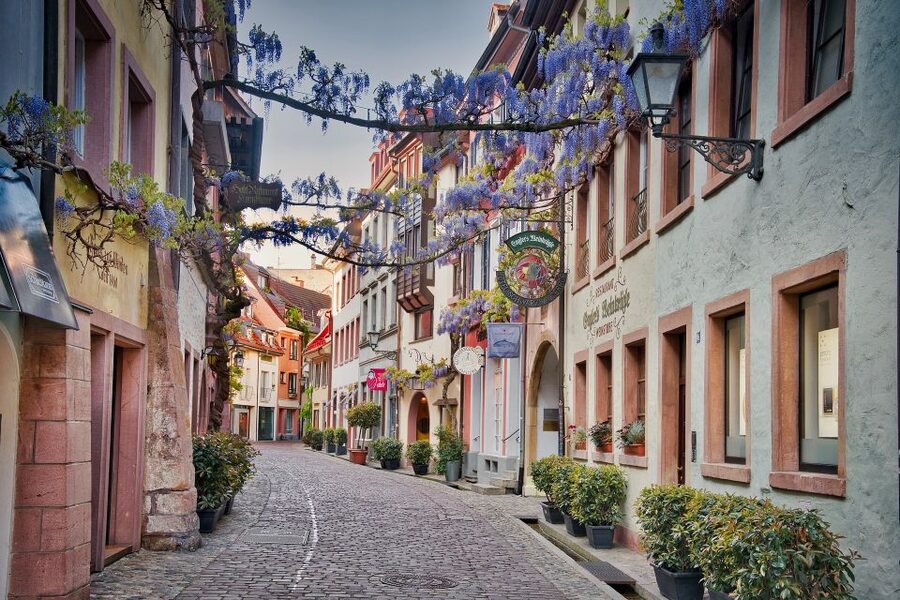
The title gives you the basic idea. Gässle means the small lanes, while Bächle refers to the shallow waterways built along many Freiburg streets. These details are easy to miss if you walk through town with your eyes fixed on the cathedral. A guide helps you notice how the water, stonework, alleyways, and buildings fit together.
I especially like that this is not just a march from one famous façade to another. The route moves through small spaces as well as broad squares. You get a feel for Freiburg as a lived-in city, not only as a collection of monuments.
The Rheinkiesel mosaics add another local detail. These colorful stone patterns appear in the pavement and contribute to the city’s visual character. They are not the sort of feature most people plan a trip around, but they reward attention once someone points them out.
The tour also gives you a quick introduction to Freiburg’s past before moving into the old town. That opening context matters. Without it, the minster, city gates, old department store, and town halls can blur into a pleasant but confusing walk. With it, the route becomes easier to follow.
A few more half-days in Freiburg worth comparing
- Freiburg: City Walking Tour with Drag Queen Betty BBQ
★ 4.7 · 525 reviews - Freiburg: Guided City Tours with Actors
★ 4.9 · 459 reviews - Freiburg: Tour of the city with cathedral visit
★ 4.7 · 167 reviews
Meeting at Schwarzwaldmarie on Münsterplatz
The tour begins at the entrance to SCHWARZWALDMARIE Souvenirs, also known as Schwarzwaldmarie-Freiburg-Kuckucksuhren-Souvenirs, on Münsterplatz. Look for a local guide wearing a name tag with the BVGD logo, the mark of Germany’s national association for professional guides.
This is a practical meeting point because Münsterplatz is the natural center of Freiburg’s old town. You do not need to begin with a long transfer to reach the first sights. The square gives you an immediate sense of the city, with the minster at its center and historic secular buildings around it.
The guide starts with a short explanation of Freiburg’s history. Expect the opening to focus on orientation and the main story of the city rather than a long academic lecture. That is the right approach for a short walking tour, especially if you plan to explore more on your own afterward.
The official tour language is German. Still, several guides have been described as bilingual or able to lead clearly in English. Iris receives particular praise for her English, patience, storytelling, and warm manner. Annabelle and Dr. Tamara Spitzing are also named as engaging guides. If you need English, check the language for your specific departure rather than assuming every scheduled tour will be the same.
Münsterplatz, gargoyles, and the Freiburg Minster
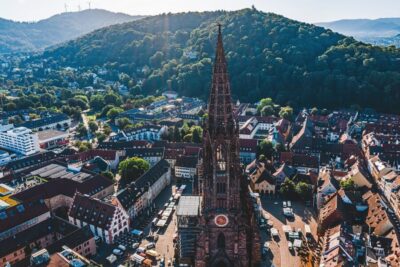
Münsterplatz is the visual centerpiece of the walk. Here you see Freiburg Minster, the cathedral’s slender steeple, and the unusual gargoyles that project from the building. The gargoyles are not all solemn religious figures. Their strange shapes give the cathedral a touch of medieval humor and make them a good subject for a guide’s explanation.
The tour stays outside the minster. This point is important. Your ticket does not include entry, and the guide does not take the group inside. If you want to see the interior, plan a separate visit around the walking tour.
The square also contains a mix of public buildings, houses, cafés, and pubs known locally as Beizen. In the morning, the traditional farmers’ market adds color and activity. If the market matters to you, choose a morning departure after checking the available start times.
The market is not simply background scenery. It helps you see Münsterplatz as a working civic space rather than a church forecourt built only for sightseeing. At other times, the square offers a quieter chance to examine the surrounding buildings and the minster’s details.
Altes Kaufhaus and the buildings around the cathedral
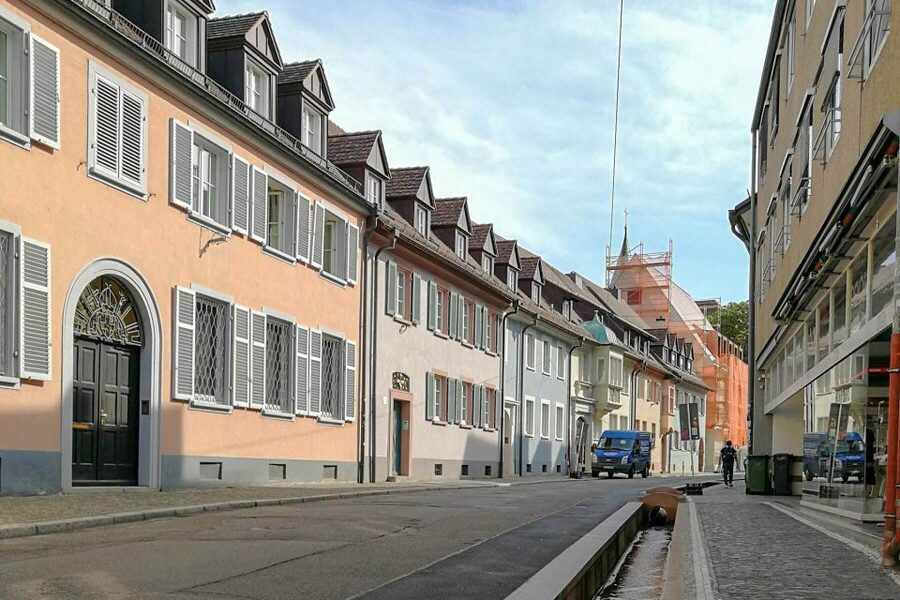
From the minster, the route introduces several important buildings around the square. The Altes Kaufhaus, or Old Department Store, is one of the key stops. Its name hints at the commercial role this part of Freiburg once played, and it helps balance the religious focus of the minster.
You also see the Alte Wache and Haus zum schönen Eck, along with other historic buildings. The appeal here is the contrast between civic, commercial, and residential architecture gathered in a compact space. A guide can explain why each façade matters instead of leaving you to guess from the outside.
This portion is also useful for orientation. Münsterplatz can feel like a single grand view, but the surrounding buildings tell a broader story about how the old town worked. I would pay close attention to the guide’s descriptions of building use, not just the names, because that gives the square more meaning.
Same city, a completely different kind of day:
- Freiburg: Highlights of the old town
★ 4.6 · 167 reviews - Freiburg: Veni, vidi, vino – wine hike and tasting
★ 4.5 · 144 reviews - Hey, Hallöchen, Freiburg! – The Travestie City Tour with Betty BBQ
★ 5.0 · 124 reviews - Freiburg: English Tours of the Old City
★ 4.5 · 108 reviews
Konviktstrasse and Freiburg’s small-lane character
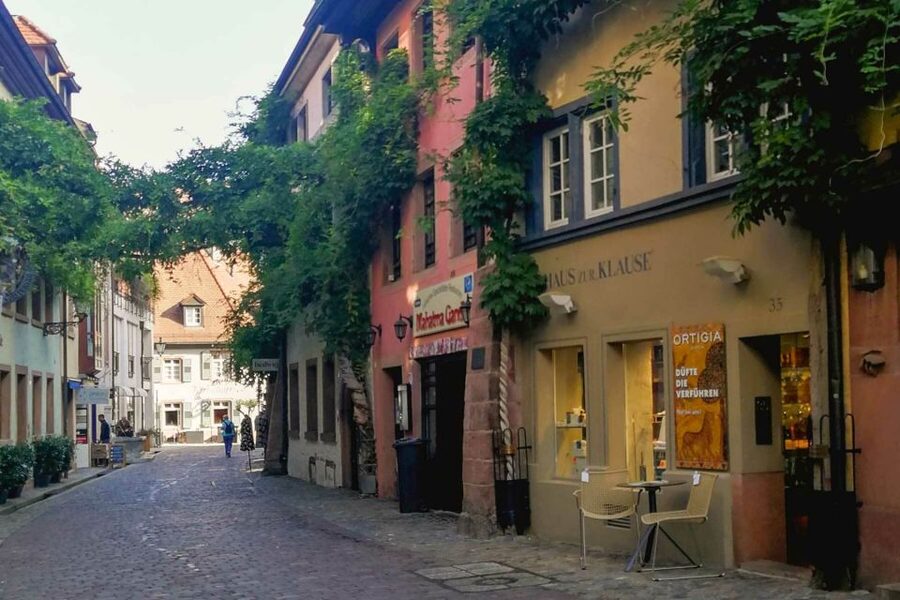
The walk then turns toward Konviktstrasse, one of Freiburg’s most attractive narrow lanes. This is where the tour’s title really earns its place. The lane offers the intimate scale that makes Freiburg different from a city tour focused only on large squares and monumental churches.
You see the crooked alleys, small waterways, and stone details at close range. The route continues toward the Handwerkerviertel, the old craftsmen’s quarter. That shift from major public buildings to a more modest working district gives the walk a useful change of pace.
Konviktstrasse is also the kind of place where a guide’s stories can add real value. The physical setting is appealing on its own, but the history of who lived and worked in these lanes makes the narrow street more than a photo stop.
One practical point: the tour involves standing while the guide talks. A participant specifically noted that the group could keep moving a little more because standing was difficult. If you have trouble standing for long periods, consider contacting the provider before booking and bring sensible footwear.
Gerberau and the Augustinerplatz area
The route continues through Gerberau, another old town area associated with Freiburg’s traditional trades and narrow streets. The name connects to tanning and leather work, a reminder that these lanes once served practical industries rather than cafés and photo stops alone.
From here, you pass Augustinerplatz and the popular Augustiner Museum. The museum itself is not included, so you will see the area and learn about its place in the city, but you will not enter as part of this tour.
I like this stop for the way it links Freiburg’s past and present. Augustinerplatz is a social city space, while the nearby museum offers a separate chance to explore art and cultural objects in greater depth. If the museum interests you, note its location as you walk and return later with more time.
The route’s steady mix of lanes, squares, public buildings, and shopping streets keeps the walk from feeling repetitive. You are not asked to spend the full 90 minutes looking at one type of architecture.
Kaiser-Joseph-Strasse and the Martins gate
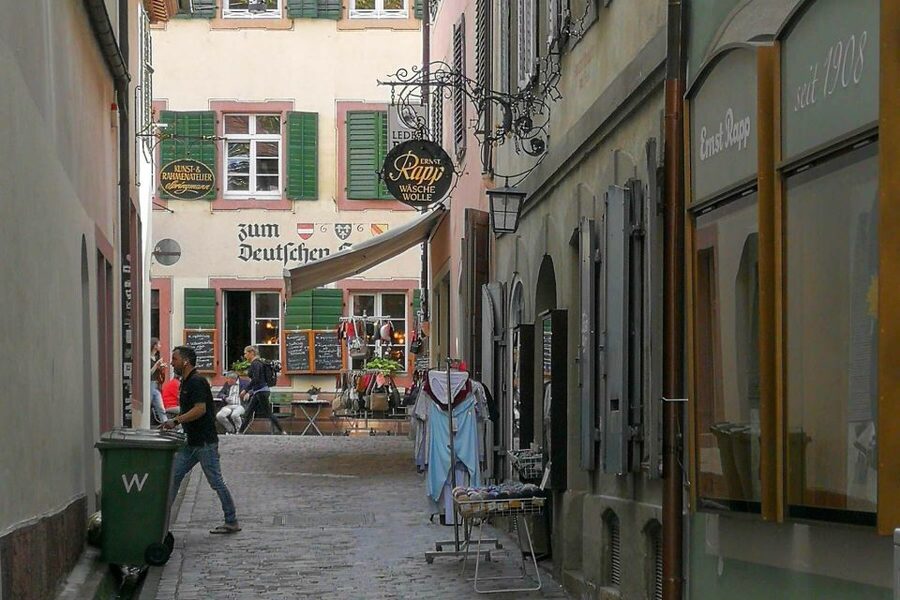
After Gerberau and Augustinerplatz, the walk reaches Kaiser-Joseph-Strasse, Freiburg’s main shopping street. This is a useful reminder that the old town is not an isolated historic set piece. It remains part of the city’s daily commercial life.
From the shopping street, you can see the Martins gate, one of the old town gates that has survived. The gate gives you a clear visual link to Freiburg’s former defenses and helps explain the limits of the historic center.
The contrast works well. One moment you are in a narrow old lane, and the next you are beside a major shopping street with a historic gate in view. I find this kind of transition more useful than a tour that keeps you inside one carefully preserved pocket.
The guide can also help you understand how the surviving gate relates to the wider old town. You are not simply looking at an attractive tower. You are seeing one remaining piece of the city’s earlier boundary.
Rathausplatz and two town halls
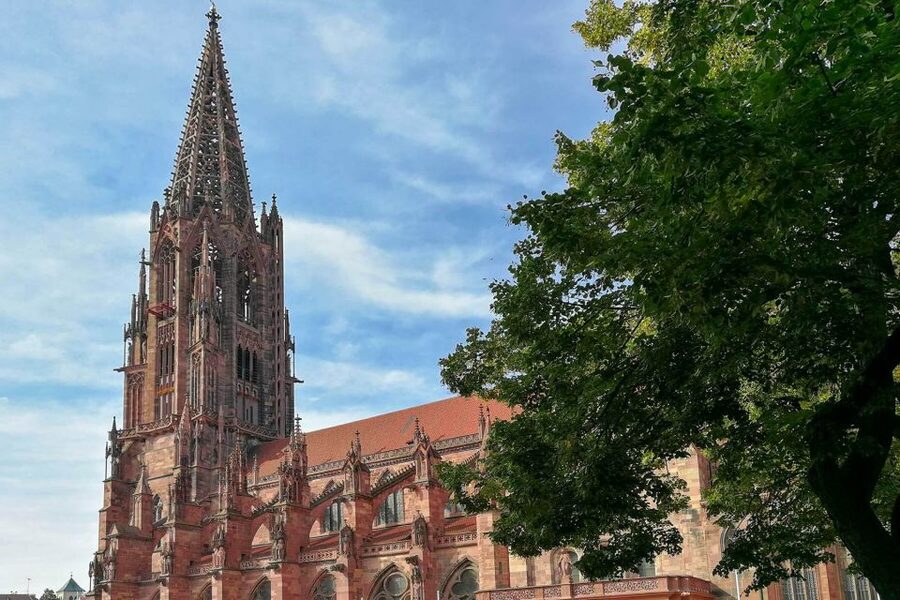
The route continues to Rathausplatz, where you find not one but two historic town halls. That detail is easy to overlook without a guide, and it gives the square an immediate talking point.
The two buildings reflect different periods and civic needs. The square is a good place to pause because it brings together administration, public space, and architecture in one view. After the tighter lanes, it also gives the group room to gather.
Guides are expected to keep the walk engaging with stories and answers. The strongest comments about this experience focus on that personal delivery. Iris is repeatedly described as warm, energetic, patient, and an excellent storyteller, while other guides are praised for keeping people involved even on a cold, wet day.
That does not mean every departure will feel identical. Guide style varies, and a group of up to 25 people can make questions and positioning harder. Still, the tour’s structure gives the guide plenty of recognizable places to use as anchors.
Haus zum Walfisch and the return to Münsterplatz
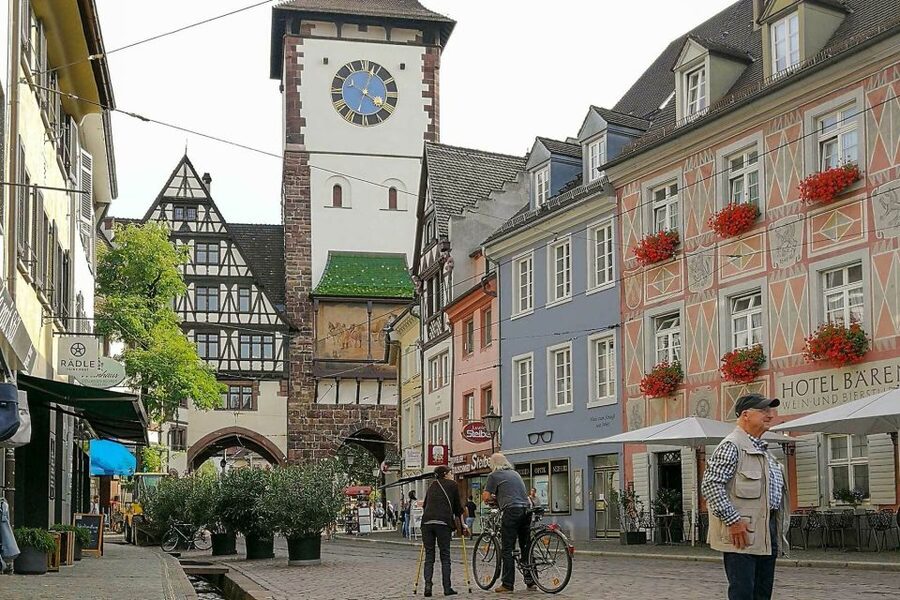
Near the end, you pass Haus zum Walfisch, a striking historic building with a memorable name. It is one of the final landmarks before the route returns to Münsterplatz.
Ending where you began is convenient. You are brought back to the central square, close to the minster, cafés, pubs, and the starting shop. That makes it easy to continue sightseeing, eat nearby, visit the market if it is still operating, or arrange a separate visit inside the cathedral.
The full circuit covers a good amount of the old town in 90 minutes. It is not designed to give you long interior visits or unhurried time at every stop. Instead, it gives you a map in your head and a list of places worth revisiting.
What the $13 price really buys you
At $13 per person, this is an inexpensive way to get oriented in Freiburg. The value is strongest if you are visiting for the first time and want someone to connect the minster, Bächle, lanes, gates, town halls, and shopping streets.
You are paying for a guided overview, not admission to attractions. Museums are excluded, and the inside of Freiburg Minster is not part of the walk. That is fair at this price, but you should budget extra time and money if those interiors are priorities.
The short length is another value point. A 90-minute tour can fit into a day trip, a train stop, or the first afternoon of a longer stay. You still have most of the day left for the museum, cathedral, market, cafés, or independent exploring.
The tradeoff is the group format. This is not a private tour, and the maximum group size is 25. One earlier account described a group of roughly 30 as large, so the actual feel may depend on the departure. Stay near the guide if you want to hear every explanation clearly.
Who should book this Freiburg walk?
I would choose this tour if you want a clear first orientation and prefer local stories to an audio guide. It suits couples, families, solo visitors, and anyone with only a short time in the old town.
It is also a good match for people who enjoy details such as mosaics, gargoyles, old trades, and small lanes. The tour does not rush only to the most famous monument. It shows you how the pieces of Freiburg fit together.
You may want something else if you need a private guide, a slow pace with frequent seating, or extensive time inside museums and churches. The route is wheelchair accessible, but it still takes place on historic streets and includes periods of standing. Ask about the specific route and language if either point is especially important to you.
Booking is flexible: you can cancel up to 24 hours before the start for a full refund, and the reserve-now, pay-later option lets you hold a place without paying immediately. Alcohol and drugs are not allowed, and audio recording is not permitted.
My call: a smart first hour and a half in Freiburg
I would book this tour for the price and the route. The Bächle, Gässle, minster details, market, old gates, and two town halls give you a much fuller introduction than a quick walk around Münsterplatz alone.
Choose it early in your visit so you can return to the places that catch your interest. Aim for a morning if you want to see the farmers’ market, and confirm the language at booking if you need English. If you can handle a shared group and do not expect cathedral entry, this is a practical, story-filled way to get your bearings in Freiburg.
FAQ
How long does the Freiburg city tour last?
The tour lasts 1.5 hours.
How much does the tour cost?
The listed price is $13 per person.
Where does the tour begin?
Meet at the entrance to SCHWARZWALDMARIE Souvenirs on Münsterplatz in Freiburg.
How do I identify the guide?
The guide waits at the meeting point wearing a name tag with the BVGD logo.
What language is the tour in?
The activity is listed with a German-speaking live guide. Some guides, including Iris, have been described as bilingual and able to lead the tour clearly in English, so confirm the language for your chosen departure.
Does the tour enter Freiburg Minster?
No. The tour visits the outside of the minster, but entry into the cathedral is not included.
Are museums included?
No. Museums in Freiburg, including the Augustiner Museum, are not included in the tour.
Is the tour wheelchair accessible?
Yes, the activity is listed as wheelchair accessible. It is a walking tour, and one participant noted that standing for extended periods could be difficult, so contact the provider if you need specific assistance.
Just added in Freiburg
- Freiburg: Walking and Strolling the Historic Center★ 4.7 · 6 reviews
- Freiburg: Private Guided Walking Tour★ 4.5 · 7 reviews
- Freiburg: Private pub crawl with insider-guide & free shots★ 4.6 · 9 reviews
- Freiburg: Red Light District City Tour★ 4.1 · 21 reviews
- Freiburg City Tour: with visit of the Freiburg Minster★ 4.8 · 51 reviews
- Freiburg: Christmas Tour with Drag Queen Betty BBQ★ 4.6 · 46 reviews
- Freiburg: Guided Pub Crawl with Drinks★ 4.4 · 99 reviews
- Freiburg: Food & Fashion in den schönsten Gassen★ 4.1 · 8 reviews
Black Forest Tours, compared.
Baden-Baden, Black Forest and Strasbourg Day Trip from Frankfurt
Read our review →

Hey, Hallöchen, Freiburg! – The Travestie City Tour with Betty BBQ
Read our review →Browse the lists this tour appears in