
Reviewed · OLD TOWN TOURS
Dresden Old Town – Guided Walking Tour in English
Dresden’s Old Town is a remarkable lesson in how a city can be destroyed and then brought back to life. This 2.5-hour English walking tour links the grand baroque buildings with the harder story of wartime ruin and reconstruction. Guides such as Nicolo, Nikolai, Dominica, and James have made this route lively with jokes, context, and clear explanations.
I like the way the walk puts Dresden into a wider European story, from its early Slavic roots to Saxony’s royal power and links with Poland and Lithuania. I also like the practical route: Frauenkirche, Fürstenzug, Dresden Castle, Semperoper, and Zwinger Palace all fit into one useful first look at the center.
The main drawback is simple: two and a half hours on foot can feel long without a toilet stop, and one person specifically wished for a break. You also do not get transportation or an interior tour of Frauenkirche, so plan this as an outdoor orientation rather than a complete museum visit.
Key points to know before you book
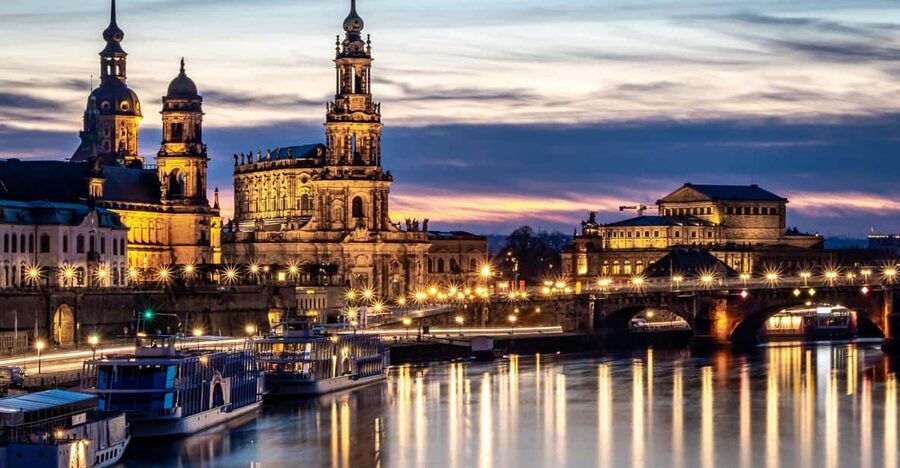
- A reconstructed old town with a complicated past: Dresden’s center looks centuries old, but much of it was rebuilt after the devastation of World War II.
- A strong royal and baroque focus: Saxon electors, Polish kings, grand palaces, and church architecture shape the walk.
- A guide-led history lesson: The best guides, including Nicolo and Dominica, connect buildings to wider European events rather than listing dates.
- A central meeting point: Find the Martin Luther statue at Neumarkt beside Frauenkirche and look for the yellow umbrella.
- Good value for a first visit: At $35, the tour covers many major sights without transportation costs or extra travel between them.
- Bring stamina and a plan for comfort: Arrive 10 minutes early, wear sensible shoes, and use a toilet before the walk begins.
Starting beside Frauenkirche at Neumarkt
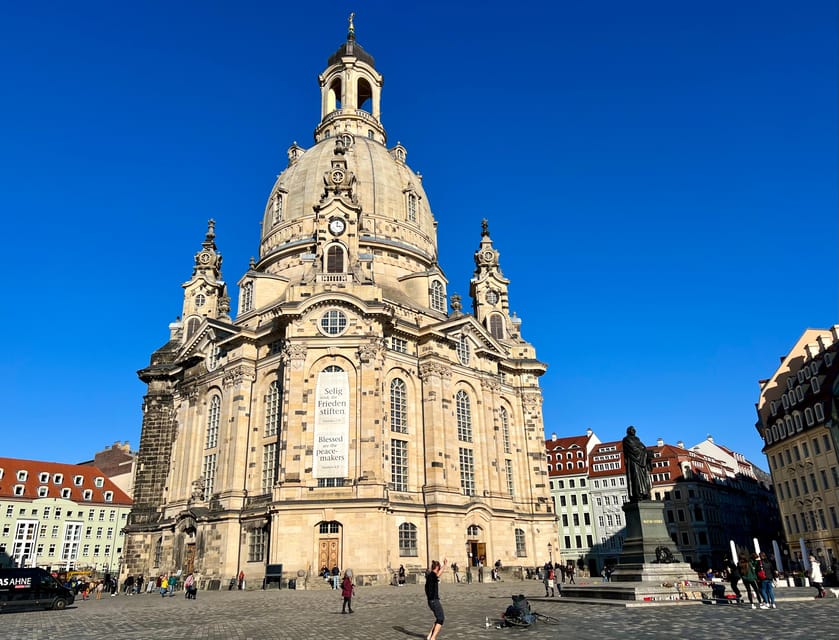
The tour begins at Neumarkt, beside the Martin Luther statue and Dresden’s famous Frauenkirche. Look for the guide with the yellow umbrella, and arrive about 10 minutes early. This is a good starting point because the square puts Dresden’s rebuilding story right in front of you.
Frauenkirche is not simply an old church in an old square. It was destroyed during the bombing of Dresden in 1945 and remained a mountain of stones for decades. The church was later reconstructed with old stones and historic design elements, giving the center its familiar baroque appearance again.
That detail changes how you read the square. At first glance, Neumarkt feels like a preserved historic setting. Then you learn that much of what you see is the result of painstaking reconstruction. I find that contrast essential to understanding Dresden. The tour helps you notice the difference between age and historical design.
The walk does not include a guided visit inside Frauenkirche, so you should allow separate time if the church interior matters to you. One family specifically wished they had arranged that. The walking tour gives you the setting and the story, but not a full church visit.
More Old Town Tours in Dresden
- Dresden: Semperoper and Old Town Tour
★ 4.8 · 5,735 reviews - Dresden: Night Watchman Tour Through The Old Town
★ 4.8 · 1,758 reviews - Dresden: Segway Tour Along the Elbe and Old Town
★ 4.9 · 392 reviews
Saxony’s rulers along Fürstenzug
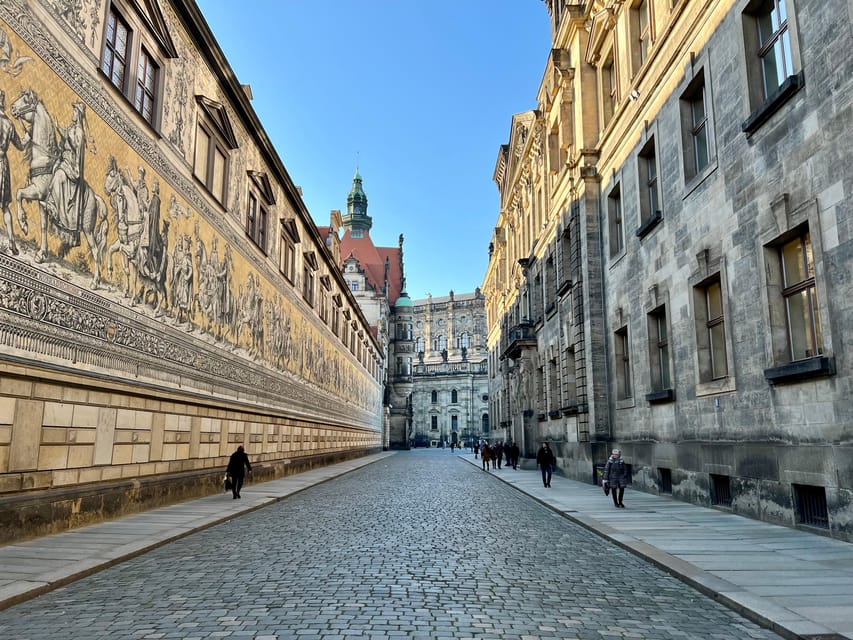
From Neumarkt, the route reaches Fürstenzug, a long mural showing the rulers of Saxony. The artwork is one of Dresden’s most memorable outdoor sights because it turns a stretch of wall into a visual history lesson.
Here, the guide can explain the Wettin dynasty and the changing role of Dresden. The city began as a small Slavic settlement, grew around a castle in the 13th century, and became an important trading center by the late Middle Ages. Silver and lead from the nearby Rudavy mountains helped fuel its prosperity.
Dresden later became the seat of Saxony’s prince-electors. In the early 18th century, Saxon rulers were also elected Kings of Poland and Grand Dukes of Lithuania. That political connection helps explain why Dresden acquired such grand buildings and ambitions.
This is where a good guide makes a real difference. You are not just looking at a row of royal figures. You are seeing evidence of a small regional city gaining power through trade, mining, dynastic marriage, and political connections across Central Europe.
Dresden Castle and the city’s royal center
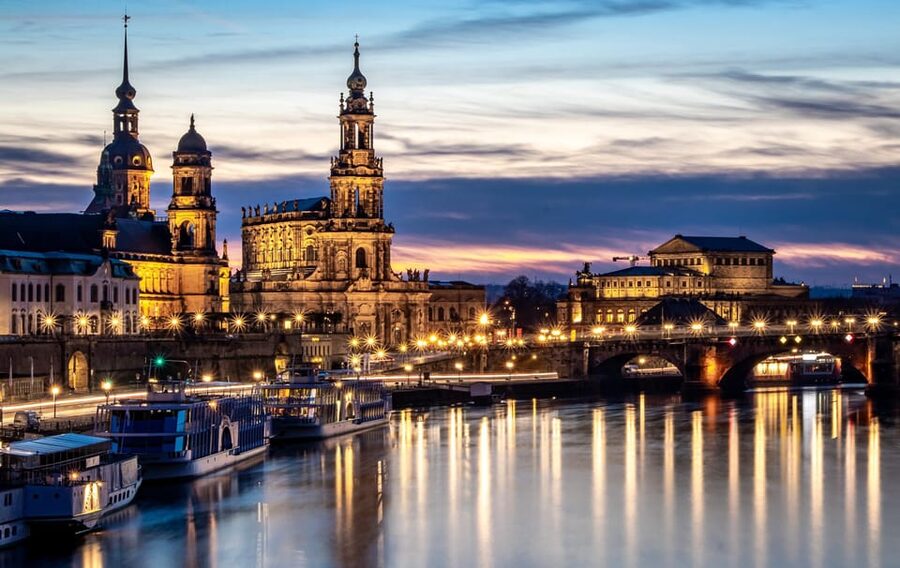
Dresden Castle adds another layer to the story. The city grew around a castle, and the later royal complex reflects centuries of change. The present building is not a single, tidy expression of one period. It carries traces of the city’s medieval beginnings, royal wealth, wartime damage, and later restoration.
The tour keeps the focus on the exterior and the surrounding streets. That makes this a useful first visit, especially if you want to understand how the castle relates to the rest of the Old Town before choosing which interiors to explore later.
I appreciate this order because it prevents Dresden’s grand buildings from becoming a blur of domes, towers, and decorated facades. The guide can explain why the castle matters before moving you toward the other major monuments.
You should expect a fairly steady pace. The route covers a lot of ground, and some tours have lasted longer than the advertised two and a half hours. That can be a bonus if you enjoy detail, but it also makes the lack of a planned toilet stop worth considering.
Altmarkt, Kreuzkirche, and the Palace of Culture
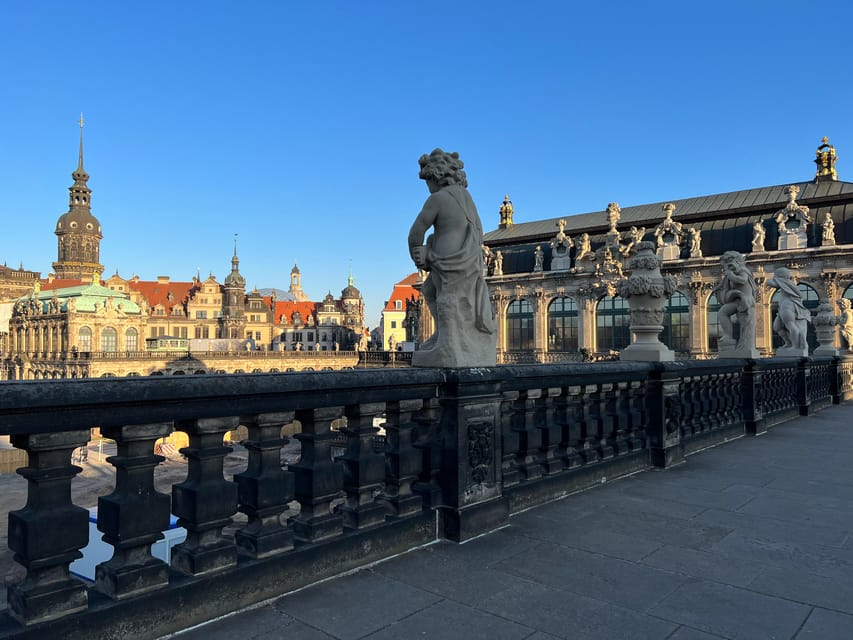
The walk continues through Altmarkt, one of Dresden’s central public spaces, toward Kreuzkirche and the Palace of Culture. This part of the route helps you see more than the royal postcard version of the city.
Altmarkt connects Dresden’s civic life with its older religious and commercial role. Kreuzkirche offers another important church setting, while the Palace of Culture points to the city’s more recent architectural history. Together, these stops show how Dresden changed across different political periods rather than remaining frozen in its baroque age.
This is also a useful section for understanding scale. Dresden’s Old Town is compact enough to cover on foot, but the buildings do not all belong to the same moment. A guide can point out how medieval, baroque, 20th-century, and reconstructed elements sit close together.
You will not need public transportation during the tour. That keeps the route simple and leaves the time for explanation, although you should be prepared to walk continuously over cobbled streets and open squares.
More Walking Tours in Dresden
- Dresden: City & Semperoper Guided Walking Tour
★ 4.8 · 2,293 reviews - Dresden: Guided City Walk with a Cup of Coffee
★ 4.7 · 1,568 reviews - Dresden: Complete Walking Tour with Frauenkirche Visit
★ 4.8 · 700 reviews - Dresden: Walking Tour with a Night Watchman and Meal
★ 4.4 · 487 reviews
Brühl’s Terrace and the Elbe connection
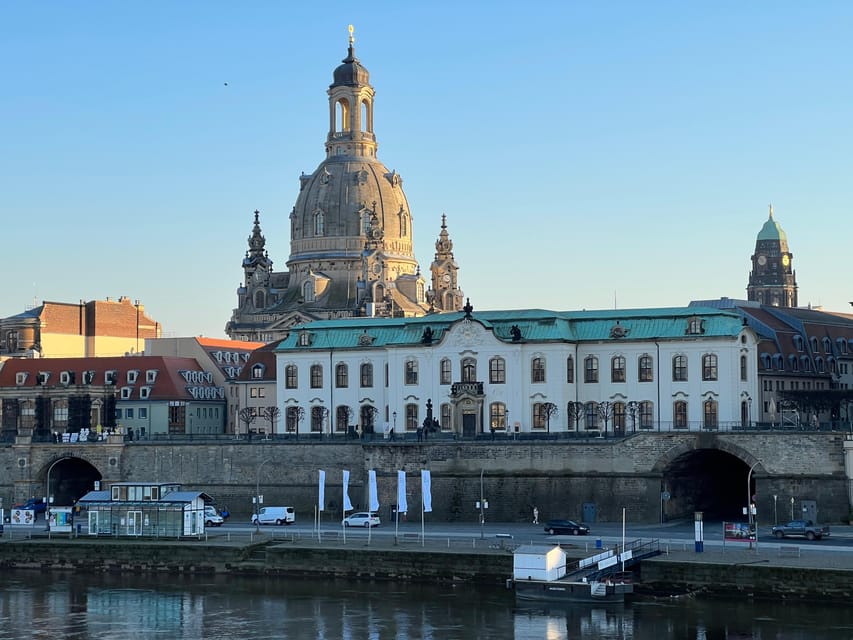
Brühl’s Terrace offers one of the walk’s most atmospheric stretches. The terrace runs above the Elbe and gives the city a broader setting beyond its monuments.
The Elbe is often described as a dividing line between Germanic and Slavic worlds. The better way to read Dresden, and one this tour emphasizes, is as a meeting point. Dresden’s name has connections that sound familiar to speakers of Czech, Slovak, Polish, and Sorbian, and the city’s history reflects movement between cultures rather than a clean border.
That idea gives the walk more depth. Dresden is not only a collection of German royal buildings. It is a Central European city shaped by nearby languages, trade routes, rulers, and shifting political ties.
Brühl’s Terrace also gives you a change of pace after the denser streets around the castle and churches. You get room to look across the Elbe and consider why this location helped Dresden grow. The guide may spend time on the city’s past and present here, so this is a good place to ask questions about modern Dresden.
Hofkirche and the Catholic mark on a Protestant city
Hofkirche is one of the Old Town’s strongest architectural sights. Its scale and decoration reflect the ambitions of the Saxon court, particularly during the period when Dresden’s rulers were linked to Poland and Lithuania.
The church is also useful for understanding the religious complexity of the city. Dresden developed in a region shaped by Protestant traditions, yet the royal court commissioned a major Catholic church. That contrast gives the building more meaning than its ornate exterior alone.
The tour’s value here comes from linking architecture to power. Large churches were not just places of worship. They showed wealth, political confidence, and the reach of a ruling family.
You may want to pause and take in the detail rather than rushing from one photo stop to the next. The route includes many major buildings, but the strongest moments come when you understand why a building was created and what it says about Dresden’s rulers.
Semperoper and the baroque skyline
Semperoper, Dresden’s celebrated opera house, brings the route into the cultural side of the city. Its presence helps explain why Dresden became known for art and music as well as politics and trade.
Along with Hofkirche, the opera house helps form the grand skyline associated with the Old Town. The guide can place it within the wider group of baroque structures that transformed Dresden in the early 1700s.
The outdoor explanation is useful even if you have no plan to attend a performance. You see how the opera house fits into the royal center, and you gain a better sense of Dresden’s desire to present itself as a major European court.
The route is not designed as a performance or museum tour. You will learn about the building from outside, then continue through the center. If you want to see interiors, you will need separate plans.
Zwinger Palace near the Elbe bridge
Zwinger Palace is one of the major final highlights. Its courtyards, pavilions, and decorative details show Dresden at its most theatrical. The palace was part of the city’s transformation into a court of European importance.
The guide can help you read the building as more than an impressive facade. It reflects the ambitions of the Saxon rulers and the wealth available to the court during Dresden’s great baroque period.
Its position near the Elbe bridge also helps tie the route together. You have moved from Neumarkt and the royal buildings through churches, civic spaces, and the river terrace, then reached one of Dresden’s clearest expressions of court culture.
This is a strong finish for a first walk because Zwinger Palace gives you an image to carry with you after the tour. You will also be better prepared to return on your own for museums or a slower look at the courtyards.
Dresden’s destruction and careful rebuilding
The most important part of this experience is not any single palace. It is the connection between Dresden’s glory and its destruction.
Nazi rule and World War II left the city center badly damaged. Dresden became known for the scale of its bombing, and many historic buildings were reduced to ruins. After the war, the work of rebuilding continued over many years.
The restored center can look so convincing that you might assume every facade survived intact. In reality, some buildings were reconstructed with old stones, historic plans, traditional methods, and careful design work. Dresden, along with Warsaw, is one of Europe’s clearest examples of a city rebuilding its historic center after near-total destruction.
A strong guide keeps this story from becoming a simple tale of beautiful buildings. You should hear about the loss, the choices made during reconstruction, and the tension between preserving history and creating a living modern city.
Several guides have been praised for making 20th-century history part of the main story rather than an afterthought. That matters. A tour that discusses only princes and baroque decoration would miss the central question of Dresden: how much of the city is old, how much is recreated, and what does that mean?
The guides and the tone of the walk
The guide is the main variable in any walking tour, and this one has drawn particular praise for clear storytelling and humor. Nicolo, also referred to as Nicolas or Nikolai, has led tours that connected Dresden with wider European history and kept the pace engaging. Dominica has been described as a passionate storyteller, while James has provided a useful historical orientation.
Guide names can vary by date, so do not book expecting one specific person unless the provider confirms it. The common thread is an English-speaking guide who explains the buildings, the city’s political past, and the destruction and rebuilding of the 20th century.
English ability has generally been strong, though speaking speed can vary. One guide was noted for speaking quickly, so do not hesitate to ask for a slower explanation if needed.
The tone is conversational rather than academic. You can expect facts mixed with anecdotes and occasional jokes. That approach works well for a long history walk because Dresden has many names, rulers, dates, and building projects to keep straight.
Is $35 a fair price?
At $35 per person, I consider this good value if you are visiting Dresden for the first time. The walk covers the main Old Town sights, uses a live English-speaking guide, and saves you the work of assembling the city’s story from separate plaques and guidebook pages.
The price structure needs a little attention. This is described as a general pay-as-you-wish tour, but the booking amount covers the reservation fee and the guide’s payment. In practical terms, treat the $35 as the amount connected with reserving and paying for the experience, rather than assuming the guide is working only for a voluntary tip.
You are paying for orientation and interpretation, not admission tickets. Transportation is not included, and the tour does not provide a separate interior visit to Frauenkirche or the other buildings.
I would get the most value by taking this walk early in a Dresden stay. Afterward, you can return to the buildings that caught your interest and choose which museums, church interiors, or palace rooms deserve more time.
Who should take this Dresden walk?
This tour suits you if you want a clear first introduction to Dresden’s center and prefer history explained in person. It is especially useful if you want the city’s royal past, Slavic connections, baroque architecture, and wartime destruction treated as one story.
Families can also do well with it. The guide style is lively enough to hold the attention of adults, and the humor helps break up the long sequence of historical names.
You should think twice if you dislike walking for two and a half hours or need frequent breaks. The route is wheelchair accessible, but cobbled streets, long stretches without a scheduled toilet stop, and the overall duration may still affect your comfort.
Arrive early, wear comfortable shoes, use a toilet before meeting the guide, and bring water. Canceling is flexible up to 24 hours before the start for a full refund, and you can reserve now and pay later, which helps if your Dresden schedule is still changing.
Should you book it?
Book this tour if you want Dresden’s major Old Town sights explained with the difficult parts included. The strongest reason to go is the historical connection between the buildings: early Slavic settlement, medieval trade, Saxon power, baroque ambition, wartime ruin, and careful reconstruction.
At $35, it is a sensible first-day choice for most visitors. Skip it only if you want a short photo walk, a private tour, or a detailed interior visit. For everyone else, bring sturdy shoes, allow the full two and a half hours, and make Frauenkirche’s interior a separate stop.
FAQ
Where does the Dresden walking tour meet?
Meet the Walkative guide next to the Martin Luther statue at Neumarkt, beside Frauenkirche. Look for the yellow umbrella.
How long does the tour last?
The advertised duration is 2.5 hours. Some tours have lasted longer, so allow extra time if your schedule is tight.
What language is the tour in?
The tour is conducted in English by a live English-speaking guide.
Which Dresden sights are included?
The route includes Neumarkt and Frauenkirche, Fürstenzug, Dresden Castle, Altmarkt, Kreuzkirche, the Palace of Culture, Brühl’s Terrace, Hofkirche, Semperoper, and Zwinger Palace near the Elbe bridge.
Is transportation included?
No. This is a walking tour, and transportation is not included.
Can I cancel the booking?
Yes. You can cancel up to 24 hours before the activity for a full refund. You can also reserve now and pay later.
Just added in Dresden
- Test Drive Electric Vehicles from the VW brand (ID. model)★ 4.8 · 190 reviews
- SRF CoBi | City Tour by ConferenceBike★ 4.7 · 38 reviews
- Dresden: Scavenger Hunt to Elbe River & Castles★ 4.7 · 15 reviews
- Dresden: Bike Rental – City Bike with Option Children Seat★ 4.5 · 13 reviews
- Private trip from Prague to Dresden, Moritzburg & Meissen★ 5.0 · 5 reviews
- Moritzburg: Scavenger Hunt Self-Guided Walking Tour★ 4.8 · 12 reviews
- Historical tour of the old town including a Saxon dinner★ 4.7 · 23 reviews
- Climb the mountains together with goats★ 4.8 · 8 reviews
Old Town Tours, compared.

Old Town & Viktualienmarkt City Walk in German
Read our review →
The Night Watchman Old Town Walking Tour in German
Read our review →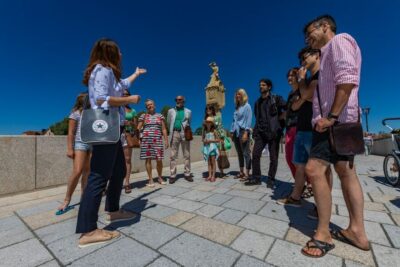
New Old Town and Highlights German-Language Tour
Read our review →Browse the lists this tour appears in