
Reviewed · HAMBURG TOURS
Dialogue in the dark (tour in German)
The striking part of Dialogue in the Dark is simple: you lose sight, and a blind guide becomes the person who shows you the way. With a long cane in hand, you move through a park, cross a street, and handle familiar places by sound, touch, and trust.
I like the small groups of up to eight, which give the hour a personal feel. I also like the chance to speak with the guide afterward in the dark bar, where questions about daily life without sight are welcome. The main drawback is practical: the tour is in German, and the complete darkness may feel uncomfortable if you dislike confined or unfamiliar settings.
Key points to know
- Blind guides lead the entire 60-minute course, turning the usual idea of who is helping whom upside down.
- Everyday scenes become difficult and surprising, including a park, a street crossing, and a bar.
- Groups are limited to eight people, so you are not lost in a crowd.
- A dark-bar conversation follows the tour, with drinks available at your own cost.
- Selected sessions focus on HSV soccer, including a soccer museum and a recreated Volksparkstadion.
- The experience costs $28 per person, with free cancellation up to 24 hours before the start.
What Dialogue in the Dark asks you to do
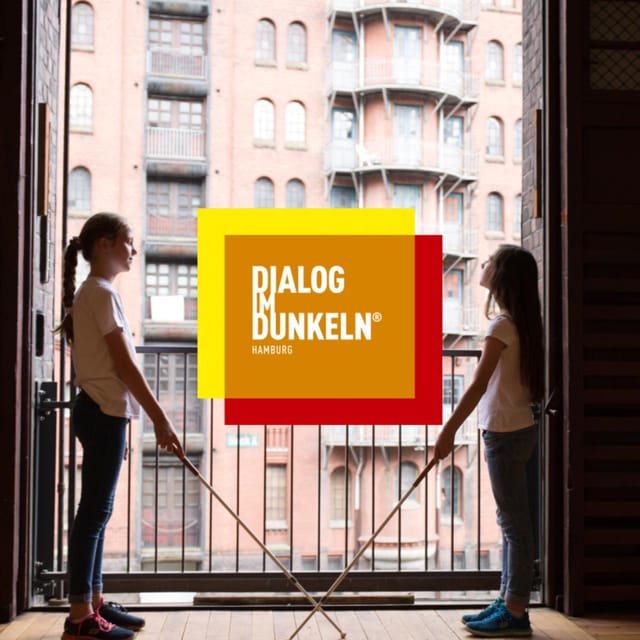
Dialogue in the Dark is not a museum visit where you walk from one display to the next. It is a guided course in complete darkness. You enter without sight and rely on your other senses, your long cane, your group, and the blind host leading you.
That change in roles is the point. In most sightseeing situations, sighted people assume they can find the door, read the sign, judge the distance, or spot an obstacle. Here, those small acts disappear. A familiar setting becomes something you must understand through sound, touch, and movement.
The experience is designed to build understanding of life without visual perception, but it does so through ordinary tasks rather than a lecture. A walk through a park or a visit to a bar may sound simple. In total darkness, each one becomes a problem to solve.
You should expect the tour to feel more personal than a standard Hamburg attraction. The guide does not simply explain the exhibition. The guide leads you through it and helps you find your way safely.
A few more half-days in Hamburg worth comparing
- Hamburg: Sex and Crime in St. Pauli Tour for Ages 18+
★ 4.7 · 15,447 reviews - Hamburg: 1.5-Hour Harbor and Speicherstadt Day Cruise
★ 4.6 · 14,200 reviews - Hamburg: 90-Minute Evening Lights Harbor Cruise
★ 4.5 · 7,728 reviews
Entering the lightless exhibition course
The tour takes place at Dialoghaus Hamburg in the German state of Hamburg. Once the lightless section begins, your group is guided through several everyday situations. The supplied information specifically names a park, a street crossing, and a bar, though the value comes less from the set pieces than from how different they feel without sight.
The long cane is an important part of the experience. You use it to sense what lies ahead and to support your movement. Your guide remains the person who understands the environment and directs the group.
With only eight people at most, you have a better chance to hear instructions and keep track of the group. A smaller group also matters emotionally. You are not performing for a large audience. You are sharing an unusual hour with a few other people while depending on the same guide.
The course lasts 60 minutes. That is long enough for the idea to become real, but short enough that the experience does not take over your day in Hamburg. Still, an hour in total darkness can feel intense. If you prefer conventional sightseeing, this is not a gentle background activity. It asks for attention from the moment it starts.
A park, a street, and familiar places made strange
The park scene gives you a useful first lesson. Parks are usually easy to read visually: you see the path, trees, open space, and people around you. In darkness, you need to work out where you are through other clues.
A street crossing raises the stakes in a different way. You cannot simply look left and right or follow a traffic signal with your eyes. The scene shows how many small visual habits guide daily movement, often without your noticing them.
These situations are valuable because they are not exotic. You probably know how to walk through a park or cross a road. The course takes those familiar actions and removes the sense you normally trust most.
The experience does not turn blindness into a game. Its strongest moments come from the shift in responsibility. Your blind host is the one with the practical knowledge of the dark setting, while you must learn to listen and follow.
That reversal can feel humbling, and it is meant to. You are not simply pretending to be blind for an hour. You are being asked to notice how much of your own confidence comes from sight and how quickly that confidence changes when sight is gone.
The dark bar and the questions you may bring
The tour ends in a dark bar, where you can have a drink and speak with the guide. Drinks are not included in the $28 price, so plan to pay separately if you want one.
This final conversation is more than a casual finish. The dark course may leave you with practical questions about navigation, work, independence, or ordinary routines without visual perception. The bar gives you a clear place to ask them.
One guide specifically praised in the supplied material is Mario, who led the group with humor and confidence and answered questions patiently afterward. His role shows why the conversation matters. The guide is not only there to move you from one scene to another. The guide can help you connect the activity with real daily life.
You should also feel free to ask respectful, direct questions. The format is built around dialogue, not silent observation. The conversation may be the most useful part for anyone who wants a better understanding of blindness beyond a short simulated experience.
Same city, a completely different kind of day:
- Hamburg: 2-Hour XXL Port of Hamburg Cruise Tour
★ 4.7 · 6,979 reviews - Hamburg: Line A Sightseeing Hop-On Hop-Off Bus Tour
★ 4.6 · 6,958 reviews - Hamburg: Elbphilharmonie Plaza Guided Tour
★ 4.7 · 5,882 reviews - Hamburg: Hamburg Dungeon Admission Ticket
★ 4.7 · 5,745 reviews
The special HSV soccer tour
At selected times, Dialoghaus Hamburg offers a soccer version of the tour. Instead of only moving through general everyday settings, you encounter a soccer museum and a recreated Volksparkstadion, the home ground associated with HSV.
This version uses the same basic idea. Your blind hosts become your eyes, and you experience soccer culture without visual access to the displays or stadium setting. That changes the way you think about a sport usually tied to sight, color, movement, scoreboards, and the view from the stands.
The HSV option is a good match if soccer is already part of your Hamburg plans. It adds local football identity to the activity and gives you a specific subject to discuss in the dark bar afterward.
Check the time and tour description carefully before booking, since the soccer focus is available only at selected times. The standard experience and HSV session should not be treated as identical products.
Why the small group matters
A maximum of eight participants is one of the strongest practical features. In a fully dark environment, a large crowd could make it hard to hear the guide, maintain your position, or process what is happening.
A small group also gives the host more room to guide people safely and answer questions. You may still share the experience with strangers, but the setting is less anonymous than a large attraction.
The number does not guarantee that everyone will react in the same way. Some people may be quiet and cautious, while others may speak often or laugh when a simple task becomes difficult. The guide has to manage those different reactions within one hour.
If you like thoughtful activities with a social side, the group format should work well. If you want complete privacy or dislike depending on other people, the format may feel less comfortable.
What the $28 price delivers
At $28 per person, this is priced like a focused cultural attraction rather than a full-day tour. You are paying for admission to Dialoghaus Hamburg and a guided hour with a blind host. The drink at the end costs extra.
I consider the price fair if you want an experience that changes how you think, not just another place to look at. The tour is short, but its effect depends on how much attention you give it. You are not buying a long itinerary packed with landmarks. You are paying for a carefully controlled change in your normal way of moving through the world.
The value is stronger for people who will use the dark-bar conversation well. If you plan to ask thoughtful questions and reflect on the experience, the hour offers more than a novelty. If you only want a quick thrill, the price may feel high for a 60-minute activity.
The reserve-now-and-pay-later option also makes planning easier. You can hold a place without paying immediately, and cancellation is free up to 24 hours before the start. Check the available times before shaping your Hamburg day around it.
Language, comfort, and access
The tour is conducted in German. That is not a small detail. The guide gives directions in darkness, so you need to understand spoken German well enough to follow instructions and respond when needed.
The experience is listed as wheelchair accessible. If you use a wheelchair, you should still confirm any personal questions about the course when booking, since darkness and movement can affect how you prefer to take part.
Flash photography is not allowed. In practical terms, that rule protects the dark setting and prevents a sudden burst of light from breaking the experience for everyone.
You should not expect to take photos during the tour. This is an activity based on what you hear, feel, and remember afterward. Keep your phone put away and give the course your full attention.
The complete darkness is the main physical and emotional consideration. Some people will find it freeing or fascinating. Others may feel uneasy at first. The guide is there to lead you safely, but the activity still requires you to accept a temporary loss of visual control.
Who will get the most from this hour
I would recommend Dialogue in the Dark to you if you enjoy activities that ask more from you than looking at objects and taking pictures. It suits people who want a thoughtful break from Hamburg’s usual sightseeing and who are willing to listen closely.
It is especially suitable for:
- People interested in accessibility and daily life without sight
- Families and friends looking for a shared activity with something to discuss afterward
- Soccer fans who can book the HSV version
- Visitors comfortable following spoken directions in German
- Anyone who enjoys small-group experiences rather than large guided outings
It may not suit you if you need constant visual orientation, dislike darkness, or want a relaxed activity with no surprises. The tour is also a poor choice if you do not understand German well enough to follow the guide.
The activity can be useful for a group because everyone enters the same unfamiliar situation. Friends and relatives may discover that they react differently to darkness, sound, and dependence on the guide. That shared experience gives you something real to talk about after the hour ends.
Should you book Dialogue in the Dark?
Book it if you want a short, unusual Hamburg experience that replaces sightseeing with listening, trust, and direct conversation. The blind guides, eight-person limit, and dark-bar discussion give the activity more substance than a simple sensory trick.
The standard tour is the better choice if you want to think about everyday life without visual perception. Choose the HSV session, at a selected time, if soccer and Hamburg football culture are your main interests.
Skip it if the German language barrier is a problem or if complete darkness sounds more stressful than rewarding. For the right person, though, $28 buys an hour you are likely to keep thinking about long after the lights come back on.
FAQ
Where does Dialogue in the Dark take place?
It takes place at Dialoghaus Hamburg in Hamburg, Germany.
How long does the tour last?
The guided tour lasts one hour.
What language is the tour in?
The live tour guide speaks German, and the listed activity language is German.
How many people are in each group?
The group is limited to a maximum of eight participants.
Who leads the tour?
Blind hosts guide the group through the lightless exhibition course.
Is a drink included at the dark bar?
No. Drinks at the dark bar are not included in the activity price.
Is the tour wheelchair accessible?
Yes, the activity is listed as wheelchair accessible.
Can I cancel the booking?
Yes. You can cancel up to 24 hours in advance for a full refund.
Just added in Hamburg
- Hamburg: St. Pauli Food and Bier Tour★ 4.7 · 5 reviews
- Hamburg: Private Tour Red Light District Walking Tour★ 4.7 · 227 reviews
- St. Pauli Tour: Drag-Attack with Barbie Stupid & Lee Jackson★ 4.8 · 280 reviews
- St. Michael’s, Elbe Tunnel & Harbor 2-Hour Hamburg Tour★ 4.9 · 21 reviews
- Hamburg: Safari tour in St. Pauli★ 4.9 · 11 reviews
- Satt Pauli – der kulinarische Rundgang durch St. Pauli★ 4.8 · 12 reviews
- Radtour um die Alster & durch traumhafte Alsterviertel★ 4.9 · 34 reviews
- Hamburg: Reeperbahn Comedy Club★ 4.3 · 53 reviews
Hamburg Tours, compared.



Browse the lists this tour appears in