
Reviewed · LEIPZIG TOURS
Music in Leipzig – Bach, Wagner and the Thomanerchor
Leipzig’s musical story begins in the old town, where trade, churches, choirs, and concert halls put the city on Europe’s cultural map. This 90-minute private walk follows the Leipzig Music Trail and connects Bach, Wagner, Mendelssohn, Schumann, the opera, the Gewandhaus, and the famous Thomanerchor.
I like the way the tour adds period street sounds and Bach’s music to a walking route that could otherwise feel like a list of names. I also like the focus on St. Thomas Church, the choir’s 800-year story, and St. Nicholas Church, where Bach gave his first Leipzig performance as cantor.
The main caution is simple: this is a music-history walk, not a full concert. One recent booking found the musical portion lighter than expected, and the churches were closed at the scheduled time, so access to interiors may depend on the day.
Key points to know before booking
- Bach is the central figure: Follow his Leipzig work through St. Thomas Church and St. Nicholas Church.
- The route also covers Wagner, Mendelssohn, and Schumann: Leipzig’s musical story reaches well beyond one composer.
- Music is part of the walk: Expect Bach excerpts and recreated 18th-century street noise, but not a complete live performance.
- The tour is private: One group can include up to 25 people, at a listed price of $188 per group.
- Tom may be your guide: He is described as engaging, well prepared, and entertaining, with a clear enthusiasm for the links between Leipzig’s musicians.
- Church access is not guaranteed: The route includes major churches, but opening conditions can change.
Why Leipzig’s music story works best on foot
Leipzig is easy to file away as a business city, a trade show city, or a stop between larger German destinations. That misses a major part of its character. Its churches, concert institutions, opera tradition, and musical schools helped make it one of Europe’s great music centers.
A walking tour makes sense here because the subject is tied to specific places. You are not simply hearing that Bach lived and worked in Leipzig. You are following the city streets that connect his churches, the old civic center, the concert world, and the institutions that still shape Leipzig’s musical life.
The route also gives you a wider view. Wagner was born in Leipzig. Mendelssohn and Schumann had important connections with the city. The Gewandhaus, the opera, and the St. Thomas Church Choir remain part of Leipzig’s cultural identity.
I especially like this approach for visitors who know a few famous names but want to understand how they fit together. You do not need to be a trained musician. The point is to see how commerce, religion, education, performance, and civic life supported one another.
More concerts and opera nights in Leipzig:
- Berlin: Classical Concert at Kaiser Wilhelm Memorial Church
★ 4.6 · 387 reviews - Munich: Classical Concert at the Residenz Palace
★ 4.5 · 148 reviews - Munich: Spanish Guitar & Bach Toccata at Asamkirche
★ 4.3 · 27 reviews
Starting at Markt 1 and the Old Town Hall
The meeting point is the Museum Shop at the Altes Rathaus, Leipzig’s Old Town Hall at Markt 1. This is a practical starting place in the historic center, and it puts you close to the city’s main musical sights.
Your guide leads the group from the old civic heart into the music story. The tour is private, so the pace and explanations can suit your group better than a large public walk. A family can ask basic questions without feeling out of place, while a music enthusiast can press for more detail.
The group limit is 25 people. That is not a tiny private walk for two, but it is still more personal than a large city tour. At $188 per group, the value improves when several people share the cost. A group of four pays far less per person than a solo visitor, while a larger family or organized group gets a fixed price instead of individual tickets.
The available guide languages are English, German, Spanish, French, Italian, and Russian. You should confirm your preferred language when checking availability. The listed duration is 90 minutes, so expect a focused introduction rather than an all-day study of Leipzig’s music.
Following the Leipzig Music Trail
The Leipzig Music Trail gives the walk a clear shape. Instead of moving randomly between old buildings, you follow a route built around the people and institutions that made Leipzig important.
The guide discusses musical museums, cultural centers, the opera, the Gewandhaus, and the churches. These stops help explain that Leipzig’s music life was never limited to one composer or one choir. It grew through performance spaces, teaching, worship, and public support.
The walk also connects past and present. The great musicians of the Gewandhaus, the singers of the St. Thomas Church Choir, and professors at the conservatory continue to influence the city’s musical identity. That makes the tour more than a backward glance at famous figures. It shows you why the subject still matters in Leipzig today.
The format is especially useful if you have limited time. In 90 minutes, you can get a map of the city’s music institutions before deciding which museum, church, concert, or performance deserves a longer visit later.
Do not expect every location to receive equal attention. The route has several major names and institutions to cover, so the guide must keep moving. If you want a detailed biography of Bach, Wagner, or Mendelssohn, you may need a separate museum visit or a longer specialist tour.
Hearing Leipzig as an 18th-century city
One unusual feature is the use of recreated 18th-century street noise. This helps you picture Leipzig as a working city rather than a quiet collection of monuments.
The sound element matters because Bach’s music was written for real settings. Churches, streets, civic buildings, and daily urban life formed the background. Hearing a suggestion of that sound world can make the historical setting easier to grasp.
The tour also includes pieces Bach composed in Leipzig. That is a welcome touch, particularly for visitors who want more than spoken commentary. Still, keep your expectations sensible. This is not advertised as a concert, and the musical examples are part of a guided walk.
That distinction is important. One booking found the experience very interesting but hoped for more music. I would choose this tour if you want musical context with excerpts, not if your main goal is a long listening session.
The guide’s job is to connect the sounds to the places. A good explanation can tell you why a certain church mattered, how Bach’s work fitted into Leipzig life, and why the city’s institutions continued to support music after his time.
A few more half-days in Leipzig worth comparing
- Leipzig: City History Canal Sightseeing Tour on a Motorboat
★ 4.7 · 6,232 reviews - Leipzig: 1.5-Hour Public Tour with Night Watchman Bremme
★ 4.6 · 3,116 reviews - Combo Tour in Leipzig: Guided City Tour & City Sightseeing
★ 4.7 · 2,317 reviews - Leipzig: 1.5-Hour Historical Walking Tour in German
★ 4.7 · 2,217 reviews
St. Thomas Church and the Thomanerchor
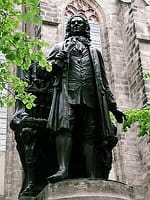
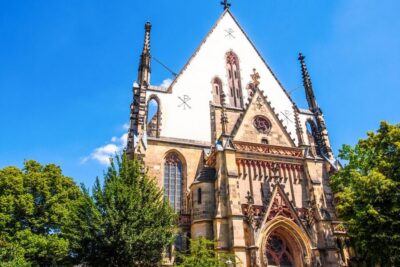
St. Thomas Church is one of the key subjects of the tour. Bach worked there, and the St. Thomas Church Choir, known in German as the Thomanerchor, has an 800-year history.
That long history gives the choir unusual weight in Leipzig. It is not just a modern performing group placed into a historic church. The choir is part of the city’s religious and musical story, and its connection with Bach helps explain why St. Thomas Church remains such an important stop.
The tour introduces the choir’s role and its reputation far beyond Leipzig. You also learn about the cultural importance of the church itself, rather than treating it as a quick photo stop.
If you have heard Bach’s name mainly in connection with organ and choral music, this is likely the most meaningful part of the route. The church links the composer’s work with an institution that still shapes Leipzig’s musical life.
Interior access can be uncertain. The route includes the church, but a recent booking found the churches closed at the planned time. The guide can still explain the site from outside, but you should not book this walk solely for guaranteed indoor access unless the provider confirms current opening conditions.
St. Nicholas Church and Bach’s first Leipzig performance
St. Nicholas Church adds another important chapter. Bach gave his first performance there as cantor in 1723, and the tour points out a bust of Bach connected with that event.
This stop helps place Bach in the city’s wider church network. Leipzig was not defined by a single building. Several churches mattered, and Bach’s work reached across them.
St. Nicholas Church also gives the tour a chance to move from biography to setting. A name in a book can feel remote. A church tied to a specific performance gives you a physical point of reference and a better sense of how Bach entered Leipzig’s musical life.
Again, access matters. The church is included in the route, but opening hours can interfere with an interior visit. If seeing the inside is essential to your plans, check ahead rather than assuming that a walking tour guarantees entry.
Wagner, Mendelssohn, and Schumann beyond Bach

Bach receives the strongest focus, but Leipzig’s musical identity is broader. Wagner was born in Leipzig, a fact the tour brings into the city’s story. Mendelssohn and Schumann also lived and worked in connection with Leipzig, adding later chapters to the city’s musical development.
This wider frame is one of the tour’s strengths. Leipzig did not have one golden moment and then fade away. Different composers and institutions added new layers over time.
The opera and Gewandhaus are part of that story. The guide explains their place in Leipzig’s cultural life, along with the conservatory and its professors. You come away with a better understanding of the city as a continuing center for performance and musical education.
The trade-off is limited depth. A 90-minute route cannot give each composer a full treatment. If Wagner is your main reason for booking, you may find that his Leipzig connection receives less time than Bach and the churches. If you want a broad city introduction, that balance works well.
What the guide adds to the experience
The guide makes a real difference on a tour built around dates, names, and institutions. The best explanations here are not just lists of composers. They show how the parts connect.
Tom is described as an engaged, capable, and entertaining city guide whose enthusiasm for the links between Leipzig’s musicians comes through clearly. That combination is useful. A guide who knows the facts but cannot connect them may leave you with a pile of information. A guide who enjoys the subject can make the relationships easier to remember.
The strongest praise centers on clear information without too many numbers. That is exactly the right balance for a short city walk. You get facts, but the tour does not appear to bury you in dates.
You should still ask questions. The experience is designed as a private group, and the guide can address your interests more directly than a large public tour. Ask about Bach, Wagner, the Thomanerchor, the Gewandhaus, or the role of the churches as the route develops.
Is $188 good value for 90 minutes?
The listed price is $188 per group of up to 25 people. That makes the cost hard to judge without considering your group size.
For one person or a couple, it is a fairly serious price for a 90-minute walk. You are paying for a private guide, not simply admission to a church or museum. The price becomes more reasonable for a family, a reunion group, or a small organized party that can divide the fee.
The multilingual service adds practical value if your group needs Spanish, French, German, Italian, or Russian rather than English. Wheelchair accessibility is also listed, which matters when planning for mixed mobility needs, though the historic route may still include normal city-street conditions.
The real value depends on your interest. If you want a quick but well-shaped introduction to Leipzig’s music institutions, the fixed group price can work. If you mainly want live music, the price will feel less convincing because the tour includes examples rather than a full performance.
The flexible booking terms help with planning. You can cancel up to 24 hours in advance for a full refund, and the reserve-now, pay-later option lets you hold a place without paying immediately. Those details are useful when your Leipzig schedule is still changing.
Who should book this Leipzig music walk?
I would recommend it to first-time visitors who want a clear introduction to Leipzig’s musical identity. It also suits families, private groups, and anyone who prefers a guide to help connect several sites in a short period.
It is a good fit for you if:
- You enjoy Bach but want context rather than a concert only.
- You want to understand the connection between the churches, choir, opera, Gewandhaus, and conservatory.
- You are curious about Wagner, Mendelssohn, and Schumann as part of Leipzig’s wider story.
- You want a private guide in one of six listed languages.
- You have only 90 minutes for a focused introduction.
I would hesitate if your top priority is guaranteed church entry or a substantial amount of live music. The route may still be worthwhile, but you should treat those elements as possible parts of the experience rather than guaranteed attractions.
Should you book it?
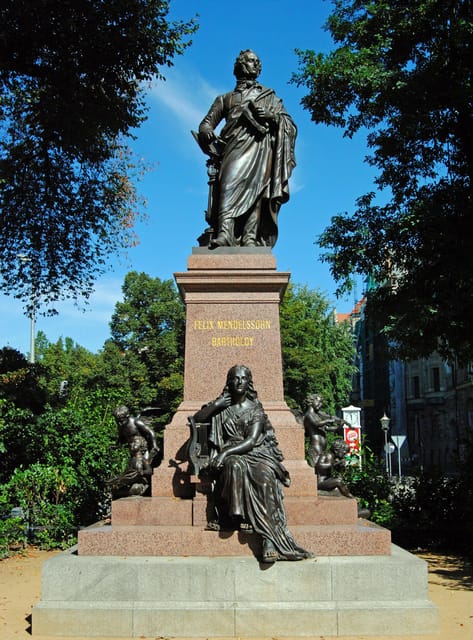
Book this walk if you want Leipzig’s music story explained in person, with Bach as the anchor and Wagner, Mendelssohn, Schumann, the Thomanerchor, the opera, and the Gewandhaus filling out the picture. The private format, multilingual guides, sound examples, and manageable 90-minute length make it a useful first look at the city.
Before booking, confirm the language and ask about current church access. If you accept that the tour is a guided history walk rather than a concert, the $188 group price can be fair, especially when shared among several people. For music lovers who want a compact route with real context, it is a strong choice.
FAQ
Where does the tour meet?
The meeting point is the Museum Shop at the Altes Rathaus, or Old Town Hall, at Markt 1 in Leipzig.
How long does the experience last?
The tour lasts 90 minutes.
How much does the tour cost?
The listed price is $188 per group of up to 25 people.
Is the tour private?
Yes. It is offered as a private group experience.
Which languages are available?
Guiding is available in Spanish, English, French, German, Italian, and Russian.
Does the tour include music?
Yes. The experience includes musical examples, including pieces composed by Bach in Leipzig, along with recreated 18th-century street sounds. It is not presented as a full concert.
Which churches are connected with the tour?
The route covers the cultural importance of St. Thomas Church and includes St. Nicholas Church, where Bach gave his first performance in Leipzig as cantor.
Can I visit the church interiors during the tour?
Church access may depend on opening conditions. A recent scheduled visit found the churches closed, so interior entry should not be assumed.
Can I cancel or pay later?
You can cancel up to 24 hours in advance for a full refund. The reserve-now, pay-later option lets you book without paying immediately.
Just added in Leipzig
- City tour on foot, by S-Bahn and tram★ 4.5 · 12 reviews
- Schkeuditz: 4-Hour Vintage East German Trabant Rental★ 4.9 · 15 reviews
- Leipzig City Centre: Scavenger Hunt Self-Guided Tour★ 4.4 · 114 reviews
- Tour on Lake Cospuden★ 4.7 · 58 reviews
- Leipzig: True or false? Walking Tour and Interactive Game★ 4.8 · 28 reviews
- Leipzig: “SoKO Leipzig”, unique Escape Room, 60 minutes★ 4.6 · 20 reviews
- Leipzig Spirits Manufacture: Guided Tour and Tasting★ 4.8 · 79 reviews
- Leipzig: Scavenger Hunt Self-Guided Tour★ 4.7 · 11 reviews
Leipzig Tours, compared.

City History Canal Sightseeing Tour on a Motorboat
Read our review →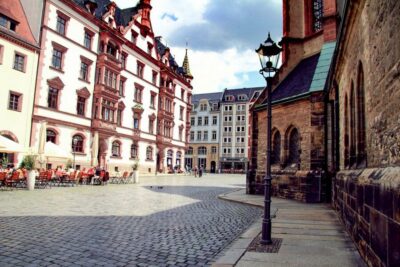





Browse the lists this tour appears in