
Reviewed · LEIPZIG TOURS
Leipzig: 360° Panorama THE CATHEDRALE OF MONET ticket
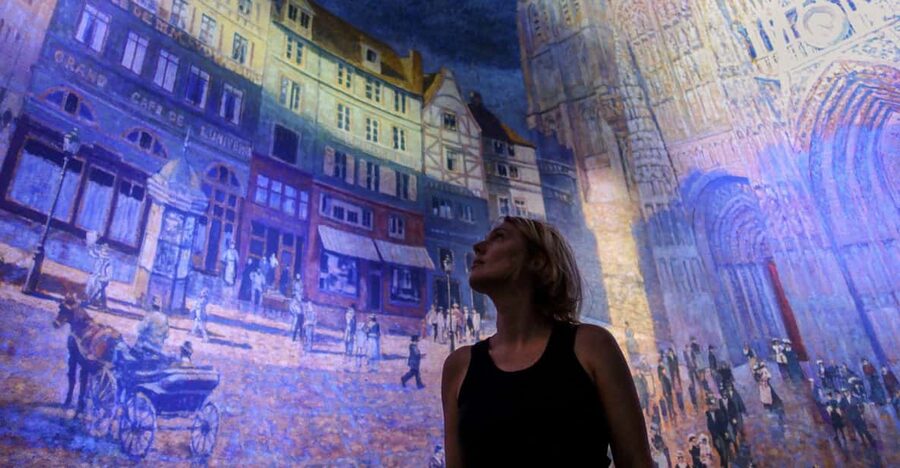
At Leipzig’s Panometer, a single Monet-inspired painting becomes a 32-meter-high 360-degree scene of Rouen. You look across the cathedral square, watch the light change from day to evening, and see the work from several levels rather than from one fixed museum wall.
I like the 15-minute day-and-night cycle, which gives the painting a sense of time instead of leaving it frozen. I also like the unusual making of the artwork: Asisi first painted a 6-by-2-meter oil image, then had it digitized and printed for the giant circular installation.
The main consideration is scale. The visitor tower reaches 15 meters, but that section is not barrier-free, and the spectacle may appeal more to people who enjoy art presented as an environment than to visitors seeking a traditional gallery visit.
Key points
- Rouen in the late 19th century: See the cathedral and surrounding streets as a painted French town from more than 100 years ago.
- A 15-minute light cycle: Day shifts into evening with changing color, sound, and music.
- A 3,500-square-meter oil painting: Brush marks and enlarged paint textures become part of the scene.
- Monet’s cathedral as the starting point: The work draws on Claude Monet’s series of Rouen Cathedral paintings.
- More than the panorama: Your ticket also covers an accompanying exhibition, a panorama legend, and a concluding film.
- Easy practical setup: The site has free parking, a café, and a small museum shop.
Entering Rouen inside the Leipzig Panometer
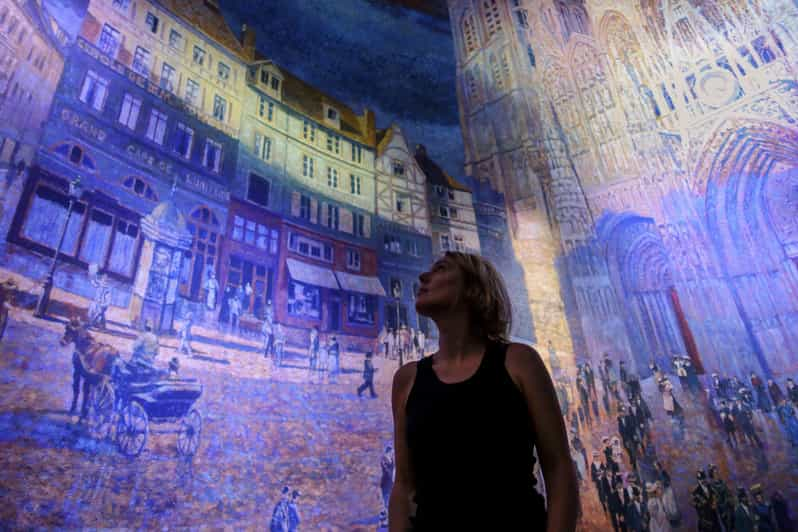
The central idea is simple and clever. Claude Monet painted Rouen Cathedral several times under different light conditions. Yadegar Asisi takes one of those lighting moods and expands it into a full view of the French city around the cathedral.
You do not stand in front of a framed canvas and move on after two minutes. Instead, you enter a circular art installation where the painted scene surrounds you. The cathedral sits at the heart of the view, while streets, houses, residents, and passing figures fill the foreground and middle distance.
The setting is Rouen at the end of the 19th century. That period matters because Monet’s work was concerned with changing light, color, and atmosphere rather than only with accurate architectural detail. Here, the cathedral is not just a building. It is the anchor for a whole moment in the city.
The installation also includes familiar names from the period. Vincent van Gogh, Auguste Renoir, and Claude Monet appear among the residents and contemporaries in the streets. Their presence adds a small game of recognition, though the main subject remains the cathedral and the changing light around it.
I would give yourself time to look beyond the obvious centerpiece. The cathedral draws your eye first, but the nearby houses, narrow lanes, and people help make the work feel like a place rather than a giant architectural study.
A few more half-days in Leipzig worth comparing
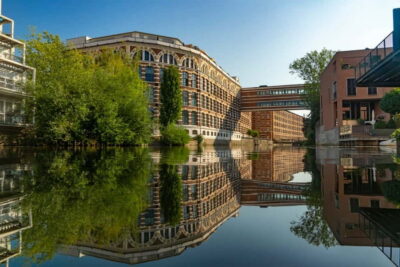
- Leipzig: City History Canal Sightseeing Tour on a Motorboat
★ 4.7 · 6,232 reviews - Leipzig: 1.5-Hour Public Tour with Night Watchman Bremme
★ 4.6 · 3,116 reviews - Combo Tour in Leipzig: Guided City Tour & City Sightseeing
★ 4.7 · 2,317 reviews
The cathedral at sunset and after dark
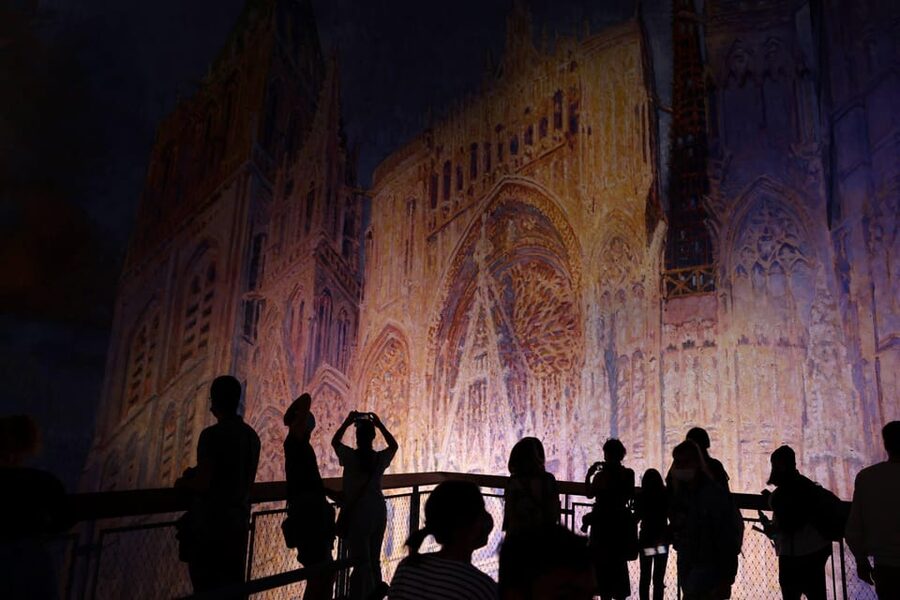
The most memorable part of the visit is the changing light. During a roughly 15-minute cycle, the panorama shifts through day and night. The cathedral facade catches the evening sun, and its orange-red glow reaches across the forecourt toward houses that are already in shadow.
That contrast is the point. You see bright stone beside darker walls, warm color against cooler shade, and small changes in the way the painted streets read. The scene does not simply become darker. It changes mood as the light moves across the architecture.
Background sounds and music accompany the cycle. They are part of the presentation, so this is not a silent museum stop. If you prefer to study paintings without sound, you may find the presentation a little theatrical. If you enjoy art with a sense of time and setting, the audio helps make the shift from afternoon to evening easier to follow.
I recommend watching at least one complete cycle. A quick look will show you the scale, but the day-to-night sequence is the feature that gives the work its reason for being. Since the ticket is valid for one day, you can also ask about the practical timing of your visit and plan around the light cycle.
How a 6-by-2-meter painting became a giant room
Asisi used an unusual process for this project. He first painted a 6-by-2-meter oil work on canvas in his Berlin studio. That original was then digitized in high resolution, printed, and arranged as a 360-degree installation at the Panometer Leipzig.
The result covers about 3,500 square meters. The original canvas texture, brushwork, and thick areas of paint are enlarged until they become part of the viewing experience. From a distance, the work reads as a city scene. Closer in, you can notice the marks that remind you it began as an oil painting.
This process gives the panorama its slightly three-dimensional quality. The canvas is not actually a built city, and you are not walking through Rouen, but the curved presentation changes how you read the painting. Your eye keeps moving from the cathedral to the houses, then down to street level and back up toward the facade.
I find this approach useful for understanding how scale changes art. A small painting asks you to bring your attention to it. This one takes over the room and asks you to consider distance, height, and position. The effect is strongest from the viewing areas higher up, where the full composition comes together.
The viewing tower and barrier-free access
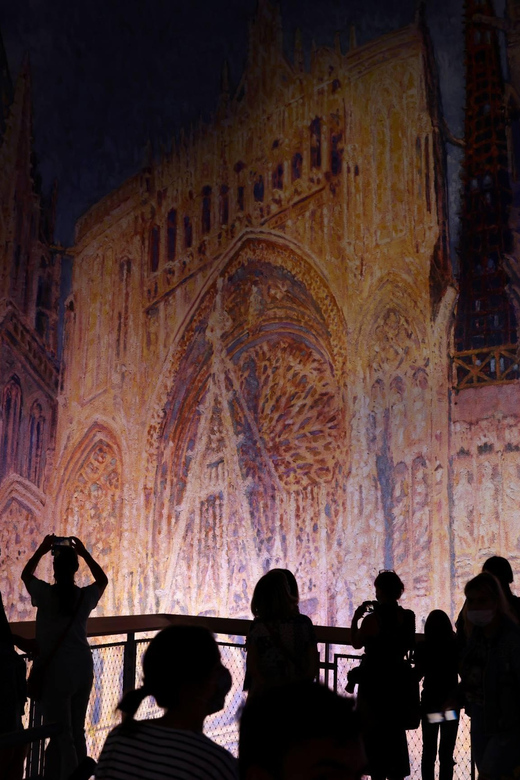
The Panometer is barrier-free apart from the 15-meter-high visitor tower. That distinction is important. You can visit the main presentation without treating the tower as a requirement, but the higher viewpoint is part of the way the panorama is meant to be seen.
From a higher level, you can take in more of the 360-degree arrangement at once. At lower positions, the cathedral and nearby streets feel larger and more immediate. Both views have value, so missing the tower does not mean missing the entire artwork.
If access needs shape your plans, check the current arrangements before you go. The information provided specifies that the Panometer itself is barrier-free except for the tower, but it does not describe every route or facility in detail.
The scale can also affect younger visitors. Children who enjoy large visual displays may find the changing light and city scene engaging. Those expecting an activity with hands-on exhibits or a fast pace may lose interest during the full 15-minute cycle.
Same city, a completely different kind of day:
- Leipzig: 1.5-Hour Historical Walking Tour in German
★ 4.7 · 2,217 reviews - Leipzig: 2-Hour Guided Walking Tour in German
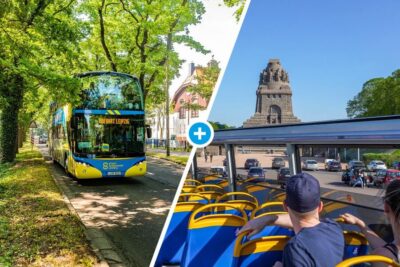
★ 4.8 · 1,612 reviews - Leipzig: 13-Stop Hop-on/Hop-off Bus Ticket
★ 4.6 · 1,468 reviews - Gruseltour Leipzig: A Haunted Guided Tour
★ 4.5 · 1,385 reviews
What comes before and after the main panorama
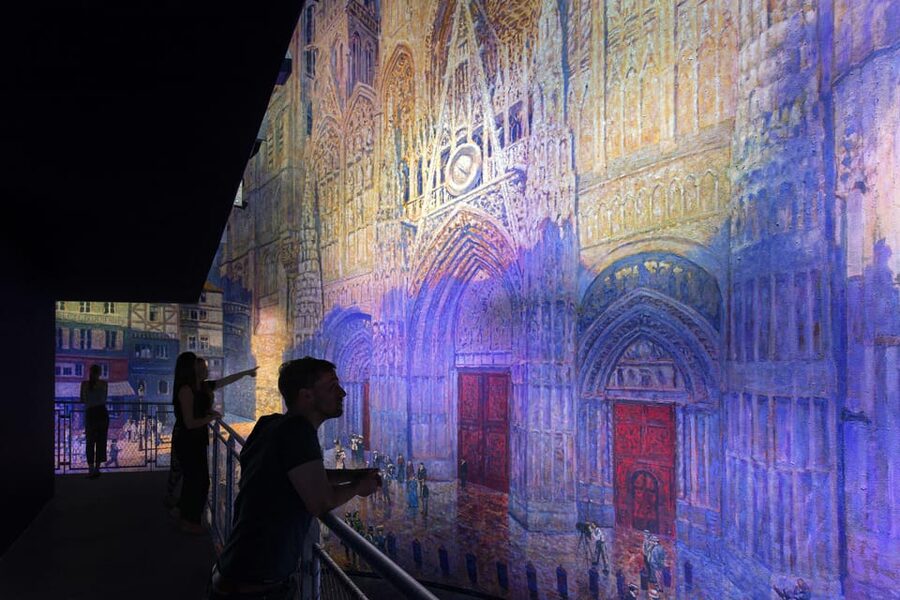
The panorama is supported by an accompanying exhibition. It gives the visit more structure and helps place the work in its artistic setting rather than presenting the large image without explanation.
A legend with explanations is included with admission. Use it to identify elements in the scene and understand what you are looking at. This is especially useful because the panorama contains many details, and the cathedral can easily dominate your first impression.
The visit ends with a film. That final presentation gives you a clear closing point and adds another layer to the story of the artwork and its setting. You should allow time for the exhibition and film rather than arriving just for a quick look at the main image.
The exact total visit time is not specified, so I would avoid building a tight schedule around it. The ticket remains valid for one day, and the attraction has a café and a small museum shop if you want to pause before or after the presentation.
Why the $18 ticket can be good value
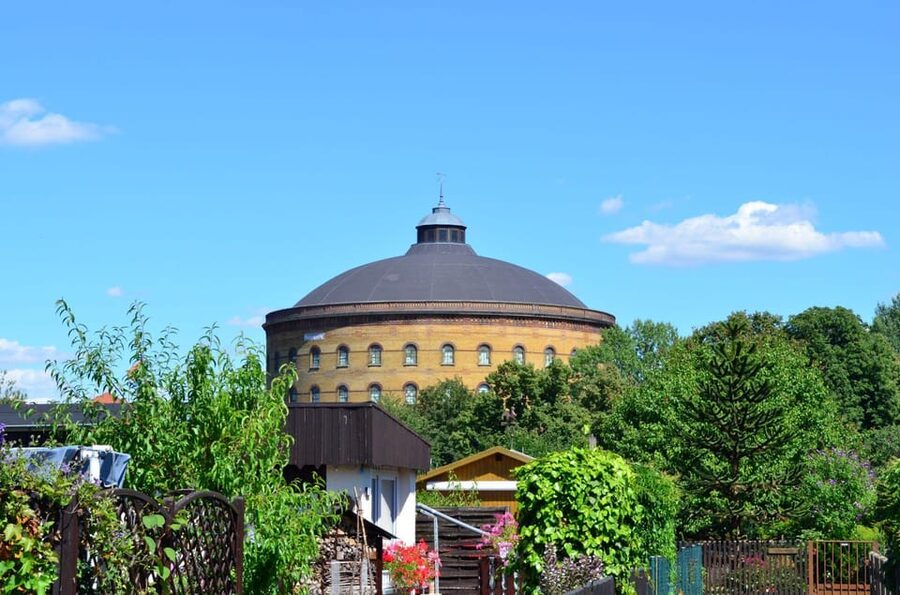
At $18 per person, this is not a casual free gallery stop, but the ticket covers several elements: entry to the Panometer, the accompanying exhibition, the 360-degree artwork, the explanatory legend, and the concluding film.
The value depends on how you use the visit. If you spend only a few minutes in the main room, the price may feel high. If you stay for the complete light cycle, read the exhibition material, study the panorama from different heights, and watch the film, the ticket gives you a substantial art stop.
You also avoid the cost of a separate guided tour unless you choose one. Guided tours in German cost an additional $4 equivalent per person, payable on arrival. Since no English guide is described, visitors who need English commentary should rely on the included explanations and their own reading of the scene.
Free parking improves the practical value, especially if you are visiting Leipzig by car. The café means you do not need to leave immediately for a drink, though the available food and opening details are not specified.
Who will enjoy this art experience most
I would recommend THE CATHEDRAL OF MONET to people who like Impressionism, large-scale visual art, architecture, or unusual museum formats. It works particularly well for anyone who wants to see how Monet’s interest in changing light can be translated into a spatial setting.
It is also a good choice for a rainy afternoon or for a break from Leipzig’s more conventional museums. You get art, history, sound, architecture, and a clear beginning and end without committing to a full-day tour.
Families may appreciate the scale and the day-night shift, though the experience still asks you to look carefully and patiently. Children who need constant interaction may find the exhibition quieter than expected.
I would be more cautious about recommending it to visitors who want to see an original Monet painting. This is Asisi’s work, based on Monet’s cathedral series, not a room of original Monet canvases. That distinction is important. You are seeing a new artwork built from Monet’s subject and approach.
Useful planning details before you go
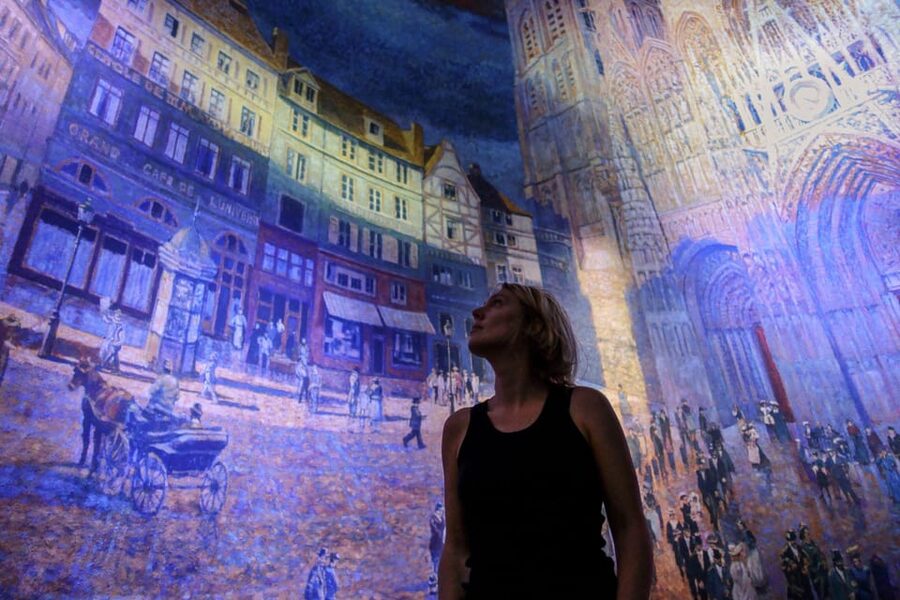
The ticket is valid for one day, but availability has starting times, so check the schedule before booking. The 15-minute light cycle is the key timed part of the presentation, and arriving with enough room in your schedule will make the visit calmer.
Pets are not allowed. Free parking is available on site, which makes the Panometer a straightforward stop for drivers. A café and small museum shop are located within the exhibition area.
German guided tours are optional and cost $4 per person, payable when you arrive. The included legend provides explanations even if you do not book the tour.
The activity allows cancellation up to 24 hours in advance for a full refund, and you can reserve now and pay later. That is useful if your Leipzig plans are still shifting, but you should still check the current availability and starting times before committing.
My verdict on THE CATHEDRAL OF MONET
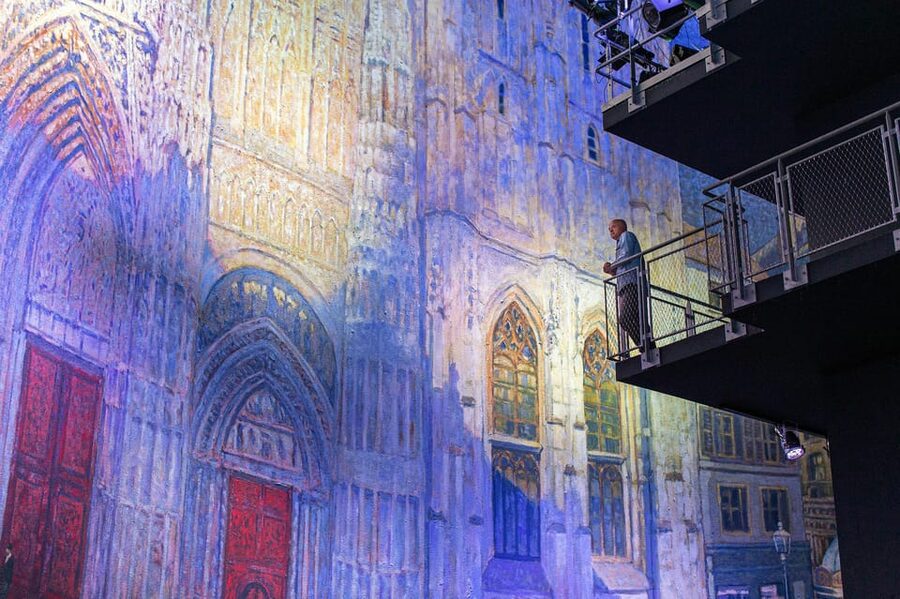
Book it if you want a large, carefully staged art experience rather than a standard museum display. The changing light, the Rouen setting, and the enlarged brushwork give you several ways to look at the same scene.
Skip it if your main goal is original Impressionist paintings, a live walking tour, or a quick attraction you can finish in ten minutes. For everyone else, the $18 ticket is fair when you stay through the full day-night cycle and use the exhibition, film, and different viewing levels.
The strongest reason to go is not simply the size. It is the way the light changes your reading of the cathedral. Monet painted the building again and again because the hour mattered. Asisi turns that idea into a room-sized event, and Leipzig gives you a memorable place to see it.
FAQ
Where is THE CATHEDRAL OF MONET located?
The experience is at the Panometer Leipzig in Saxony, Germany.
How much does admission cost?
The listed price is $18 per person.
How long is the ticket valid?
The ticket is valid for one day.
What does the ticket include?
Admission includes the Panometer exhibition, THE CATHEDRAL OF MONET panorama, a legend with explanations, and the concluding film.
How long does the day-and-night sequence take?
The change from day to night takes about 15 minutes.
Is the visitor tower accessible to everyone?
The Panometer is barrier-free except for the 15-meter-high visitor tower.
Are guided tours included?
No. Guided tours in German cost an additional $4 per person and are payable upon arrival.
Can I park at the Panometer?
Yes. Free parking is available on site.
Are pets allowed?
No. Pets are not allowed.
Just added in Leipzig
- City tour on foot, by S-Bahn and tram★ 4.5 · 12 reviews
- Schkeuditz: 4-Hour Vintage East German Trabant Rental★ 4.9 · 15 reviews
- Leipzig City Centre: Scavenger Hunt Self-Guided Tour★ 4.4 · 114 reviews
- Tour on Lake Cospuden★ 4.7 · 58 reviews
- Leipzig: True or false? Walking Tour and Interactive Game★ 4.8 · 28 reviews
- Leipzig: “SoKO Leipzig”, unique Escape Room, 60 minutes★ 4.6 · 20 reviews
- Leipzig Spirits Manufacture: Guided Tour and Tasting★ 4.8 · 79 reviews
- Leipzig: Scavenger Hunt Self-Guided Tour★ 4.7 · 11 reviews
Leipzig Tours, compared.
City History Canal Sightseeing Tour on a Motorboat
Read our review →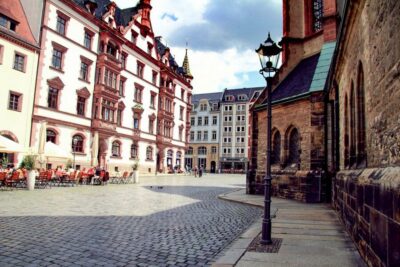


Browse the lists this tour appears in