
Reviewed · LEIPZIG TOURS
Federal Administrative Court Leipzig: A journey into the heart of German justice
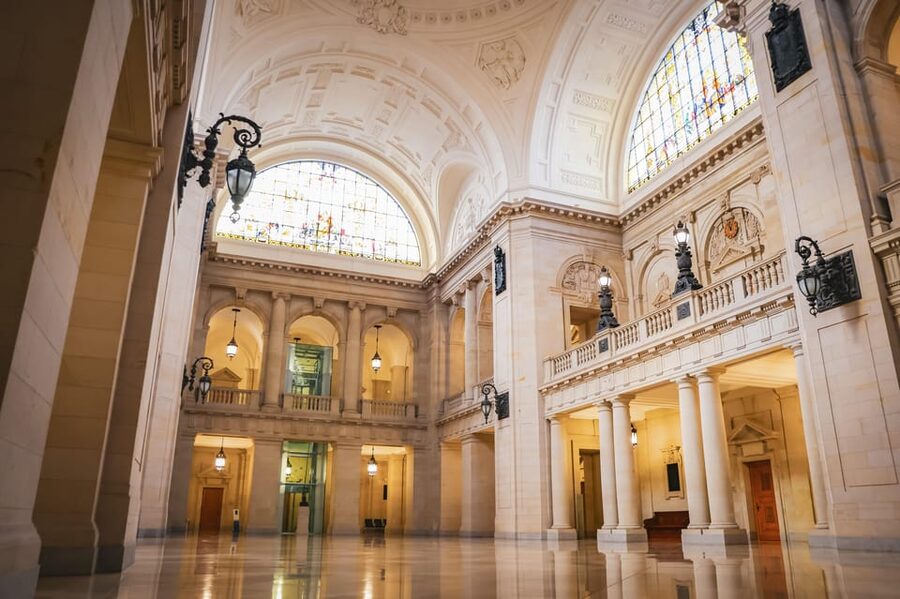
The most striking part of this tour is the building itself. The Federal Administrative Court occupies the former Imperial Court of Justice, built in 1879, with grand courtrooms, imperial paintings, and national coats of arms that make German legal history feel close at hand. I like the link between architecture and real cases, and I like that the tour reaches beyond courtrooms into the former presidential apartment.
This is a strong value at $14 for 90 minutes, especially if you enjoy history, politics, or old buildings with a serious story to tell. The main drawback is language: tours are held in German, with English available on request, and children under 14 are not admitted. Some visitors also find the allotted time too short for all the material.
Key points at a glance
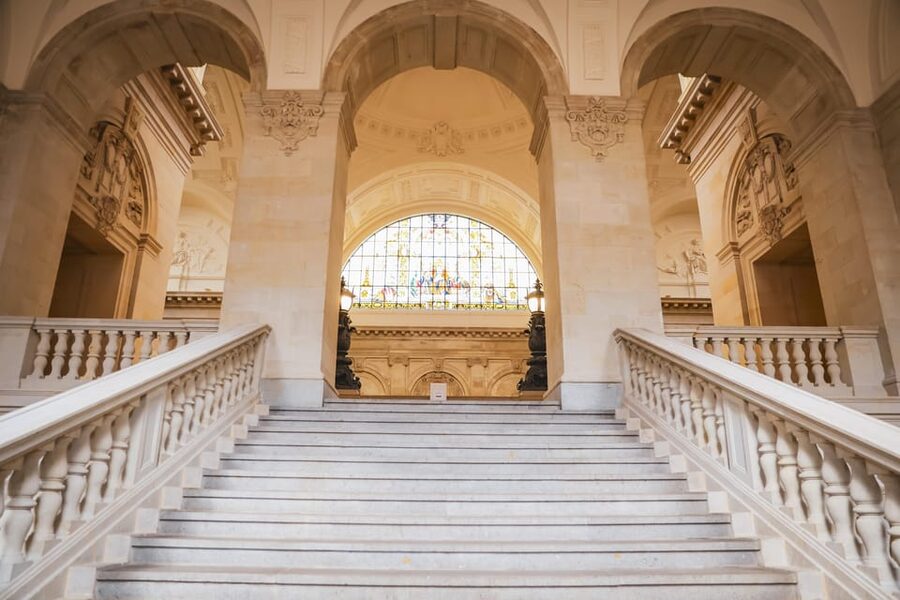
- A former Imperial Court of Justice: Enter a Wilhelmine-era building completed in 1879 and still used for Germany’s highest administrative court.
- Historic cases brought to life: Learn about the 1933 Reichstag fire trial and Karl Liebknecht’s 1907 trial over his published writings.
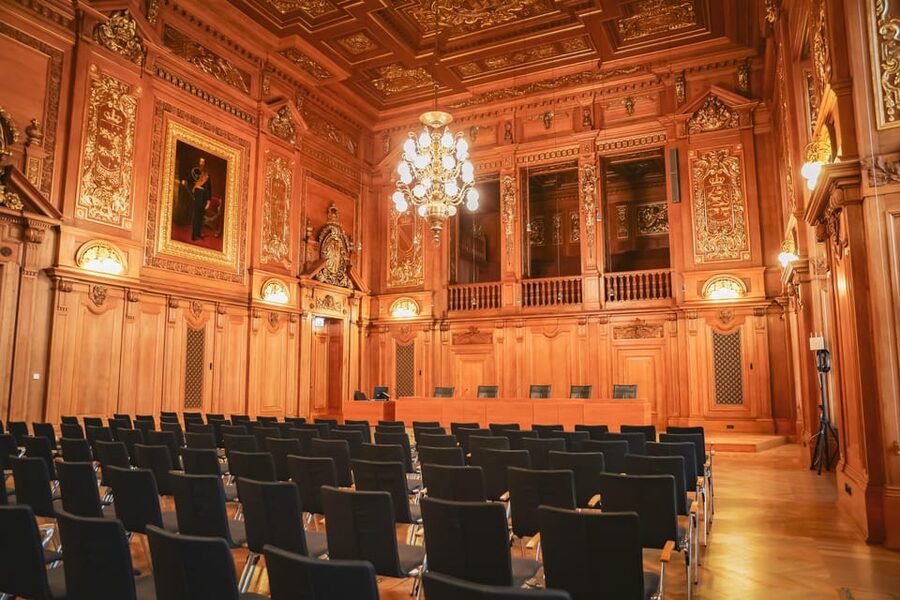
- Courtrooms with imperial detail: See large meeting rooms decorated with national coats of arms and paintings from the imperial period.
- A look inside official life: Visit the former presidential apartment, an unusual addition to a courthouse tour.
- Justice through several political eras: Hear how the building served as an art museum during the GDR period before returning to judicial use in 2002.
- A short, focused visit: The 1.5-hour tour suits a morning or afternoon in Leipzig, but the amount of history may leave you wishing for more time.
Entering Leipzig’s former Imperial Court of Justice

Meet at Simsonplatz 1, directly in front of the Federal Administrative Court. Arrive 10 to 15 minutes early. This is a working court, not simply a museum, so starting promptly matters and the entrance point is worth finding before the tour begins.
The building dates to 1879, when it was created as the Imperial Court of Justice during the Wilhelmine era. That date gives you a useful key to the visit. You are not entering a neutral public building. The design reflects the power and ceremony of the German Empire, an era when courts were meant to look imposing as well as function efficiently.
The exterior sets the tone, but the interior carries the real weight. As you move through the court, look for the formal decoration rather than expecting a modern, stripped-down legal workplace. The architecture helps explain how Germany once presented authority, law, and the state to the public.
I find this kind of setting more rewarding than a standard history museum because the rooms still belong to the institution they were built to serve. The past has not been placed behind glass. It remains part of the building’s daily identity.
A few more half-days in Leipzig worth comparing
- Leipzig: City History Canal Sightseeing Tour on a Motorboat
★ 4.7 · 6,232 reviews - Leipzig: 1.5-Hour Public Tour with Night Watchman Bremme
★ 4.6 · 3,116 reviews - Combo Tour in Leipzig: Guided City Tour & City Sightseeing
★ 4.7 · 2,317 reviews
Courtrooms where law and politics meet
The historic courtrooms are the heart of the visit. The large courtroom includes national coats of arms and imperial paintings, details that make the room feel ceremonial and politically charged. Your guide explains how the design reflects the period, rather than asking you to admire decoration without context.
The tour also covers the official clothing of federal judges. The crimson robe and beret are practical symbols of office, but they also show how courts use visual signals to mark authority. If you have seen judges in films, the real details here offer a more grounded comparison.
The building’s rooms are valuable because they connect physical space with institutional practice. A courtroom is not just a handsome hall. It controls movement, attention, and formality. Even without attending a hearing, you can see how the setting was intended to shape the public experience of justice.
Do not expect a theatrical reconstruction or a courtroom performance. This is a guided explanation of the building, its purpose, and its legal past. The strongest guides make the architecture easier to read and keep the history moving at a good pace.
The Reichstag fire trial and Karl Liebknecht’s 1907 case
The tour reaches beyond building details to important moments in German legal history. One featured case is the infamous Reichstag fire trial of 1933. That trial belongs to one of Germany’s most troubled political periods, and its inclusion shows how courts can become caught up in events far larger than the legal questions on paper.
You also hear about the October 1907 trial in which Karl Liebknecht defended himself over the publication of his writings. Liebknecht was a prominent socialist and political figure, so the case opens a window onto conflict over public speech, political ideas, and the limits placed on published material.
These examples give the tour its purpose. Without them, the building could be reduced to grand stairs, painted ceilings, and official clothing. With them, you can consider how German courts have handled pressure, political conflict, and changing ideas about law.
The material is serious, but the tour is not described as dry or slow. The most effective approach is to connect a case to a room, a date, or a decision, then explain why it mattered. That makes the history easier to follow, even if you do not have a background in German law.
Because the tour is in German, language ability matters here more than it would on a simple architectural walk. If you understand German, you should get the full benefit of the explanations. English is available on request, but arrange that before booking rather than assuming every departure will be bilingual.
The former presidential apartment
One of the most unusual stops is the former presidential apartment. A court tour that includes private living quarters offers a different view of the institution. You are not only seeing where legal work took place, but also learning something about the senior official who once lived within the building.
The apartment adds a human scale to the visit. Courtrooms can feel formal and distant. A former home suggests routines, status, and the way public office once extended into private life. The supplied tour details do not promise a fully furnished period interior or a particular collection, so think of this as a historical room visit rather than a decorative house museum.
This stop also helps show how institutions were organized in the past. A senior court official’s residence inside the same complex says something about hierarchy and the close relationship between work and home. It is a small detail, but it gives the building another layer.
If you are mainly interested in legal procedure, the apartment may feel less essential than the courtrooms. If you like social history and architecture, it is one of the tour’s more distinctive features.
Same city, a completely different kind of day:
- Leipzig: 1.5-Hour Historical Walking Tour in German
★ 4.7 · 2,217 reviews - Leipzig: 2-Hour Guided Walking Tour in German
★ 4.8 · 1,612 reviews - Leipzig: 13-Stop Hop-on/Hop-off Bus Ticket
★ 4.6 · 1,468 reviews - Gruseltour Leipzig: A Haunted Guided Tour
★ 4.5 · 1,385 reviews
From courthouse to GDR art museum and back
The building’s story did not end with the Imperial Court of Justice. During the GDR era, it was used as an art museum. That change is important because it shows how buildings survive political systems by taking on new roles.
The museum period also prevents a simple story of uninterrupted judicial tradition. The building was created for one state, used differently under another, and later returned to judicial service. In 2002, it became the seat of the Federal Administrative Court.
This shift gives the tour a broad time span without requiring a long bus ride or several separate museum visits. You follow German history through one address. The rooms become evidence of changing governments, institutions, and public priorities.
I especially like this part for visitors who want more than imperial architecture. A building can look unchanged while its meaning changes completely. Hearing about the art museum period helps you notice that difference.
The current court is Germany’s highest administrative court. Its 14 senates decide disputes in administrative law and help guide the further development of that law. You do not need legal training to grasp the basic point: this court deals with conflicts involving public administration, and its decisions can influence how administrative law develops.
Why the 90-minute format works, and where it falls short
The tour lasts 1.5 hours, which is long enough to cover the building’s major spaces and historical turns without taking over your day. You can fit it between other Leipzig sights, use it as a focused morning activity, or choose it for a rainy afternoon when an indoor visit makes sense.
The short format also keeps the subject manageable. German judicial history can become dense very quickly, especially when a guide moves between the Empire, the 1930s, the GDR, and the modern Federal Republic. A 90-minute route forces the main ideas into a clear shape.
The tradeoff is depth. There is a lot to cover: architecture, courtroom design, famous cases, judge’s clothing, the presidential apartment, the GDR museum years, and the present court. You may leave with a good framework but still want more detail about individual cases or the building’s art.
That is not a reason to skip the tour. It is a reason to set your expectations correctly. Think of it as a well-focused introduction to a major German legal site, not a full legal history course.
The available comments point to the same practical strength: the guides explain architecture, construction history, historical context, and current legal work in a lively way. The most useful quality is not speed but clarity. A good guide can make complicated material feel ordered and keep the tour from turning into a list of dates.
What the $14 price really buys you
At $14 per person, this is inexpensive for a guided visit inside a functioning national court. The value comes from access and explanation. You are paying to see historic courtrooms, enter the former presidential apartment, and have a guide connect the rooms to major cases and political changes.
A self-guided look at the exterior would cost nothing, but it would miss most of what makes the building worth visiting. You might see the imposing architecture, yet not understand why the Reichstag fire trial, Karl Liebknecht’s case, the GDR art museum period, and the 2002 return to court use matter.
The price is especially fair for anyone who would otherwise pay for a museum admission and a separate guided architecture walk. This visit combines both subjects, along with current information about the Federal Administrative Court.
The value is lower if you do not understand German and cannot arrange an English tour. Since the important material is delivered by the guide, language is not a minor detail. Confirm English availability when you book if German is not comfortable for you.
Flexible booking adds a practical benefit. You can reserve now and pay later, and cancellation is allowed up to 24 hours before the start for a full refund. That helps if you are building a Leipzig schedule around changing plans.
Practical details for a smooth visit
The meeting point is Simsonplatz 1, in front of the court. Arrive 10 to 15 minutes early so you are not searching for the entrance as the group is due to enter.
Tours are conducted in German. English tours are available on request, and some content may be presented in its original language. Ask about language before you commit if you need English throughout.
The building is wheelchair accessible. Pets are not allowed, although assistance dogs are permitted. Alcohol and drugs are prohibited, as are party groups and bachelor or bachelorette groups. These rules fit the setting: this is a court, not a nightlife activity.
The experience is not suitable for children under 14. Older teenagers who have an interest in history, politics, or architecture may find it worthwhile, but the subject and formal setting are aimed more at adults.
No transport is included, and none is needed as part of the experience itself. You make your own way to the court and spend the 90-minute visit inside. The supplied details do not specify group size, so do not book expecting a private tour unless that is confirmed separately.
Who should book this court tour?
I would choose this experience if you enjoy buildings that still carry their original institutional purpose. It is also a smart pick if you want German history told through specific places and cases rather than through a general city walk.
The tour suits:
- Adults interested in German political and legal history
- Architecture fans who want to see Wilhelmine-era interiors
- Visitors curious about the Reichstag fire trial or Karl Liebknecht
- People looking for a short indoor activity in Leipzig
- Anyone who enjoys seeing how a public building changed under different governments
I would hesitate if you want an informal, family-friendly attraction, a tour in guaranteed English, or a visit focused only on decorative architecture. The legal subject is central, and the age restriction excludes younger children.
Should you book the Federal Administrative Court tour?
Book it if you want a compact, low-cost look at German justice in a building that has served several very different purposes. The combination of historic courtrooms, imperial decoration, major political trials, the former presidential apartment, and the building’s GDR museum chapter gives you far more than an exterior photo stop.
The strongest reason to go is the connection between place and law. You see where judicial authority was presented, learn about cases shaped by political tension, and hear how the court functions today. At $14, that is a sound deal.
Skip it if German-language guiding would prevent you from following the story and an English departure cannot be arranged. Also skip it if you need a relaxed attraction for young children. For adults with an interest in history, architecture, and the workings of government, this is one of Leipzig’s more distinctive indoor visits.
FAQ
Where does the tour begin?
The meeting point is in front of the Federal Administrative Court at Simsonplatz 1.
How long does the tour last?
The guided tour lasts 1.5 hours.
What language is the tour in?
Tours are held in German. English tours are available on request.
How much does the tour cost?
The listed price is $14 per person.
What parts of the building are included?
The tour includes the Federal Administrative Court, historic courtrooms, and the former presidential apartment.
Is the building wheelchair accessible?
Yes, the activity is wheelchair accessible.
Are children allowed to join?
The tour is not suitable for children under 14.
Can I cancel for a refund?
You can cancel up to 24 hours in advance for a full refund.
Just added in Leipzig
- City tour on foot, by S-Bahn and tram★ 4.5 · 12 reviews
- Schkeuditz: 4-Hour Vintage East German Trabant Rental★ 4.9 · 15 reviews
- Leipzig City Centre: Scavenger Hunt Self-Guided Tour★ 4.4 · 114 reviews
- Tour on Lake Cospuden★ 4.7 · 58 reviews
- Leipzig: True or false? Walking Tour and Interactive Game★ 4.8 · 28 reviews
- Leipzig: “SoKO Leipzig”, unique Escape Room, 60 minutes★ 4.6 · 20 reviews
- Leipzig Spirits Manufacture: Guided Tour and Tasting★ 4.8 · 79 reviews
- Leipzig: Scavenger Hunt Self-Guided Tour★ 4.7 · 11 reviews
Leipzig Tours, compared.
City History Canal Sightseeing Tour on a Motorboat
Read our review →



Browse the lists this tour appears in