
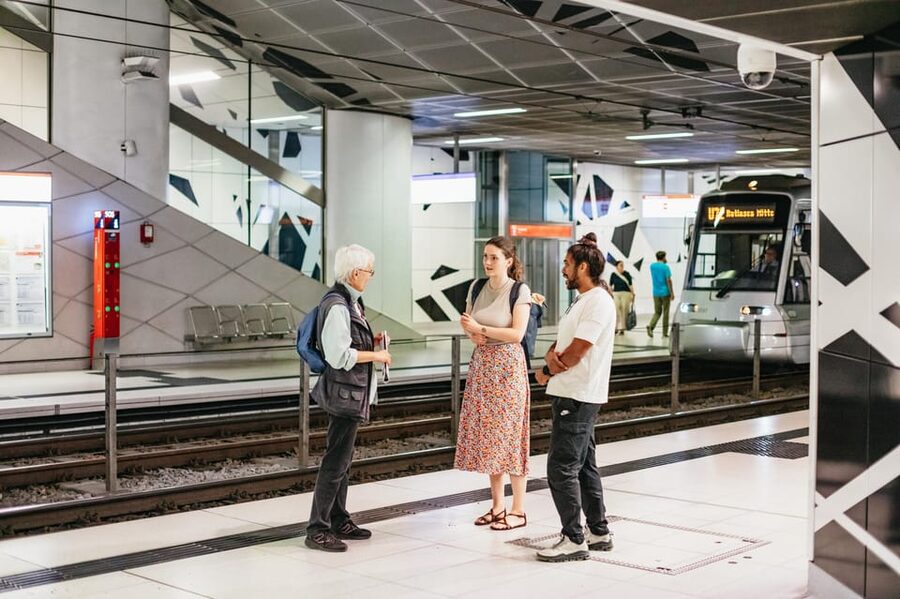
Reviewed · DUSSELDORF TOURS
Düsseldorf: The Wehrhahn Line Metro Guided Tour
Düsseldorf’s Wehrhahn Line turns an everyday subway ride into an underground art walk. Stations such as Pempelforter Straße, Schadowstraße, Heinrich-Heine-Allee, Benrather Straße, and Kirchplatz each use a different visual language, from painted surfaces and geometric forms to sculptural and interactive details.
I like the small-group feel reported by one booking, where only three people joined the tour, and I like the guide’s focus on how artists worked with subway engineers rather than simply pointing out pretty decorations. The 1.5-hour route also gives you a tidy introduction without taking up half your day.
The main catch is practical: the tour is conducted in German, and your metro ticket is not included. You need a price-level A3 ticket, so this is best for visitors comfortable following a German-speaking guide and managing a short public transport journey.
Key points about Düsseldorf’s underground art tour
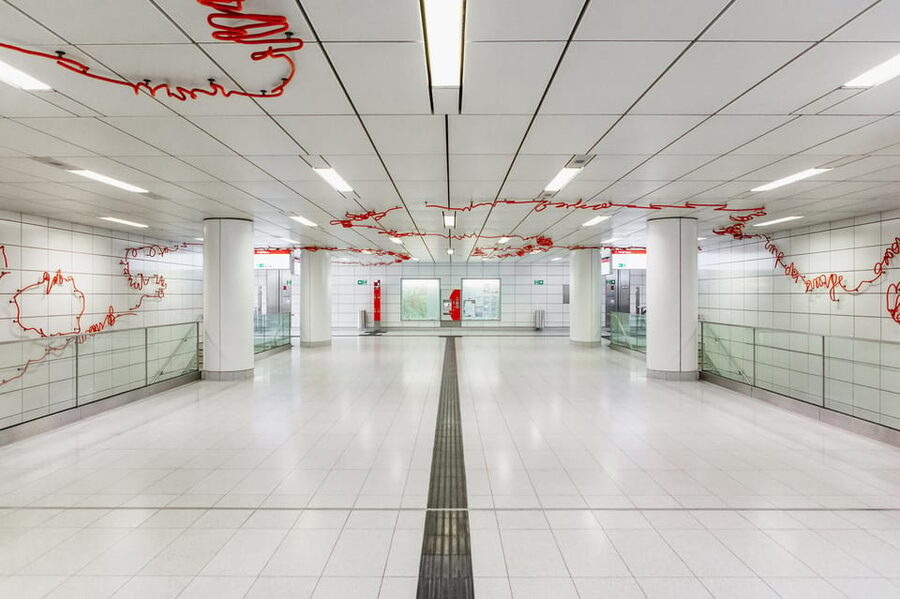
- Five notable stations receive special attention: Pempelforter Straße, Schadowstraße, Heinrich-Heine-Allee, Benrather Straße, and Kirchplatz.
- Each station has a distinct character, with painted, sculptural, interactive, acoustic, or geometric features.
- The tour explains the design process, including the cooperation between artists and subway engineers.
- The meeting point is easy to identify: the street-level Pempelforter Straße station entrance on Oststraße, at the corner of Am Wehrhahn.
- You can choose a shared group or private tour, depending on how much personal attention you want.
- The price is $20 per person, but you must buy the required price-level A3 metro ticket separately.
Why Düsseldorf’s Wehrhahn Line deserves a closer look
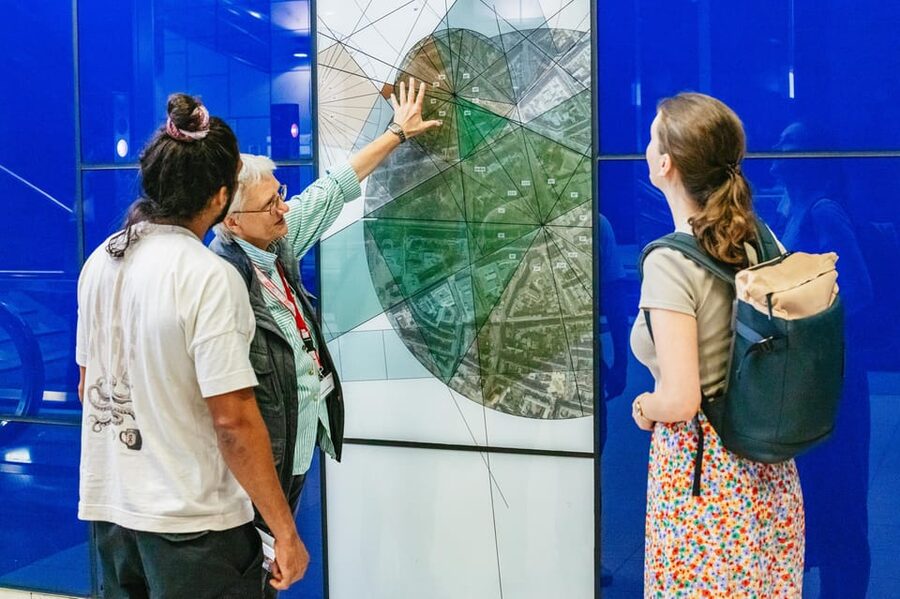
Most people use a subway station to get somewhere else. Düsseldorf asks you to pause and look around first.
The Wehrhahn Line is useful because its stations are not treated as identical transport boxes. The design concept was developed across six subway stations with different artists working alongside the engineers who had to make the line function safely and efficiently. That partnership gives the tour its main point: you are not just seeing decoration added after construction. You are looking at spaces where art and infrastructure were planned together.
I find that approach more rewarding than a standard architecture walk because the stations serve a clear daily purpose. You see the art in the same setting used by commuters, rather than behind museum glass. The underground setting also changes how you notice sound, lighting, surfaces, scale, and movement.
The tour lasts about 1.5 hours. That is enough time to compare several stations and hear the ideas behind them, while still leaving your afternoon open for Düsseldorf’s streets, museums, or cafés. If you want a long technical lecture about the entire subway network, this will feel brief. If you want a focused look at a remarkable section of the city’s public design, the length works well.
A few more half-days in Dusseldorf worth comparing
- Düsseldorf: City Sightseeing Cruise on the Rhine
★ 4.1 · 2,954 reviews - Düsseldorf: 24-Hour Hop-On Hop-Off Ticket
★ 4.2 · 1,685 reviews - Düsseldorf: Brewery Tour with Alt Beer Tastings
★ 4.7 · 1,523 reviews
Starting at Pempelforter Straße on Oststraße
The stated meeting point is at the street-level station access on Pempelforter Straße, on Oststraße at the corner of Am Wehrhahn. Take care here. The tour does not begin as a conventional sightseeing walk in front of a famous monument. You are meeting at a subway entrance, so allow a little time to locate the correct street-level access.
Pempelforter Straße is also one of the stations discussed during the tour. That makes the opening convenient: you begin where the transport system and the subject of the tour meet. Your guide can introduce the line’s wider design idea before the group moves through the stations.
The early explanation matters. Without context, a decorated subway station can look like a collection of unrelated walls and signs. With the design story in place, you can compare the choices made at each stop. Look for the difference between something made to be seen at a glance and something that changes as you walk past it.
The booking information also gives Oststraße and Ferienwohnung Nordwind as possible starting-location references, but the clear meeting instruction is the street-level Pempelforter Straße access at Oststraße and Am Wehrhahn. I would rely on that precise street description when planning your arrival.
Pempelforter Straße and the line’s design idea
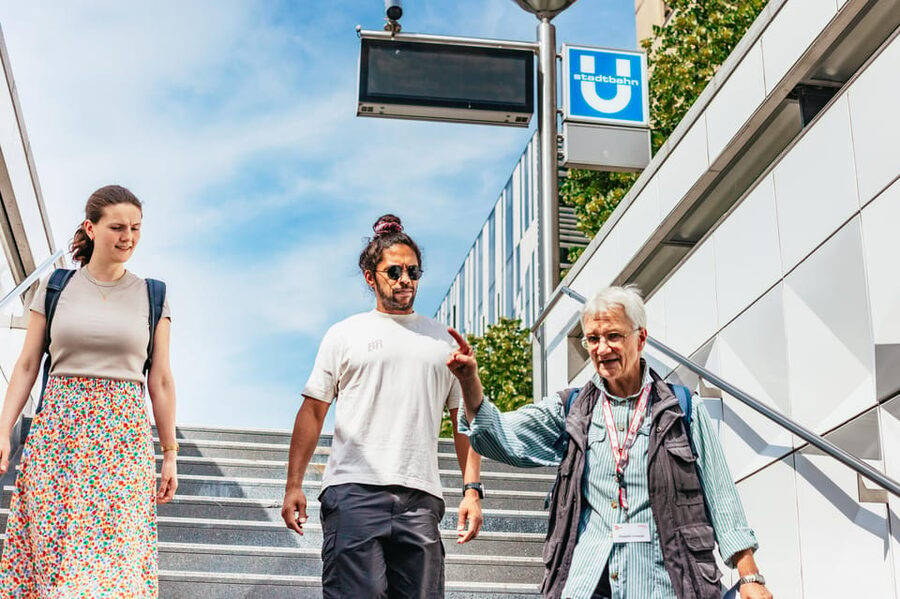
The tour presents Pempelforter Straße as one of the important stations along the route. Here, you begin learning how the six-station concept was developed and carried out by different artists in cooperation with subway engineers.
That cooperation is one of the strongest reasons to take a guided tour instead of simply riding the line on your own. You can certainly visit the stations independently, but you may not understand why one space feels painted, another sculptural, and another more geometric or sound-focused. The guide gives those differences a framework.
The station also helps set your expectations. This is not an art museum with a separate room for every work. The pieces share space with ticketing areas, platforms, signs, lighting, and passenger movement. The design has to work at walking speed and during the daily rush. A guide can point out features that you might miss while searching for the train.
If you are traveling with someone who enjoys architecture but does not want a full museum afternoon, this is a useful compromise. You stay active, move through the city’s transport system, and still get an informed explanation of the design.
Schadowstraße and the art of movement

Schadowstraße is another major stop on the route. The station is presented as a place where art and architecture meet, and it gives you another chance to compare a station’s individual character with the shared concept of the line.
The most useful question to carry through the tour is simple: how does the artwork behave when you move? Some details may be painted and immediately visible. Others may depend on perspective, repeated shapes, the way a corridor directs your eye, or how sound works in the space. The supplied information describes painted, sculptural, interactive, acoustic, and geometric features across the stations, so you should expect a range of approaches rather than one repeated style.
That variety keeps the 1.5-hour route from becoming a string of similar stops. You are not asked to admire the same type of installation five times. Instead, the guide helps you see how different artists answered the same broad challenge: make a working subway station distinctive without losing its purpose.
There is also a practical benefit to seeing Schadowstraße as part of the route. A subway station is often judged only by how quickly it moves you through the city. This tour asks you to notice the design decisions that usually fade into the background.
Same city, a completely different kind of day:
- Düsseldorf: Altbier-Safari Beer Walking Tour
★ 4.4 · 1,150 reviews - Düsseldorf: Guided Tour with a Night Watchman
★ 4.7 · 986 reviews - Düsseldorf: Rhine Tower Adult Entry
★ 4.5 · 638 reviews - Dusseldorf: Old Town & Altbier Tour
★ 4.7 · 585 reviews
Heinrich-Heine-Allee and the public side of art
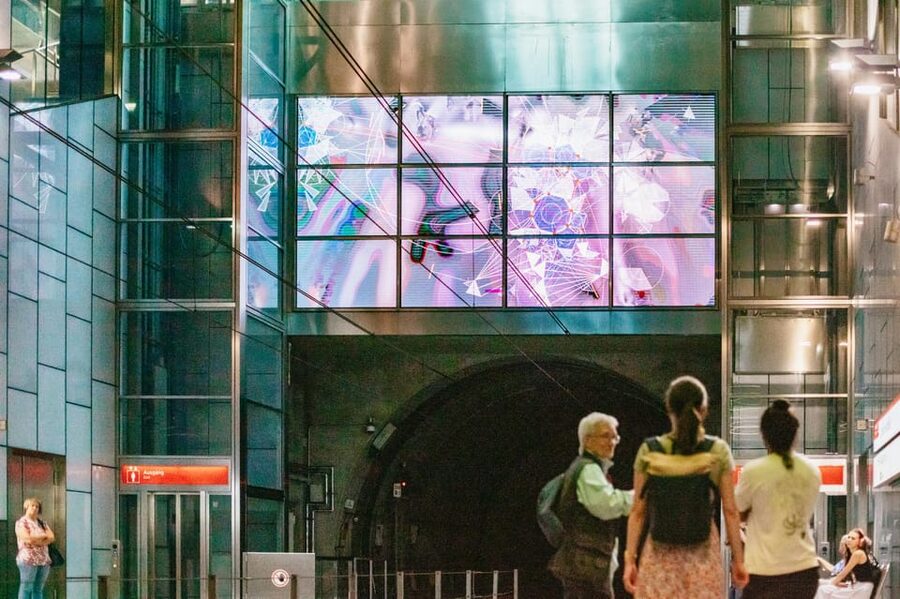
Heinrich-Heine-Allee is one of the best-known stops named for the tour. Its inclusion gives the route a central point for discussing how art in public transport reaches a broad audience.
You do not need to be an art specialist to get something from this stop. The guide’s job is to explain what you are seeing in clear terms and connect it to the station’s function. One of the strongest comments about the tour praised the guide for explaining everything very well, while another highlighted the large amount of information and interesting detail. That tells you to expect more than a quick list of station names.
The route is conducted in German, so your language comfort matters here. If you understand German, you can follow the explanations and ask questions in the natural setting where the work appears. If you do not, the tour may be difficult to appreciate fully, since no English guide is listed.
Heinrich-Heine-Allee can also be a useful checkpoint for your own attention. Notice how your impression changes when you stop thinking of the station as a passageway and start treating it as a designed public room. That shift is the central lesson of the tour.
Benrather Straße and comparing different artistic choices

Benrather Straße adds another station to the comparison. The tour does not present the line as one single artwork. Instead, it shows how separate artists created distinct spaces within one transport project.
This is where a guided explanation can save you from a common problem with self-guided sightseeing: you may recognize that a station looks unusual, but not know what to compare. At Benrather Straße, think back to Pempelforter Straße, Schadowstraße, and Heinrich-Heine-Allee. Which features rely on color? Which use shapes or physical forms? Which may be more connected to sound, interaction, or the movement of people?
The details supplied for the route do not identify one signature installation at each station, so I would not arrive expecting a single famous object or a long photo stop at every platform. Instead, expect the guide to point out the notable design features and explain how they fit the wider project.
The tour includes photo stops, but you should keep your camera work sensible. This is still an operating metro system, not a closed gallery. Take your pictures when the guide pauses and avoid letting photography distract from the explanations.
Kirchplatz and the final comparison
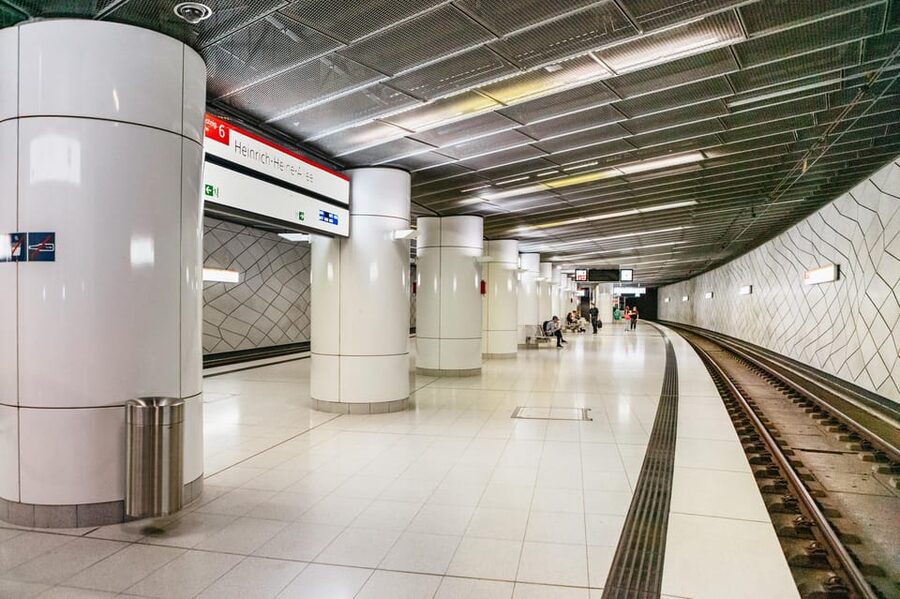
Kirchplatz is the final named station in the route and one of the possible drop-off points. It gives the tour a natural place to gather the different ideas you have seen along the line.
By this stage, you should be able to compare the stations in terms of mood, material, shape, sound, and interaction. That is more useful than trying to pick one favorite immediately. The line’s appeal comes from the contrast between stations, and Kirchplatz works as a final piece in that comparison.
The activity information also says the tour ends back at the meeting point, while Kirchplatz and Oststraße are given as drop-off locations. Since those details point to more than one possible end arrangement, confirm the exact return plan when booking or with the guide at the start. Either way, the route is built around the Wehrhahn Line rather than a long surface walk.
If you want to continue exploring afterward, Kirchplatz is worth keeping in mind as a possible endpoint. If you need to return to where you began, Oststraße is also listed. Do not assume that the tour ends at a separate sightseeing attraction.
What the $20 price really covers
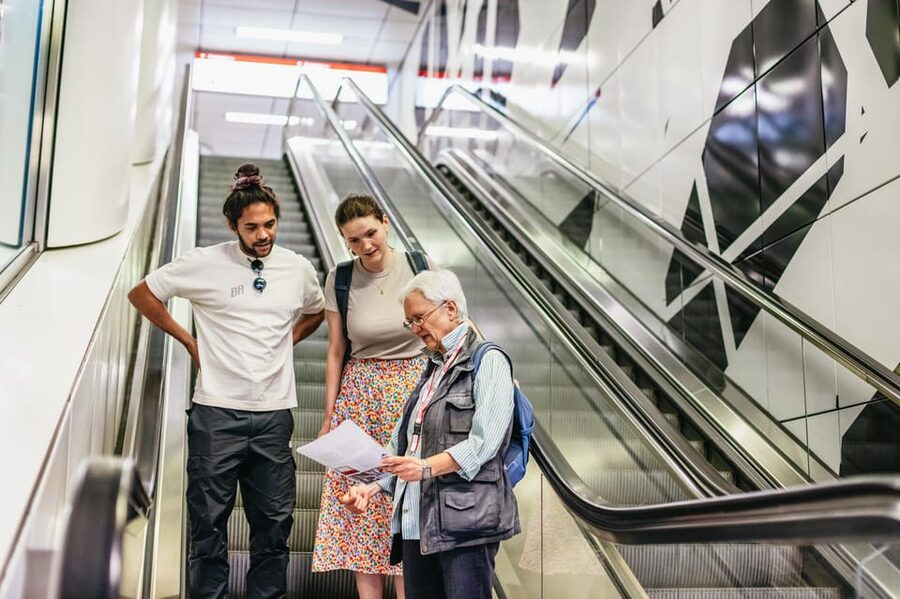
At $20 per person, this is a fairly focused paid tour. You are paying for a live German-speaking guide, a structured route through several stations, and the interpretation that ties the designs together. The metro ticket is extra, and you must purchase a price-level A3 ticket to participate.
That extra cost is small in the context of the outing, but it is important to budget for it. The $20 price is not an all-inclusive transport and guide package. Think of it as the fee for the explanation and organization, with your local metro travel handled separately.
The value improves if you care about architecture, public art, or city planning. You could ride the line alone, but you would lose the background on how artists and engineers worked together and why the stations differ. If you are only looking for a quick ride or a general introduction to Düsseldorf, the fee may feel less necessary.
You can select a shared group or private tour. A shared tour should suit most visitors who want the standard route and the chance to hear a guide’s explanation. A private option makes more sense if you want a more personal pace or have a particular interest in art and architecture, though the provided information does not state the private-tour price.
Group size, guide style, and language

The strongest praise centers on the guide rather than on convenience. The guide was described as very friendly and competent, and another booking noted that an older guide explained everything extremely well. A separate comment praised the manageable group size, the guide, and the large amount of useful information.
Those details suggest a tour with a human scale, although you should not assume every departure will have only three people. One group happened to include three participants, which made it easy to listen and ask questions. Larger departures may feel less personal.
German is the only listed tour language. That is the single biggest decision point for international visitors. If you understand German, the language adds an authentic local quality, since the guide can explain the project in its home setting. If you do not, you should not book expecting an English summary.
The tone also seems more informative than theatrical. This is a good match for you if you like practical explanations, design details, and a guide who takes the subject seriously. It may be less suitable if you want a fast-moving photo tour with little commentary.
Best timing and who should book
The tour takes 1.5 hours, with starting times shown according to availability. A sunny February departure received specific praise, which is a useful reminder that the route works in poor weather too. Since much of the activity takes place underground, it can be a sensible choice when outdoor sightseeing is less pleasant.
I would recommend it to:
- Architecture and design fans who want to see public projects in daily use.
- Art-minded visitors who prefer a working city setting to a formal gallery.
- Düsseldorf return visitors looking for a different side of the city.
- German-speaking visitors who enjoy detailed local explanations.
- Anyone with about two hours free who wants a compact, structured activity.
I would be cautious if you dislike public transport, need an English guide, or want a broad overview of Düsseldorf’s major sights. The tour stays closely focused on the Wehrhahn Line. It does not replace a city walk, museum visit, or general orientation tour.
Book with enough time to find the entrance at Oststraße and buy your A3 metro ticket. Free cancellation is available up to 24 hours in advance, and you can reserve now and pay later, which helps if your schedule is still shifting.
Should you book the Wehrhahn Line tour?
Book it if the idea of art in everyday infrastructure appeals to you and you can follow a German-speaking guide. The $20 fee is reasonable for a short, organized route that explains the link between artists, architecture, and subway engineering, especially if you would otherwise pass through these stations without noticing their design.
Skip it if you need English commentary or are looking for famous monuments and surface-level sightseeing. For the right audience, though, this is a smart Düsseldorf choice: compact, unusual, and grounded in the city’s daily life.
FAQ
How long does the Düsseldorf Wehrhahn Line tour last?
The tour lasts 1.5 hours.
What language is the tour conducted in?
The live tour guide speaks German.
How much does the tour cost?
The listed price is $20 per person.
Is a metro ticket included?
No. You must purchase a metro ticket at price level A3 separately.
Where does the tour meet?
Meet at the street-level station access on Pempelforter Straße, on Oststraße at the corner of Am Wehrhahn.
Which stations are visited?
The route includes notable stops such as Pempelforter Straße, Schadowstraße, Heinrich-Heine-Allee, Benrather Straße, and Kirchplatz.
Can I book a private tour?
Yes. You can choose between a shared group tour and a private guided tour.
Can I cancel the booking for a refund?
You can cancel up to 24 hours in advance for a full refund.
Just added in Dusseldorf
- (H)Alt! 4 Bier! Brauhaus! Führung!★ 4.3 · 27 reviews
- Filmtour Düsseldorf: From Hollywood to Netflix★ 4.9 · 4 reviews
- Explore Düsseldorf with Passionate tour guides!★ 4.0 · 69 reviews
- DüsseldorfCard Plus★ 4.1 · 14 reviews
- Düsseldorf: Scavenger Hunt Self-Guided Tour★ 4.6 · 127 reviews
- Düsseldorf: The Ultimate Team event (3 rooms – 9 games)★ 3.4 · 5 reviews
- Düsseldorf: Culinary Soul Guided Tour★ 4.7 · 110 reviews
- Düsseldorf: Old Town Interactive Crime Tour with actor★ 4.9 · 22 reviews
Dusseldorf Tours, compared.


Browse the lists this tour appears in