
Reviewed · OLD TOWN TOURS
Düsseldorf: Old town and banks of Rhine – heart and lifeline
Düsseldorf’s story comes together on foot here: polished Königsallee, crooked Old Town lanes, traditional breweries, and the broad Rhine all fit into one compact walk. You get the city’s shopping face, its beer culture, and its riverfront in one go, without spending half the day on transport.
I like the route’s clear variety and the chance to learn that Altbier is not all the same. I also like the private-group setup, which gives you room to ask about food, drinks, and the best places to pause. The main drawback is time: 100 minutes is enough for an overview, but not for a slow visit inside every landmark or a long brewery stop.
Key points to know before booking
- Start at the Triton Fountain: Meet at the north end of Königsallee’s moat, where the Triton figure provides an easy landmark.
- See Düsseldorf in three acts: The route links luxury shopping, the Old Town, and the Rhine riverbank.
- Learn the Altbier differences: Your guide can explain the local brewing tradition and help you decide where to try this Düsseldorf specialty.
- Private groups up to 18: The price is charged per group, not per person, which can be good value for a larger party.
- English or German guiding: Guides include Meike and Henning, subject to availability.
- Plan for walking: Comfortable shoes matter on cobblestones, and the tour does not include food or drinks.
From the Triton Fountain to Königsallee
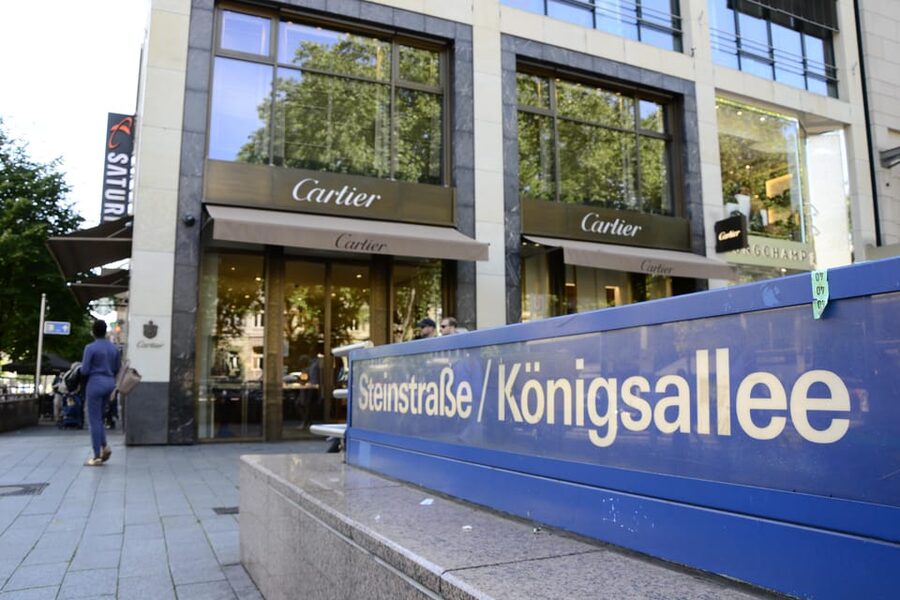
Your meeting point is the Triton Fountain at the north end of the moat on Königsallee. It is a practical place to begin because the fountain is a fixed landmark, rather than an easily missed shop entrance or hotel lobby.
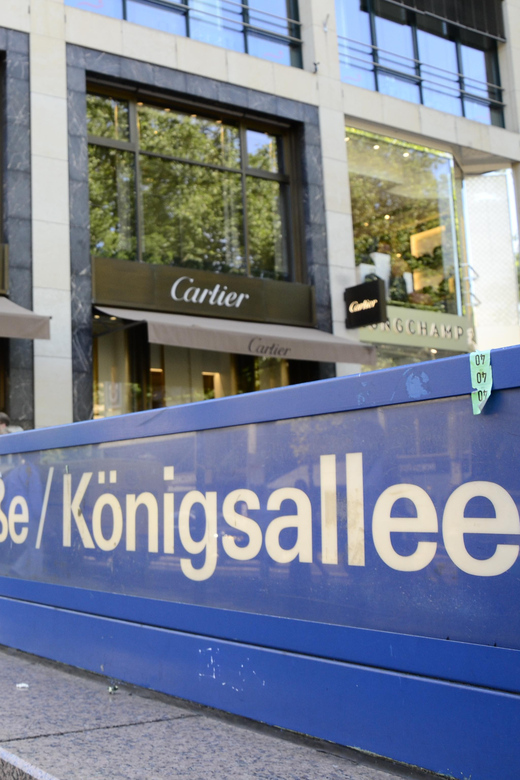
Königsallee, usually shortened to Kö, gives you Düsseldorf’s polished first impression. The boulevard is famous for luxury shopping, but the route only passes by rather than setting aside time for shopping. That is a good choice for a short city walk. You get the setting and the city’s modern, affluent image, then move on to the older quarters.
The contrast matters. Düsseldorf is not presented as only a handsome shopping street or only a beer town. You first see the broad, formal side of the city, then turn toward narrow streets and older buildings. I find that kind of progression useful because it helps you understand how the different parts of Düsseldorf fit together.
If shopping is your main reason for visiting, you may want extra time before or after the tour. The walk itself is about orientation and context, not browsing department stores or designer boutiques.
More Old Town Tours in Dusseldorf
- Dusseldorf: Old Town & Altbier Tour
★ 4.7 · 585 reviews - Düsseldorf: Altstadt Guided Tour
★ 4.5 · 447 reviews - Düsseldorf: Sweet Treats Guided Walking Tour of Old Town
★ 4.7 · 66 reviews
Turning into the Old Town
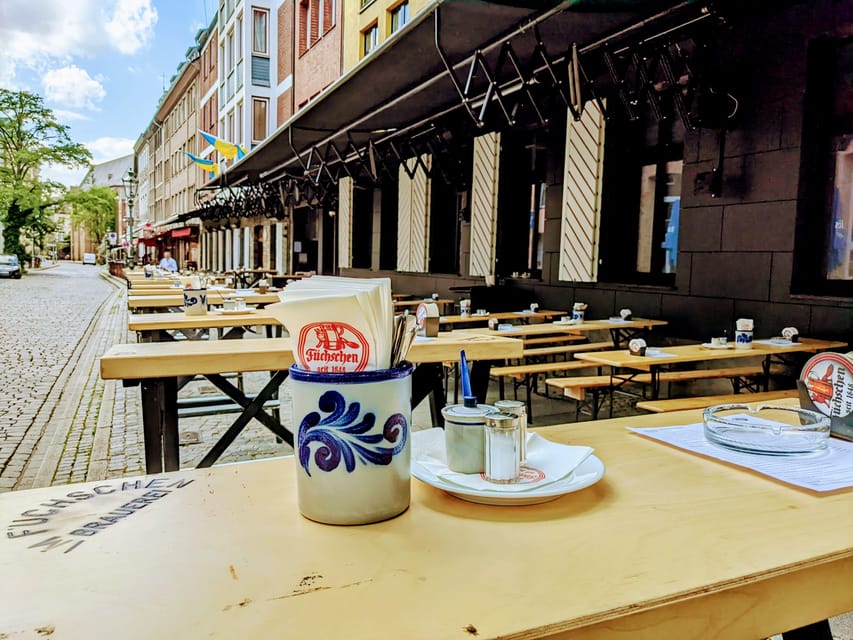
The route then heads into Altstadt, Düsseldorf’s historic center. Here the pace changes. Instead of a grand boulevard, you get cobblestone lanes, older façades, small passages, and a close-up look at the part of town associated with breweries and nightlife.
This is where a guide adds real value. A map can show you streets, but it cannot explain why a lane matters, connect a building to a local story, or point out a useful place for food and drink. The tour promises anecdotes as well as history, so expect the guide to give you a sense of character rather than simply recite dates.
The Old Town is also where you should listen for practical advice. The guide can explain where to eat and drink and help you compare places serving Altbier. Since food and drinks are not included, these suggestions are especially useful after the walk. You are not being handed a tasting, but you are being given a better starting point for your own choice.
Keep your expectations in check. A 100-minute visit through the Old Town is a walking introduction. It does not leave much room for lingering over every side street, entering several buildings, or stopping for a full meal.
St. Lambertus Church and the old city core
St. Lambertus Church is one of the route’s main visual stops. You walk to the church as part of the Old Town section, giving you a chance to pause and take in one of Düsseldorf’s best-known historic buildings.
The value here is not simply the building itself. St. Lambertus helps anchor the older city around you. After the modern feel of Königsallee, the church makes the Old Town feel less like a collection of bars and more like a place with a long civic and religious past.
The provided tour details do not promise an interior visit, so plan to see the church as an exterior stop unless your guide says otherwise. That is typical for a compact city walk. You can still ask questions and take photographs, but you should not count on a dedicated museum-style visit.
This stop will suit you if you enjoy connecting landmarks to the surrounding streets. If you prefer long indoor visits, art collections, or detailed architectural study, you may need to add another activity later.
Burgplatz and the remains of Düsseldorf Castle
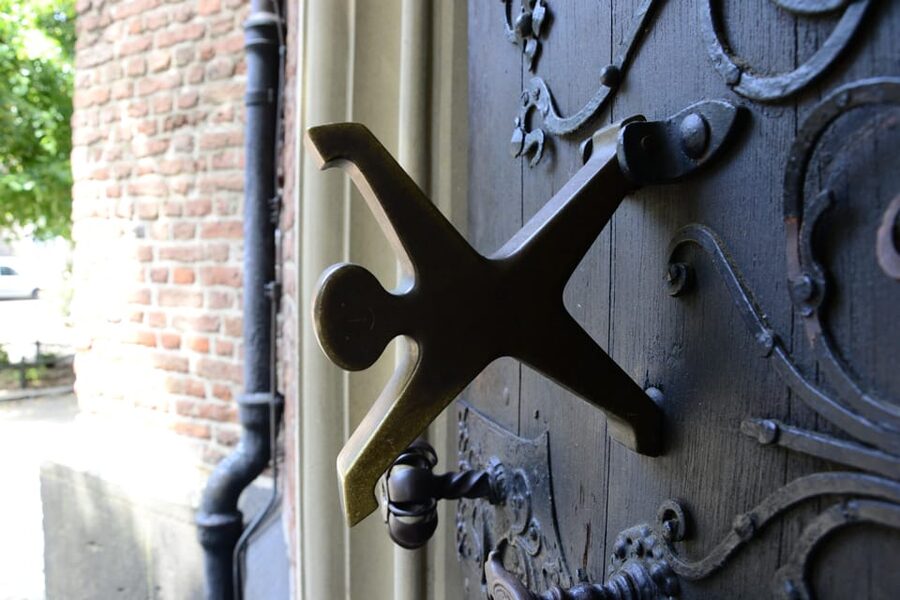
The walk continues to Burgplatz, a key public square in the Old Town. The route includes an explanation of where Düsseldorf Castle once stood and what remains today. That gives this stop more substance than a quick square-crossing.
I like this part because ruins and partial remains often tell a more honest story than a perfectly preserved building. You see how the city has changed, what has disappeared, and what still shapes the present-day center. The guide can connect the square to the former castle site, helping you read the city rather than just photograph it.
Burgplatz also works as a transition point. From here, the route moves toward the Rhine, so you shift from the tight streets of the Old Town to a more open view. The change in space is one of the pleasures of the walk.
Because the tour is short, the stop is likely to focus on the site’s story and setting rather than a long historical lecture. That suits most people who want a useful city introduction without being buried in detail.
Same city, a completely different kind of day:
- Düsseldorf: City Sightseeing Cruise on the Rhine
★ 4.1 · 2,954 reviews - Düsseldorf: 24-Hour Hop-On Hop-Off Ticket
★ 4.2 · 1,685 reviews - Düsseldorf: Brewery Tour with Alt Beer Tastings
★ 4.7 · 1,523 reviews - Düsseldorf: Altbier-Safari Beer Walking Tour
★ 4.4 · 1,150 reviews
Ratinger Straße and the world’s longest bar
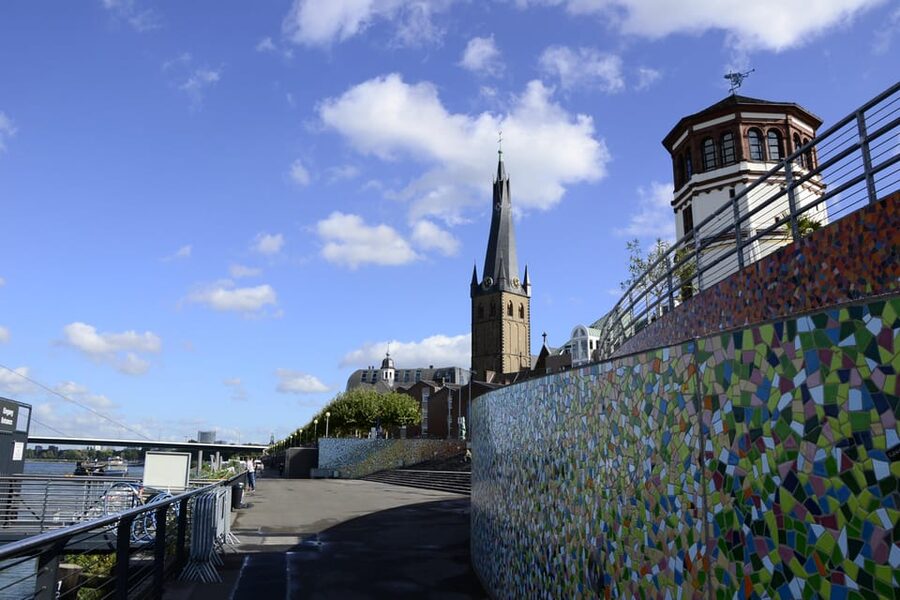
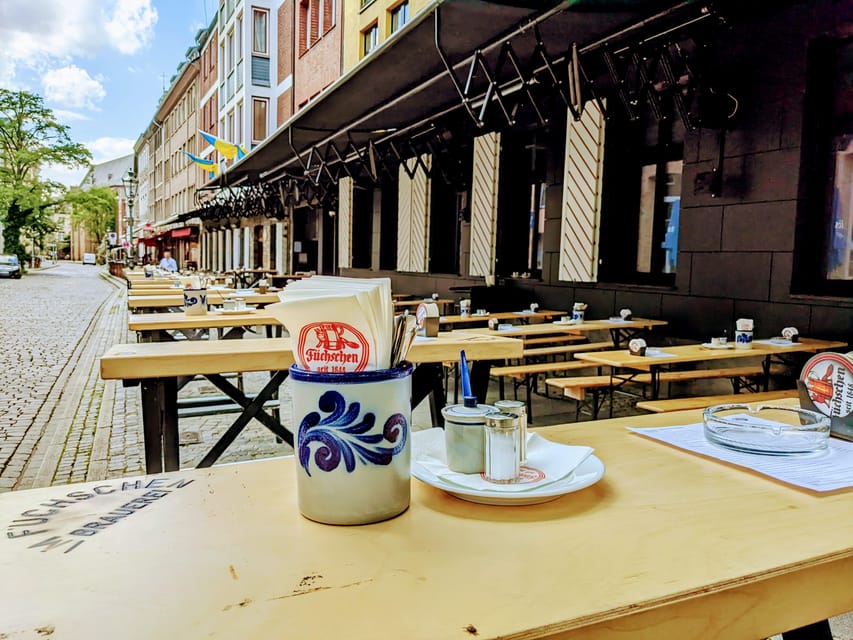
Ratinger Straße is another important part of the walk. The street is tied to Düsseldorf’s brewery culture and the famous idea of the Old Town as the world’s longest bar. That nickname refers to the concentration of pubs and breweries packed into the central area, not to one literal bar stretching through the city.
This is the point where the tour becomes especially practical. You pass traditional breweries where Altbier is made, and your guide can explain that one Altbier is not necessarily the same as another. For a first visit, that is a helpful distinction. You can make a more informed choice instead of ordering the first local beer you see.
The tour does not include drinks, so you should budget separately if you want to try Altbier during or after the walk. The guide’s advice about where to drink may be one of the most useful parts of the experience, particularly if you have only a short stay in Düsseldorf.
Do not expect a brewery tour or a formal tasting unless that is arranged separately. The details describe passing breweries and learning about them. That makes this a city walk with beer context, not a dedicated brewing experience.
The Old Town Hall and the route toward the Rhine
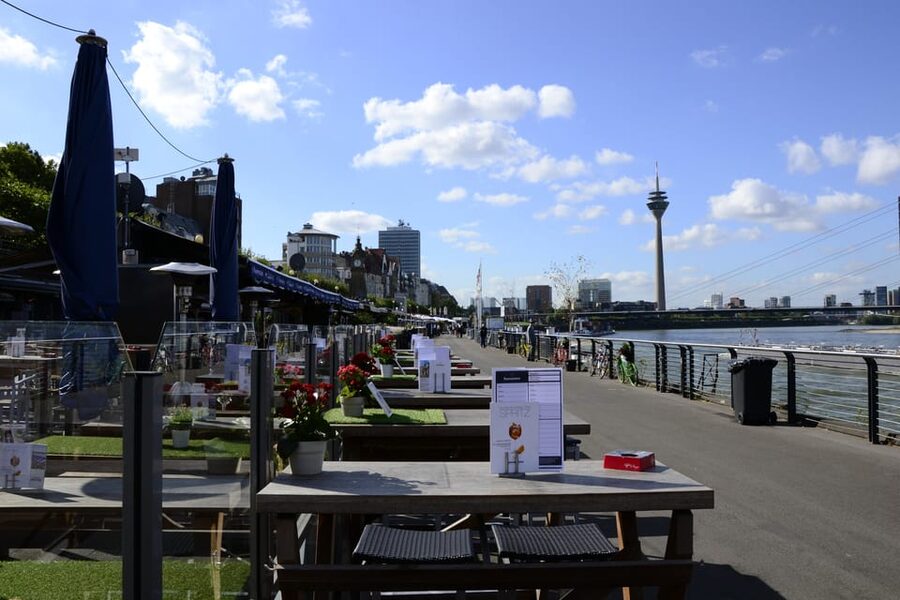
The Old Town Hall is included as another walking stop. Its place on the route helps round out the civic side of Düsseldorf’s center after the church, castle site, and brewery streets.
You can expect the guide to explain what you are seeing from outside and place the building within the Old Town’s public spaces. The provided details do not promise entry, so treat it as an exterior landmark. In a tour of this length, that is a sensible arrangement.
The route then moves toward the Rhine riverbank. This makes the Old Town Hall a useful bridge between the historic center and the final open-air section. You are not simply retracing your steps. The walk keeps moving through different parts of the city.
This sequence also means the tour ends with a change of mood. After narrow lanes and busy brewery streets, the riverfront gives you room to look around and take stock of what you have seen.
The Rhine promenade and Düsseldorf’s lifeline
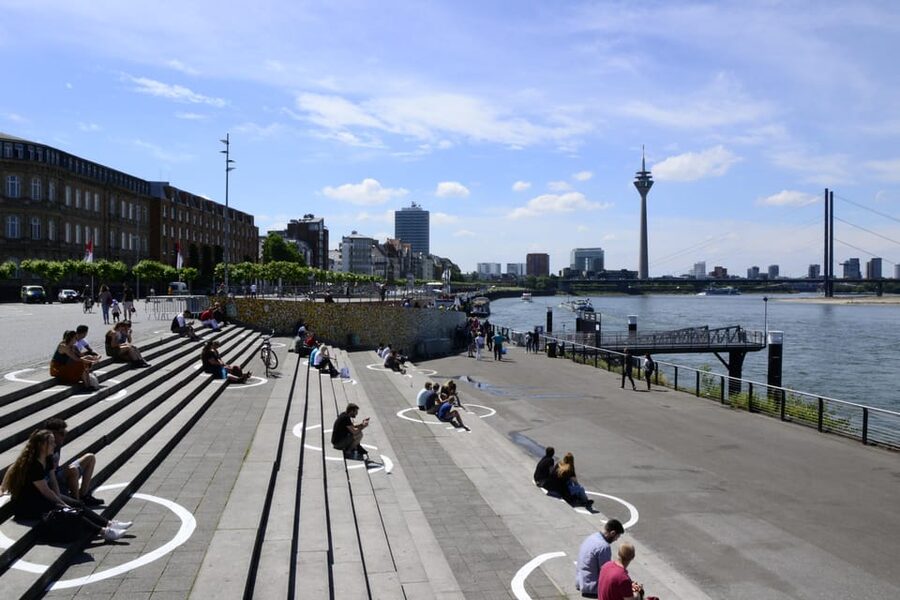
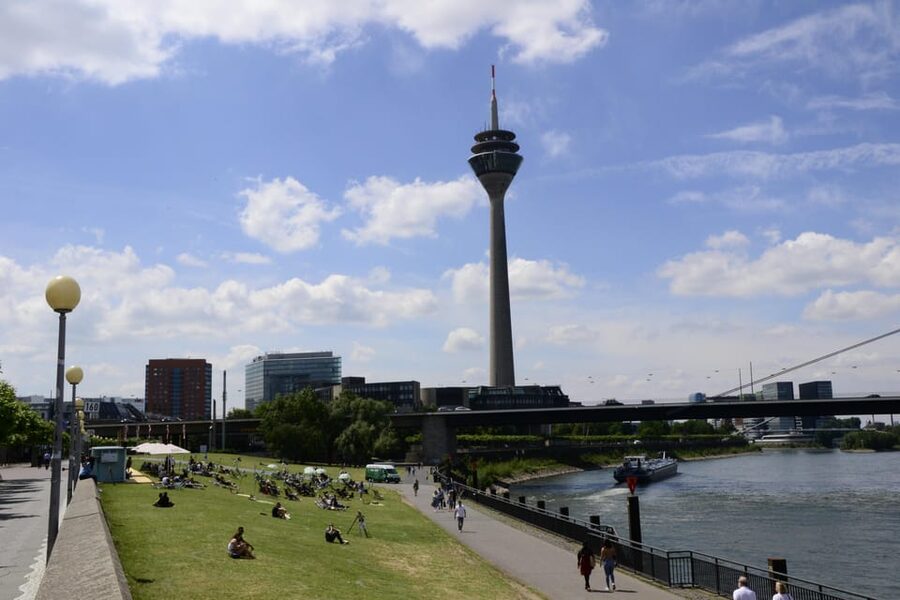
The Rheinuferpromenade is the final major section. Here you stroll beside the Rhine and look at the surrounding sights from the riverbank. The river is not just a pretty finish. It helps explain Düsseldorf’s location and its connection to trade, movement, and daily city life.
I like ending beside the Rhine because it gives the tour a natural sense of direction. You begin at the city’s formal shopping boulevard, pass through its historic core, and finish beside the water. That route gives you a simple mental map you can use for the rest of your stay.
The promenade is also a good place to ask final questions. You can get more advice on food and drinks, clarify where you want to return, or ask your guide to suggest areas worth exploring on your own. The tour is designed to provide local tips, not just a fixed set of facts.
The riverbank portion may feel brief if you hoped for a long, relaxed riverside stroll. The total walk is limited, and several major stops come before it. Still, it provides a strong finish and a chance to see how the Rhine relates to the Old Town.
What the private format means for you
This is a private group experience for up to 18 people. The listed price is $212 per group, which changes the value calculation quite a bit. For one or two people, it is a significant cost for a short walking tour. For a family or larger party, the per-person price can become much more reasonable.
A private group also gives you more control than a large scheduled walk. You can ask about Altbier, local restaurants, the castle site, or the stories behind the streets without worrying that the guide must keep a large crowd moving. The information provided does not promise a fully customized route, so do not assume you can replace the listed stops with a completely different itinerary.
The tour is offered in English and German. Two guides connected with especially strong feedback are Meike and Henning. Meike is noted for strong foreign-language skills and a lively tour filled with useful city suggestions. Henning is specifically recommended for people interested in less obvious places. If you have a choice when booking, you can ask whether either guide is available, but guide selection is not guaranteed by the details provided.
Timing, walking comfort, and value
The duration is listed as 100 minutes, while the included details describe a two-hour walk. I would plan for roughly two hours and confirm the exact start time and duration when you reserve. Either way, this is a compact introduction, not a half-day tour.
You should wear comfortable shoes. Cobblestones and continuous walking can be tiring, especially if you are also carrying shopping bags or a daypack. The route is described as wheelchair accessible, but the Old Town includes historic streets, so it is sensible to raise any specific mobility concerns before booking.
Food, drinks, and tips are not included. That keeps the headline price focused on the guide and the walking experience, but you need to allow extra money if you want to sample Altbier or stop for a meal afterward.
The cancellation policy is useful if your schedule may shift: you can cancel up to 24 hours before the experience for a full refund. You can also reserve and pay later, which reduces the risk of committing cash before your plans are settled.
Who will get the most from this walk?
I would choose this tour if you are visiting Düsseldorf for the first time and want a strong orientation in a short window. It suits couples, families, business groups, and friends who prefer a private guide to a large public group.
It is also a good match if you care about local eating and drinking advice. The brewery stops and Altbier discussion give the walk a distinctly Düsseldorf flavor, while the river and historic landmarks keep it from becoming only a pub crawl.
You may want something else if you are looking for extensive interior visits, a beer tasting, or a slow architectural study. You will see several important places, but most are walking stops. For a deeper look at museums, churches, or castle history, plan a separate visit.
Should you book it?
Book this walk if you want one efficient route through Düsseldorf’s main central contrasts: Königsallee, Old Town streets, brewery culture, former castle grounds, civic buildings, and the Rhine. The private format is the strongest value for groups, especially when divided among several people.
For a solo visitor or a couple watching every euro, $212 is a lot for 100 minutes. In that case, the tour makes the most sense if personal guidance, local food tips, and a private pace matter more to you than a low-cost overview.
Ask about Meike or Henning if their availability fits your plans. Otherwise, the route itself remains the main reason to book: it gives you a useful first map of Düsseldorf and leaves you with clear ideas about where to eat, drink, and walk next.
FAQ
Where does the Düsseldorf walking tour meet?
Meet at the Triton Fountain at the north end of the moat on Königsallee.
How long does the tour last?
The duration is listed as 100 minutes, while the included details describe a two-hour walk. Check the available start times and exact duration when booking.
What languages are available?
The tour is available in English and German.
Is this a private tour?
Yes. It is offered as a private group experience for up to 18 people.
Is the tour wheelchair accessible?
Yes, the activity is described as wheelchair accessible.
Are food and drinks included?
No. Food and drinks are not included in the price.
Can I cancel for a refund?
Yes. You can cancel up to 24 hours in advance for a full refund.
Just added in Dusseldorf
- (H)Alt! 4 Bier! Brauhaus! Führung!★ 4.3 · 27 reviews
- Filmtour Düsseldorf: From Hollywood to Netflix★ 4.9 · 4 reviews
- Explore Düsseldorf with Passionate tour guides!★ 4.0 · 69 reviews
- DüsseldorfCard Plus★ 4.1 · 14 reviews
- Düsseldorf: Scavenger Hunt Self-Guided Tour★ 4.6 · 127 reviews
- Düsseldorf: The Ultimate Team event (3 rooms – 9 games)★ 3.4 · 5 reviews
- Düsseldorf: The Wehrhahn Line Metro Guided Tour★ 4.5 · 29 reviews
- Düsseldorf: Old Town Interactive Crime Tour with actor★ 4.9 · 22 reviews
Old Town Tours, compared.

Old Town & Viktualienmarkt City Walk in German
Read our review →
The Night Watchman Old Town Walking Tour in German
Read our review →
New Old Town and Highlights German-Language Tour
Read our review →Browse the lists this tour appears in