
Reviewed · CHRISTMAS
Dresden with a touch of Xmas: English small group tour
Dresden’s Christmas story is best told on foot, and this two-hour walk links the city’s grandest squares with several smaller Advent markets before finishing at Striezelmarkt, one of Germany’s oldest. You’ll hear how a fishing village grew into a royal capital, how war nearly erased its center, and how Dresden rebuilt its monuments.
I like the mix of Baroque architecture and Christmas traditions, especially the route through the Zwinger, along the porcelain Fürstenzug, and into the market stalls. I also like the local touch: guides such as Doris and Laura Park explain where to find good Glühwein, regional food, and wine. The main drawback is that everything is viewed from outside, and winter cold, cobbles, crowds, and occasional trouble hearing the guide can affect the experience.
Key points at a glance
- A history-led route: Follow Dresden from its medieval beginnings through the Renaissance, Baroque era, Second World War, and postwar rebuilding.
- Several markets in one walk: See the small market at Neumarkt, the medieval-style market near the Royal Stables, and finish at Striezelmarkt.
- Strong local guiding: English-speaking licensed guides include Doris and Laura Park, with a focus on stories, questions, and practical tips.
- Major sights from outside: See the Zwinger, Royal Palace areas, Catholic Cathedral, Frauenkirche, and Fürstenzug without entry fees.
- A good winter plan: The two-hour walk gives you a clear introduction before you return to the Christmas markets at your own pace.
- Worth the $25 price: The cost is modest for a focused city-center introduction, though it does not include food, drinks, or tickets.
Why Dresden works so well at Christmas
Dresden has an unusually compact historic center. The main monuments sit close enough together that you can move from a riverfront square to an opera house, palace, church, and Christmas market without using public transportation.
Advent adds another layer. The decorated stalls give the formal Baroque squares a warmer, more everyday feel. You see Dresden not only as a collection of restored monuments, but also as a city where locals gather for hot wine, sweets, handmade goods, and seasonal food.
The walk also gives useful context. Dresden was not always the cultural capital you see today. Its story begins with a small fishing settlement and trading outpost, then moves through royal ambition, court ceremony, religious conflict, wartime destruction, and painstaking reconstruction.
That long view matters. Without it, Dresden’s grand buildings can feel almost too polished and theatrical. With a guide, the city becomes easier to read. A palace courtyard suggests court life. A church recalls religious change. A line of porcelain tells a story of royal display and civic pride.
A few more half-days in Dresden worth comparing
- From Prague: Dresden Christmas markets and old town tour
★ 4.9 · 39 reviews - Dresden: Festive Christmas Concert in the Zwinger
★ 5.0 · 26 reviews - Dresden: Christmas Sightseeing Tour with a ‘Pflaumentoffel’
★ 4.5 · 13 reviews
Starting beside the Elbe at Schlossplatz
The meeting point is at the base of the statue of Friedrich August I on Schlossplatz, near the River Elbe and the foot of Augustus Bridge. On Google Maps, search for Denkmal Friedrich August dem Gerechten.
Arrive about 10 minutes early. The guides usually arrive shortly before the start, and the group cannot wait for late arrivals. This is worth taking seriously in winter, when finding the statue among large buildings and pedestrians can take longer than expected.
Schlossplatz is a fitting place to begin. You are immediately surrounded by the buildings that define Dresden’s historic core, while the river helps you get your bearings. From here, the guide begins setting out the city’s story rather than simply naming monuments.
You will want comfortable shoes with good grip. Dresden’s historic streets are cobbled, and snow or ice can make them slippery. Warm clothing is essential, since the tour runs in all weather once bookings have been accepted.
Theaterplatz and Dresden’s grand stage

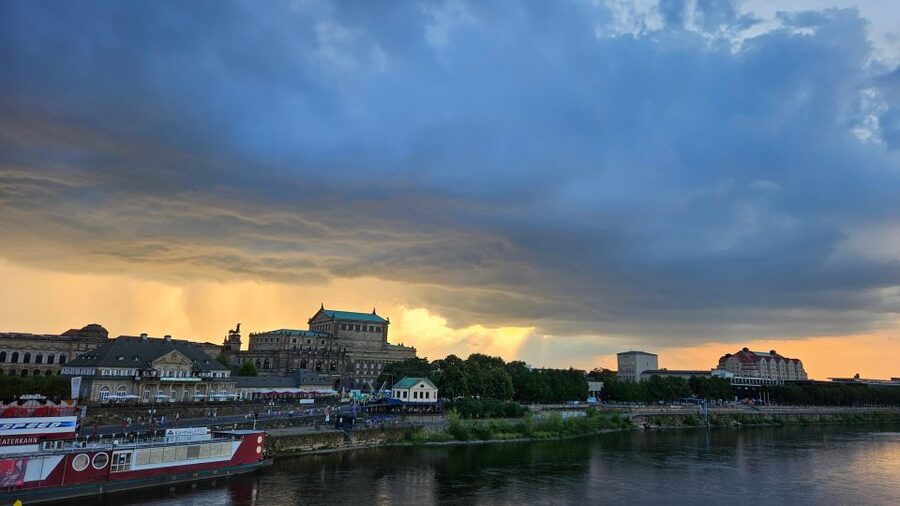
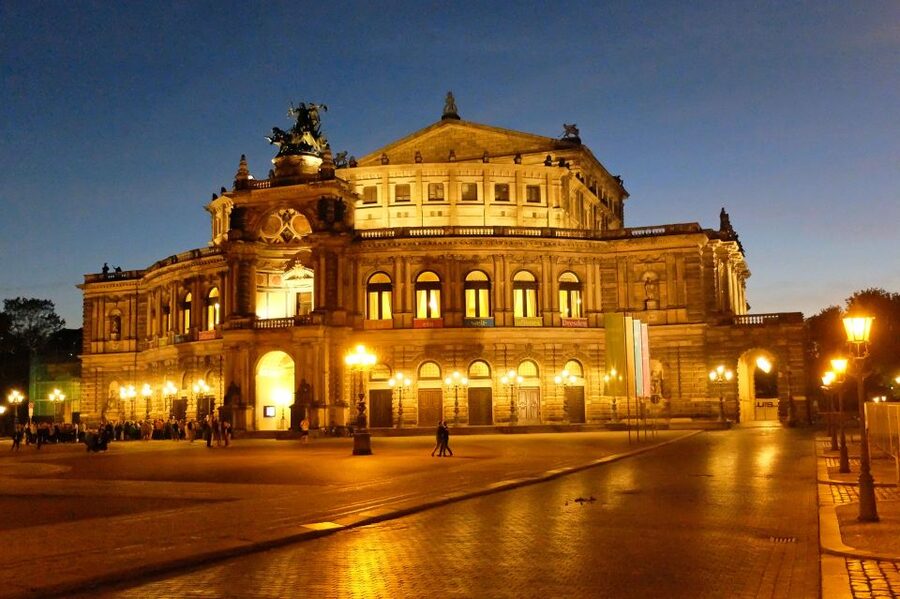
The route continues to Theaterplatz, one of Dresden’s most impressive open spaces. The square is framed by major buildings, including one of Europe’s most beautiful opera houses.
This stop helps explain Dresden’s cultural reputation. The architecture here was designed to impress, and the square still works as a kind of outdoor stage. Your guide discusses the buildings and the role they played in the city’s public life.
The value of this part of the walk is not just visual. A guide can point out how Dresden’s rulers used architecture to express power, taste, and ambition. You get a clearer sense of why the city became known as the Florence on the Elbe.
The opera house and surrounding monuments are viewed from outside, so this is not a substitute for an evening performance or an interior visit. Still, it gives you a useful introduction before you decide which buildings deserve more of your own time.
Inside the Baroque spirit of the Zwinger
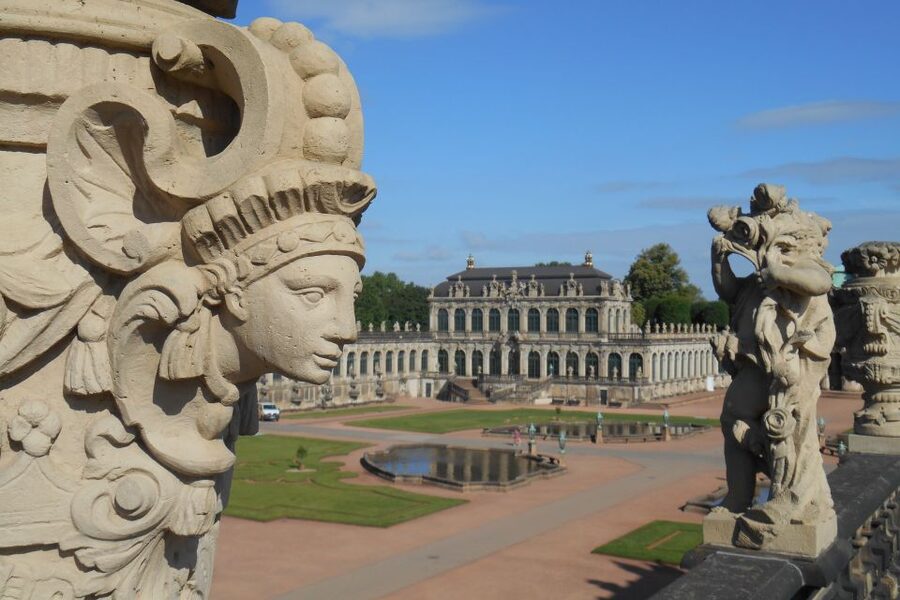
The Zwinger is one of the route’s strongest stops. This Baroque complex is not simply a palace facade. Its courtyards, galleries, sculpture, and formal design reveal how Dresden’s royal court staged festivals and parties.
The guide explains how the space was used for court entertainment. That detail brings the stone and stucco to life. You can picture the Zwinger as a setting for ceremony and display, not just as a photogenic monument.
The walk focuses on the public areas. Entry tickets are not included, and the tour does not promise access to the museums. That is a fair trade for a short city walk, but you should plan a separate visit if you want to see the art collections inside.
The Zwinger is also a good place to ask questions. Guides are encouraged to discuss historical details and adjust explanations to the group. Doris, one of the guides, is especially good at answering questions with humor and clear English, according to the experience information.
Same city, a completely different kind of day:
- Dresden: Semperoper Tickets and Guided Tour
★ 4.7 · 12,102 reviews - Dresden: The Original Night Watchman Tour in Lantern Light
★ 4.6 · 6,653 reviews - Dresden: Semperoper and Old Town Tour
★ 4.8 · 5,735 reviews - Dresden: River Sightseeing Boat Cruise
★ 4.3 · 5,323 reviews
The Royal Palace and its Renaissance courtyard
The route continues toward the Royal Palace. If the public courtyard is open, the guide takes you through it to see its unusual Sgrafitto decoration and frescoes.
Sgrafitto is a Renaissance technique in which layers of plaster are scratched to reveal contrasting colors beneath. It is a small detail, but a memorable one. You get a close look at an artistic method that is easy to miss when you only admire Dresden from a distance.
The conditional wording matters here. Access to the courtyard depends on whether the Royal Palace is open. Do not book this walk expecting a guaranteed palace interior or a fixed amount of time inside.
The palace area also reinforces one of the tour’s main themes: Dresden’s history is visible in layers. Medieval traces, Renaissance decoration, Baroque expansion, wartime loss, and modern restoration all sit close together.
The Catholic Cathedral and a porcelain procession
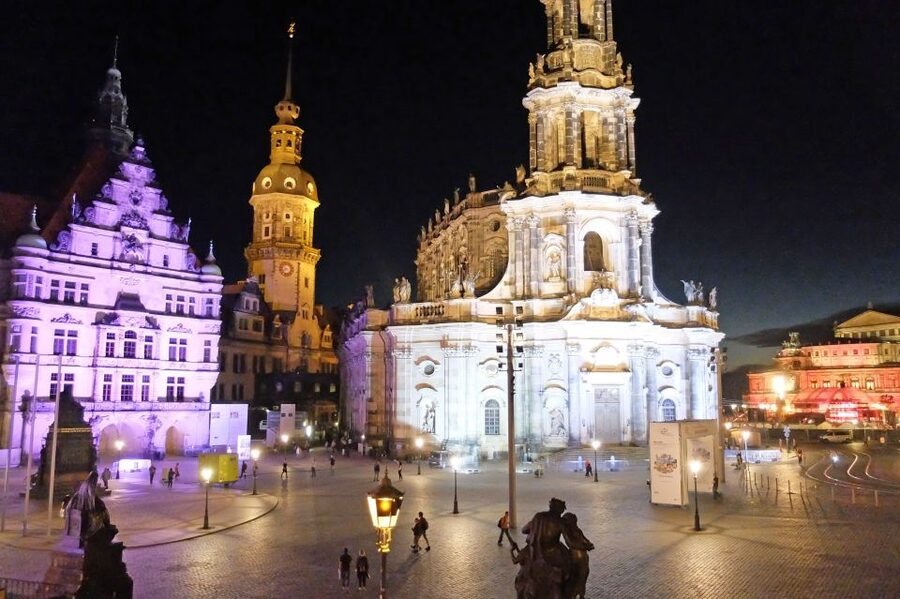
The walk circles the Catholic Cathedral, a building that reflects Dresden’s complicated religious past. The cathedral is not treated as an isolated church, but as part of the city’s wider political and religious story.
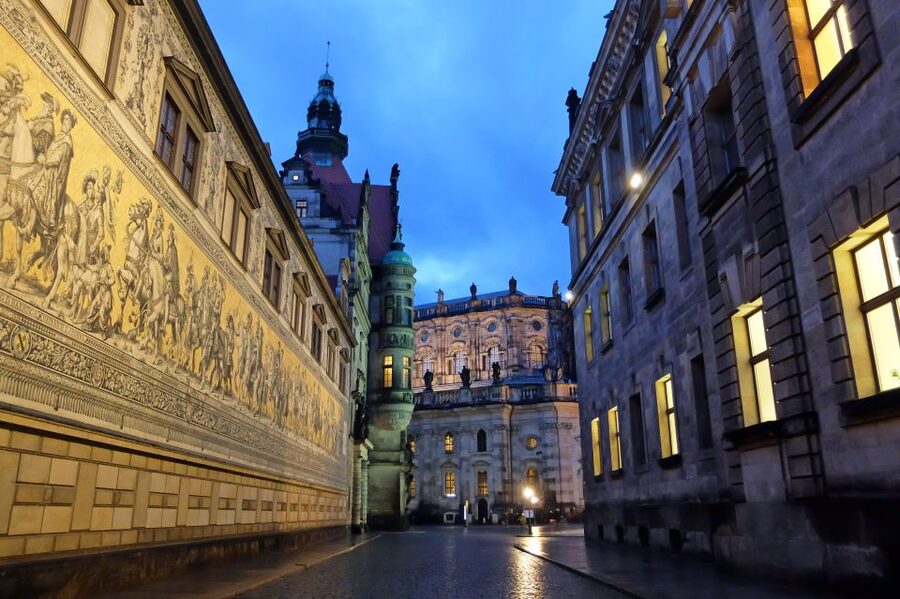
From there, you reach the Fürstenzug, a 100-meter-long mural made entirely from hand-made porcelain tiles. It presents a procession of rulers and is one of Dresden’s most distinctive public artworks.
The mural is easy to walk past without understanding what you are seeing. With an English guide, you can place it in the context of Saxony’s rulers and royal image-making. Its size also makes more sense when you know it was meant to project continuity and authority along a major city route.
This is a particularly good part of the tour for visitors who like visual details. You are not just looking at another grand building. You are examining a long public artwork where material, scale, and political message all matter.
Neumarkt and the smaller Christmas markets
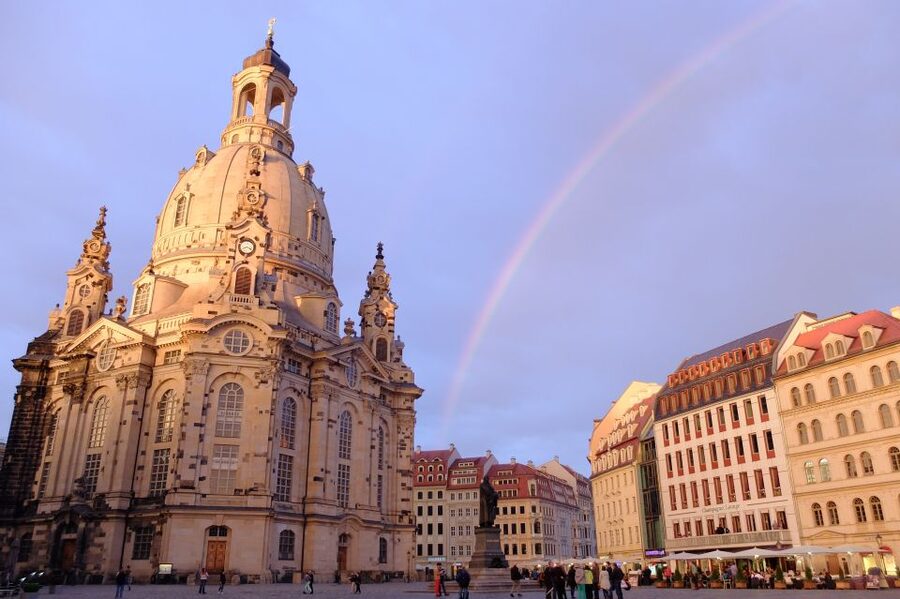
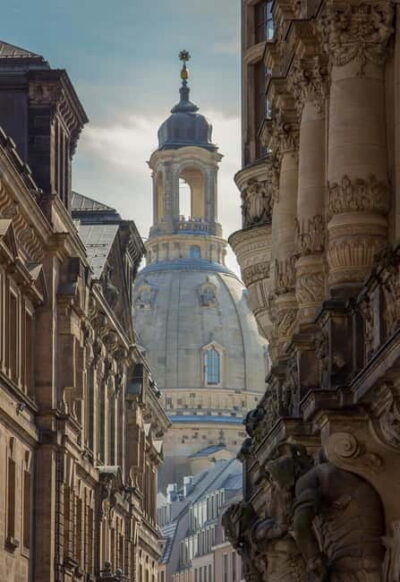
Neumarkt brings you to one of Dresden’s most recognizable squares and the Church of Our Lady, also known as the Frauenkirche. The church and square are central to the city’s postwar story, since Dresden’s historic core suffered devastating destruction in the Second World War.
The guide explains what happened to the city and its citizens during the bombing, then places the rebuilding in a wider postwar context. This part is serious, and rightly so. Dresden’s Christmas atmosphere should not erase the human cost of its past.
The square also has a small Christmas market. It is a useful contrast with the larger market at the end of the walk. You can see how different parts of the city use the same seasonal traditions in different settings.
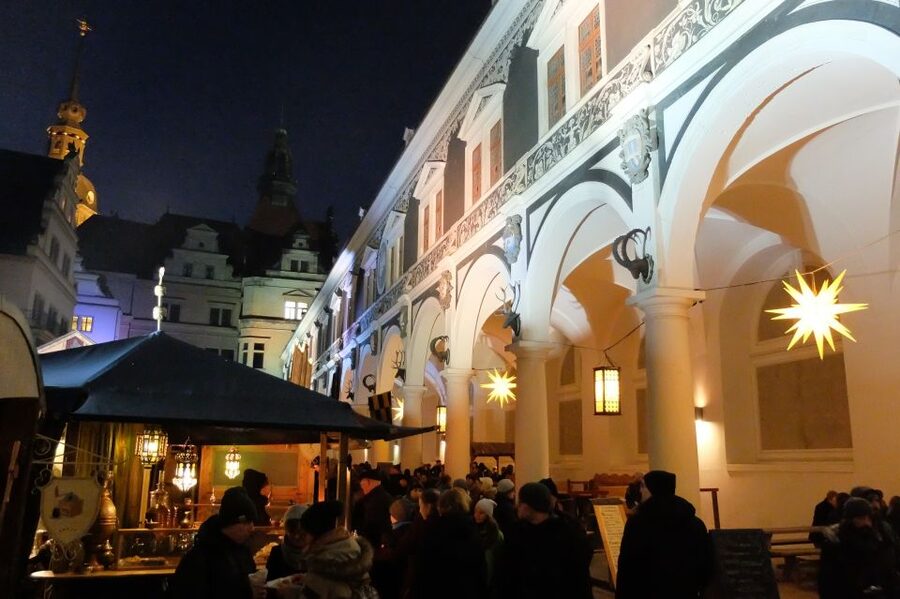
The route may also include a medieval-themed Christmas market in the Royal Stables. One practical point came up from the guiding itself: the medieval market can charge a €5 entry fee later in the day, but may be free before 3 p.m. A guide may adjust the route to let you see it at the better time, though you should not assume this change is guaranteed.
Finishing at historic Striezelmarkt
The final market is Striezelmarkt, known as one of Germany’s oldest Christmas markets. It is also the point where the walk shifts from guided sightseeing to independent browsing.
The guide explains local Christmas customs, food, and wine, then points you toward Glühwein. Drinks are not included, so bring cash or another accepted payment method if you want to raise a cup after the walk.
This finish works well because you do not have to rush away. You can stay at the market, eat, shop, and compare stalls at your own pace. The tour gives you enough background to recognize local traditions rather than treating the market as a generic seasonal fair.
The market is also a practical ending for a winter afternoon. After two hours outside, you may want food and a hot drink more than another monument. The guide’s local suggestions can save you from choosing the first stall you see.
The guides and how the tour feels
The guiding is one of the best reasons to choose this walk. See My Dresden uses local licensed guides, and the team places clear emphasis on research, historical accuracy, and guiding skills.
Doris is described as humorous, clear in English, and happy to answer questions. Laura Park is another named guide who personalizes the commentary by connecting parts of Dresden’s story to the interests and backgrounds of people in the group.
Laura is also willing to change the order when it helps the group. Her decision to visit the medieval Christmas market before its possible afternoon entry charge shows the kind of practical judgment that can improve a short tour.
One small concern is sound. A guide can be well prepared and still be difficult to hear when turning away from part of the group. Stay near the guide, especially in open squares and around market noise. The group’s position can make a real difference.
Is $25 good value for two hours?
At $25 per person, this is a reasonable price for an English-language introduction to Dresden’s central sights. You are paying for a local guide, a planned route, historical explanation, and practical market advice.
The price is especially fair if Dresden is new to you. In two hours, you see several major monuments and learn how they fit together. That can save you time later, since you will know which buildings and museums deserve a second look.
The limits are clear. Entry tickets are not included. Food, drinks, and transportation are also extra. The sights are mainly viewed from outside, and the tour is not a replacement for a full museum visit.
Think of it as a well-priced orientation with a seasonal ending. If you want interiors, long museum visits, or a private guide, you will need a different product. If you want a compact history lesson followed by free time at the markets, the price makes sense.
Who should book this Dresden Christmas walk?
I would choose this tour if you want Dresden explained rather than simply photographed. It suits first-time visitors, couples, solo visitors, and families with older children who can manage two hours of walking in winter weather.
It is also a good fit if you care about the city’s difficult history. The route does not present Dresden as only a pretty Christmas destination. It addresses the destruction of the Second World War and the work of rebuilding the city.
You should think twice if you dislike cold-weather walking, cobbled streets, or outdoor sightseeing. You may also prefer a different plan if your main goal is shopping at the markets, since the guided portion includes substantial history and architecture before the free time begins.
The tour currently has a 4.7 rating from 41 reviews, which matches the practical picture: strong guides, clear historical storytelling, and a few normal problems with winter conditions and hearing in busy spaces.
FAQ
How long does the Dresden Christmas tour last?
The tour lasts two hours. Starting times vary, so check availability when booking.
What language is the tour conducted in?
The live tour is conducted in English.
Where does the tour begin?
It begins at the base of the statue of Friedrich August I on Schlossplatz, near the River Elbe and the foot of Augustus Bridge. Google Maps lists the location as Denkmal Friedrich August dem Gerechten.
How early should I arrive?
Arrive 10 minutes before the scheduled start. The group cannot wait for late arrivals, and the meeting point may take time to find.
Does the tour include entry tickets?
No. Entry tickets are not included, and the sights are viewed from outside. Access to the Royal Palace courtyard depends on whether it is open.
Are food and drinks included?
No. Food, drinks, and Glühwein are not included. The guide provides tips about local food, wine, and where to find Glühwein.
Does the tour visit a Christmas market?
Yes. The route passes several smaller markets and finishes at Striezelmarkt, one of Germany’s oldest Christmas markets.
What should I wear and bring?
Wear warm clothing and comfortable shoes with good grip. Dresden’s cobbled streets can become slippery in snow, so sturdy footwear is important.
Should you book it?
Book this walk if you want a short, useful introduction to Dresden before spending your own time at the Christmas markets. The best parts are the clear historical arc, the Zwinger and Fürstenzug, the serious discussion of wartime destruction, and guides such as Doris and Laura Park who add humor and practical judgment.
Skip it if you need indoor sightseeing, guaranteed palace access, or a tour built mainly around eating and shopping. For most visitors arriving in Dresden during Advent, though, $25 buys a sensible first look at the city and leaves you at Striezelmarkt with the background to enjoy it properly.
Just added in Dresden
- Test Drive Electric Vehicles from the VW brand (ID. model)★ 4.8 · 190 reviews
- SRF CoBi | City Tour by ConferenceBike★ 4.7 · 38 reviews
- Dresden: Scavenger Hunt to Elbe River & Castles★ 4.7 · 15 reviews
- Dresden: Bike Rental – City Bike with Option Children Seat★ 4.5 · 13 reviews
- Private trip from Prague to Dresden, Moritzburg & Meissen★ 5.0 · 5 reviews
- Moritzburg: Scavenger Hunt Self-Guided Walking Tour★ 4.8 · 12 reviews
- Historical tour of the old town including a Saxon dinner★ 4.7 · 23 reviews
- Climb the mountains together with goats★ 4.8 · 8 reviews
Christmas, compared.
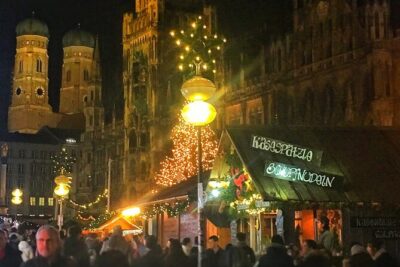
Original Munich Christmas Market Tour with Festive Wine and Food
Read our review →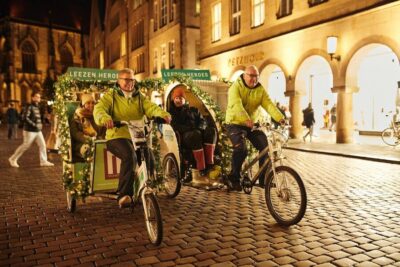
Private Christmas Tour in Münster including Glühwein
Read our review →
From Rüdesheim: 2-hour Christmas Boat Tour on the Rhine
Read our review →
From Prague: Dresden Christmas markets and old town tour
Read our review →
Browse the lists this tour appears in