

Reviewed · DRESDEN TOURS
Dresden: Smile Tour with Prosecco
Dresden’s Smile Tour pairs the city’s grandest sights with a simple pleasure: a glass of Prosecco in a beautiful old-town setting. You’ll walk past the Zwinger, Semperoper, Dresden Castle, and Frauenkirche while your guide explains Dresden’s past, including the destruction and rebuilding that shaped the city you see today.
I like the short 105-minute format and the personal feel of a small walking group. I also like that guides such as Silvia and Frau Tröster have been praised for making the history clear, warm, and easy to follow. The main caution is consistency: one booking was reported as lasting only about an hour, and another group waited without a guide, so confirm your meeting details before setting out.
Key points at a glance
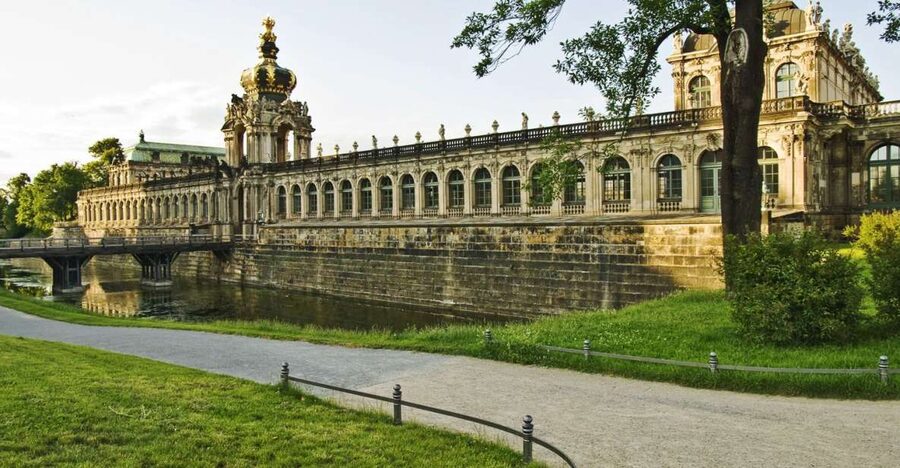
- A 105-minute walk through Dresden’s old town: The route focuses on the city’s main architectural sights rather than museum interiors.
- One glass of Prosecco included: You enjoy the drink at a particularly beautiful place during the tour.
- Major Dresden landmarks in one outing: Expect the Zwinger, Semperoper, Dresden Castle, and Frauenkirche.
- A useful introduction to wartime Dresden: The guide covers how World War II affected the city and its buildings.
- Live guiding in four languages: English, French, German, and Italian are offered.
- Minimum group size matters: The tour runs with at least four participants, while groups of more than six may arrange a time of their choice.
Starting beside the Frauenkirche
The tour begins at the Martin Luther Statue in front of the Frauenkirche. This is a practical meeting point in the heart of Dresden’s old town, and the church gives you an immediate sense of the city’s scale and character.
You should arrive in comfortable clothes and allow a little extra time to find the statue. The meeting point is specific, but a busy historic square can still make a last-minute search awkward. I would save the location on your phone before leaving your hotel.
The Frauenkirche is more than a pretty starting point. Its history gives the tour an important early theme: Dresden was heavily damaged during World War II, yet much of the old center was rebuilt with care. The church itself was reconstructed after the war, so the building you see today connects Dresden’s older past with its long process of recovery.
That context helps you read the city properly. Dresden’s old town can look like a perfectly preserved baroque center, but some of what you see is restored or rebuilt. A guide can explain that difference as you walk, which is more useful than simply taking photographs of grand facades.
A few more half-days in Dresden worth comparing
- Dresden: Semperoper Tickets and Guided Tour
★ 4.7 · 12,102 reviews - Dresden: The Original Night Watchman Tour in Lantern Light
★ 4.6 · 6,653 reviews - Dresden: Semperoper and Old Town Tour
★ 4.8 · 5,735 reviews
A compact route through Dresden’s grand buildings
The Smile Tour is not designed as a long museum visit or a detailed study of one monument. It is a walking introduction to the central sights, with the guide linking buildings, events, and city life as you move between them.
The route includes Dresden Castle, the Zwinger, the Semperoper, and the Frauenkirche. These sights sit close enough to make a short old-town walk practical, though the exact order and amount of time at each stop can vary.
Dresden Castle
Dresden Castle helps introduce the city’s rulers and its long political past. Its large complex is one of the key pieces of the old center, and it gives the walk a strong sense of place before you reach the more decorative buildings nearby.
I would pay attention to how the castle differs from the Zwinger. The castle feels tied to power, residence, and administration, while the Zwinger is more openly theatrical. Seeing both on the same walk lets you compare the different ways Dresden presented wealth and authority.
The tour does not promise entry into the castle or any of the museums inside. Treat this stop as an exterior visit with historical explanation. If you want to see the collections within, plan a separate visit.
The Dresden Zwinger
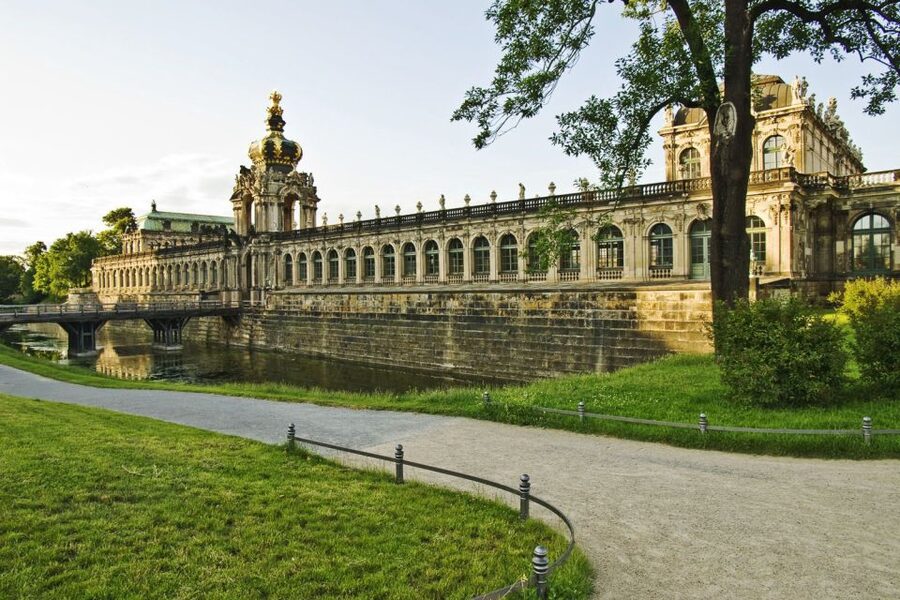
The Zwinger is likely to be one of the visual high points of the walk. Its courtyards, sculpted details, and grand layout make it easy to understand why Dresden is often associated with baroque architecture.
A good guide can keep the Zwinger from becoming just another photo stop. Listen for the reasons behind its design and its role in the city’s old court culture. The building is especially effective when you step back and take in the full arrangement rather than focusing only on individual statues or arches.
The tour’s short format works well here. You get an introduction and time to appreciate the setting without committing half a day to one complex. On the other hand, anyone wanting detailed architectural analysis will probably find the stop too brief.
Same city, a completely different kind of day:
- Dresden: River Sightseeing Boat Cruise
★ 4.3 · 5,323 reviews - Dresden: Tour of VW’s Transparent Factory
★ 4.5 · 4,058 reviews - Dresden: 1-Day Hop-On-Hop-Off Bus Tour
★ 4.5 · 2,813 reviews - Dresden: Church of Our Lady Guided Tour of Gallery
★ 4.7 · 2,421 reviews
The Semperoper
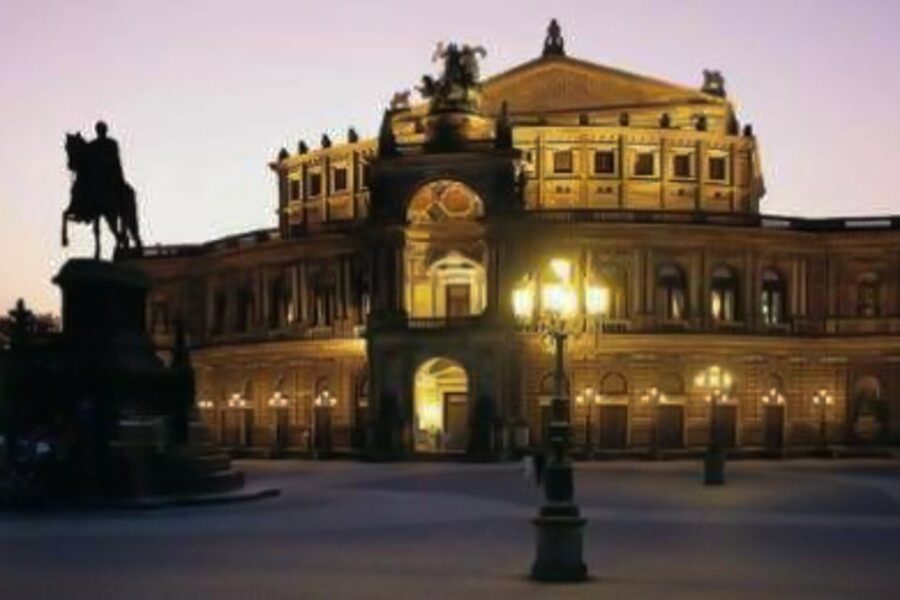
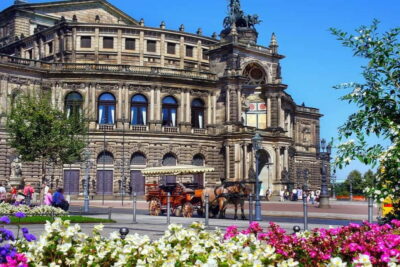
The Semperoper brings a different mood to the route. This famous opera house adds music and performance to Dresden’s architectural story, and its formal exterior makes a strong contrast with the open spaces of the Zwinger.
You can expect the guide to discuss the building as part of Dresden’s cultural identity. The tour is not an opera performance, and entry is not listed, but hearing about the building while standing outside gives you a useful orientation if you plan to return for a show or a separate visit.
This is one reason I like taking a city walk early in a Dresden stay. You learn which buildings deserve a second look, then you can decide where to spend more time later instead of trying to understand the whole center at once.
The Frauenkirche
The Frauenkirche appears at the beginning and forms part of the tour’s broader story of destruction and rebuilding. Its restored appearance can make it easy to forget how much of Dresden was lost during World War II.
The guide explains the wartime damage and the changes that followed. That history adds weight to the otherwise cheerful Prosecco theme. The tour asks you to smile, but it does not ignore the difficult parts of Dresden’s past.
I would not expect a full church history lesson or an extended interior visit. The value here is the connection between the building, the square around it, and the wider story of the old town.
Dresden’s wartime past without a heavy lecture
The most meaningful part of the tour may be its explanation of how Dresden was destroyed during World War II and then rebuilt. The city center contains many grand buildings, but the story behind them is not always visible from the street.
A short walking tour cannot cover every detail. What it can do is give you a clear framework. You learn why reconstruction matters, why certain buildings look old even when parts are new, and how Dresden’s identity is tied to both its baroque past and its wartime losses.
I appreciate that this subject appears within a light, social tour rather than being treated as the entire focus. The Prosecco and friendly tone keep the walk approachable, while the historical content prevents it from becoming a shallow sightseeing loop.
Still, you should choose this tour for an introduction, not a specialist history lesson. If your main interest is the bombing of Dresden, postwar politics, or reconstruction methods, you will want a more focused museum or historical tour as well.
What the Prosecco adds
The included drink is one glass of Prosecco at an especially beautiful place. It is a small feature, but it changes the pace of the outing.
Most city walks move from one explanation to the next. A brief pause with a drink gives you time to look around, take in the surroundings, and chat with the guide or other members of the group. The point is less about the quantity of wine and more about creating a relaxed moment in the middle of the sightseeing.
I would keep your expectations sensible. This is not a tasting tour, and no further drinks or food are listed. If you do not drink alcohol, the supplied information does not specify a substitute, so ask the provider before booking if that matters to you.
The drink also explains the tour’s name and tone. This is meant to be a friendly introduction to Dresden, not a solemn march from monument to monument. That can suit couples, friends, and anyone who prefers sightseeing with a little humor and ease.
The guide makes the difference
The strongest part of this experience is likely to be the guide. Names connected with the tour include Silvia and Frau Tröster, though you cannot assume either one will lead your departure.
Frau Tröster has been described as presenting her broad knowledge with charm, while Silvia has been praised for her warmth and enthusiasm for Dresden. Those details matter because a 105-minute city walk depends heavily on the person holding the group together.
A good guide will answer questions as they arise, connect one building to the next, and keep the history from sounding like a list of dates. One account specifically described being able to ask questions and receive clear answers. That is a useful sign for anyone who prefers conversation over a fixed speech.
There is also a warning here. A separate account described a very short tour with a rushed pace and little information. Since the minimum group is four, a small departure may not automatically feel more personal. If you want time for questions, ask at the start how the guide plans to use the 105 minutes.
Timing, group size, and value at $23
At $23 per person, the tour is reasonably priced for a live, guided introduction to Dresden, especially with one glass of Prosecco included. You are paying for a guide, a structured route, local context, and a small refreshment, not entry to the city’s museums or monuments.
The 105-minute duration is long enough to give the main sights proper attention without taking over your day. I would book it near the start of your Dresden visit. Afterward, you will know which buildings you want to revisit and where you may want to spend more time.
The minimum of four participants is important. If fewer than four people book, the tour may not operate. Larger groups of more than six can arrange the tour at a time of their choice, which may help families, clubs, or private groups plan around a fixed schedule.
The advertised time is 105 minutes, but one account reported a tour of only about an hour. That may have been an unusual departure, but it is worth keeping in mind. If you have a train, concert, or restaurant booking immediately afterward, leave a generous buffer.
The activity offers free cancellation up to 24 hours before departure, with a full refund, and you can reserve now and pay later. Those terms are useful when your Dresden schedule is still shifting.
Who will enjoy this walk most
I would recommend the Smile Tour if you want a friendly overview of Dresden’s center, prefer walking to sitting in a bus, and like a little social atmosphere with your history.
It is a good match for:
- First-time visitors who want the main old-town sights explained in one outing
- Couples or friends who like the idea of a drink during sightseeing
- People who want a short tour before choosing which museums to visit
- Visitors who appreciate a guide who can answer questions in English, French, German, or Italian
- Private groups of more than six looking for a flexible start time
I would be more cautious if you want long interior visits, detailed art history, or a serious specialist account of World War II. The tour covers important historical themes, but it remains a compact city walk.
People with mobility concerns should also ask the provider for current route details before booking. The supplied information describes a walking tour and advises comfortable clothes, but it does not give a specific accessibility statement.
Practical tips for a smoother experience
Arrive at the Martin Luther Statue in front of the Frauenkirche a little early. This gives you time to identify the correct place and avoid starting the walk in a rush.
Wear shoes and clothes suited to walking. The tour stays in the old town, but you will still be on your feet for close to two hours if it runs for the full advertised duration.
Ask questions. The best value comes from the guide’s ability to connect the sights and explain what you are seeing. If you are curious about reconstruction, the Frauenkirche, or the wartime destruction of Dresden, raise those subjects directly.
Keep the rest of your schedule flexible. The advertised duration is 105 minutes, but the reported shorter outing and a past meeting problem make it wise not to place an important reservation immediately afterward. Confirm the tour before departure, particularly if your plans depend on it operating that day.
Should you book the Dresden Smile Tour?
I would book it for an affordable, easygoing first look at Dresden’s old town. The combination of the Zwinger, Semperoper, Dresden Castle, Frauenkirche, wartime context, and one glass of Prosecco gives you a lot in 105 minutes.
The decision comes down to your preferred pace. If you want a warm guide, a compact route, and a cheerful introduction, this is a sensible choice at $23. If you need a detailed historical study, guaranteed timing, or extensive time inside the monuments, choose a more specialized tour and visit the sights separately.
Before paying, confirm the departure, meeting point, and operating status. The tour has received strong praise for friendly guides such as Silvia and Frau Tröster, but the mixed timing and attendance reports mean that a quick check is worth your effort.
FAQ
Where does the Dresden Smile Tour begin?
It begins at the Martin Luther Statue in front of the Frauenkirche.
How long does the tour last?
The advertised duration is 105 minutes.
What sights are included?
The tour covers Dresden Castle, the Dresden Zwinger, the Semperoper, and the Frauenkirche, along with other parts of the old town.
Is Prosecco included?
Yes. One glass of Prosecco is included at an especially beautiful place during the tour.
Which languages are available?
The live guide may conduct the tour in English, French, German, or Italian.
What is the minimum number of participants?
The tour takes place with a minimum of four participants.
Can a larger group choose its own start time?
Groups with more than six participants may book the tour at a time of their choice.
What should I wear?
Comfortable clothes are recommended for the walking tour.
Can I cancel for a full refund?
Yes. You can cancel up to 24 hours in advance for a full refund.
Can I reserve now and pay later?
Yes. The activity allows you to reserve your place and pay later.
Just added in Dresden
- Test Drive Electric Vehicles from the VW brand (ID. model)★ 4.8 · 190 reviews
- SRF CoBi | City Tour by ConferenceBike★ 4.7 · 38 reviews
- Dresden: Scavenger Hunt to Elbe River & Castles★ 4.7 · 15 reviews
- Dresden: Bike Rental – City Bike with Option Children Seat★ 4.5 · 13 reviews
- Private trip from Prague to Dresden, Moritzburg & Meissen★ 5.0 · 5 reviews
- Moritzburg: Scavenger Hunt Self-Guided Walking Tour★ 4.8 · 12 reviews
- Historical tour of the old town including a Saxon dinner★ 4.7 · 23 reviews
- Climb the mountains together with goats★ 4.8 · 8 reviews
Dresden Tours, compared.
The Original Night Watchman Tour in Lantern Light
Read our review →


Browse the lists this tour appears in